




Synthetic Palapa Thatch for the Mexican Palapa Roof
Palma Sintética for Cancún, Riviera Maya and Beyond
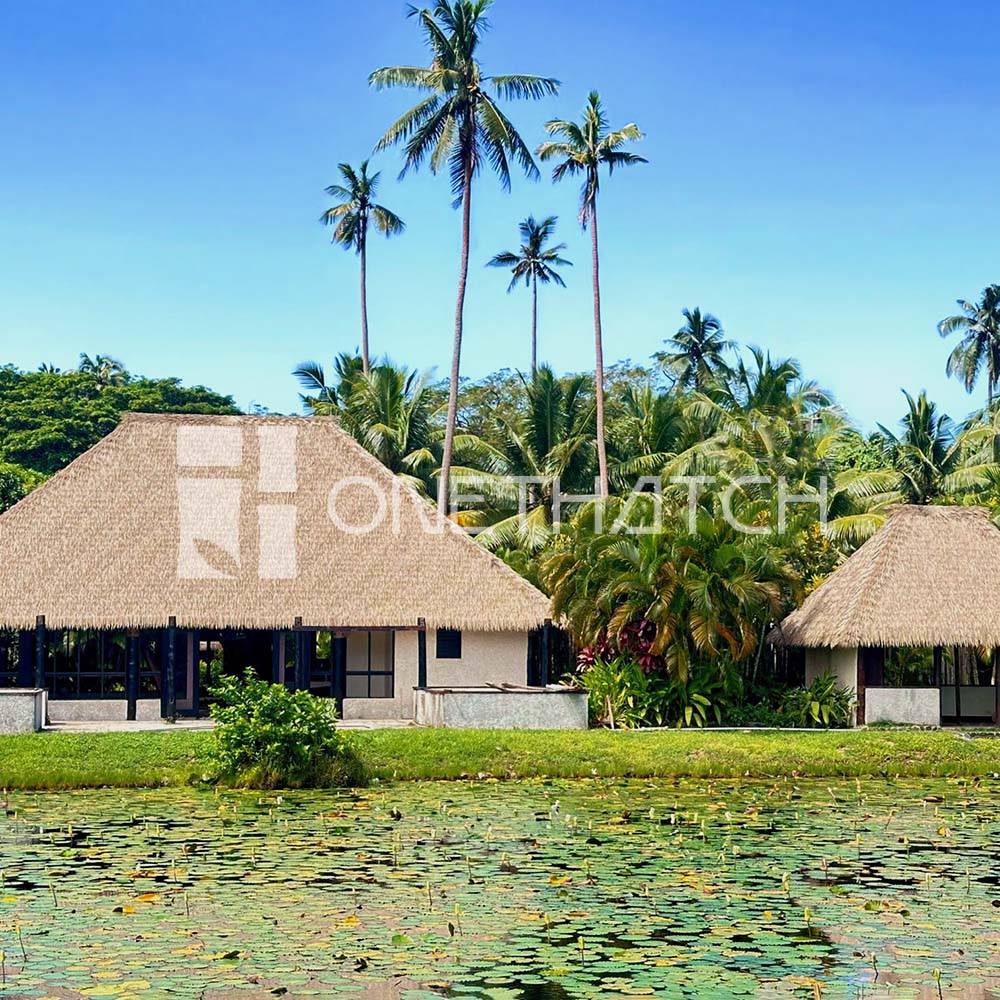
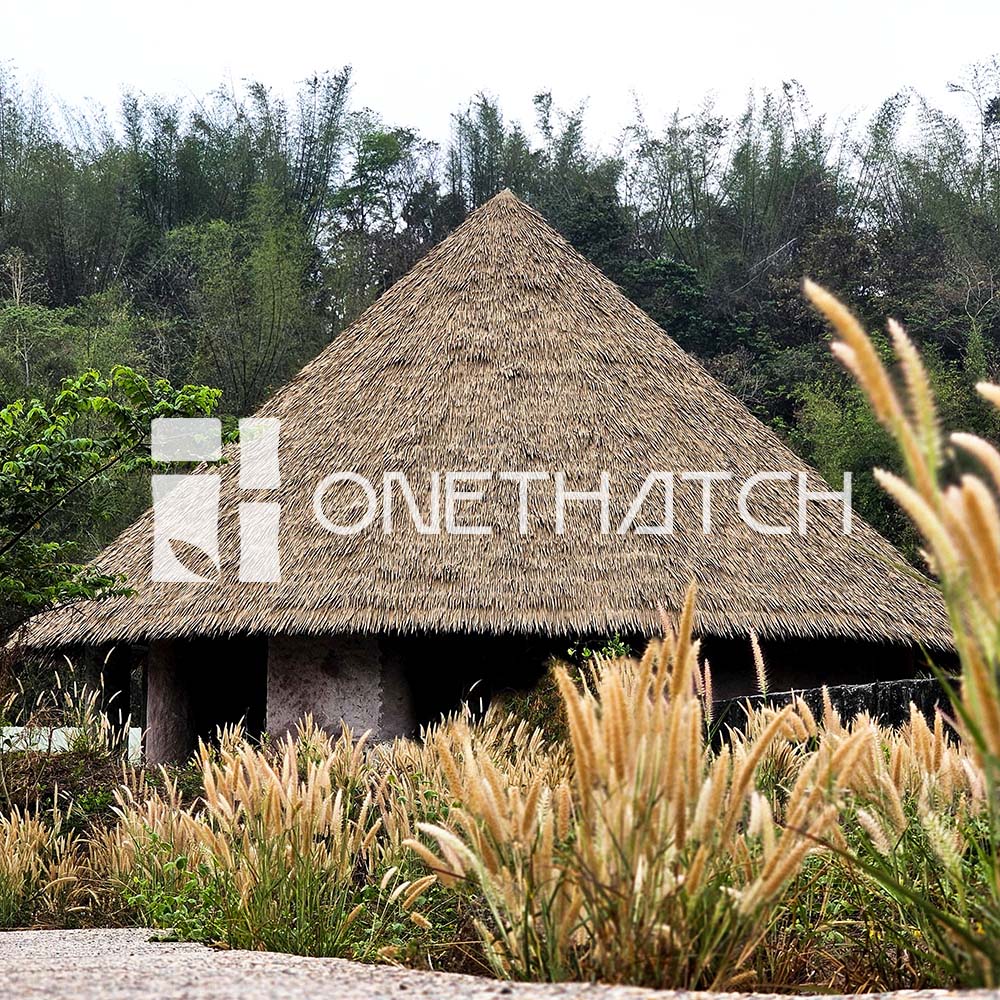
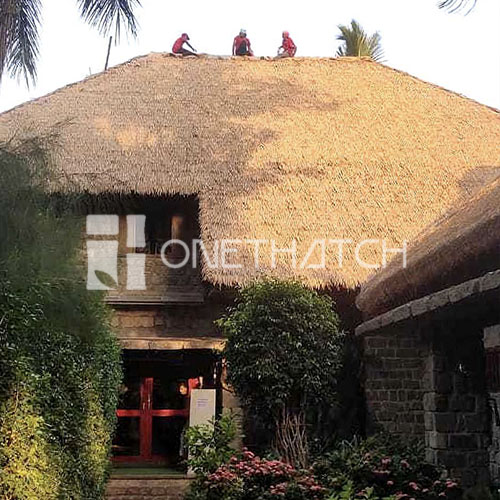
A palapa roof is part of the soul of the Mexican coast. ONETHATCH PALM (RAINCAPE) recreates it for resorts and homes in Cancún, Playa del Carmen, Tulum and across the Riviera Maya, without the cycle of drying, rotting and replacement that natural palm leaves go through.
Known locally as palma sintética or techo de palapa artificial, this synthetic thatch roofing is moulded from casts of real palm leaves in high-density polyethylene (HDPE). It captures the woven, rain-cape texture of traditional Mexican thatch, with the colour compounded through the material so its warm tones hold under the Caribbean sun.
Why ONETHATCH PALM Suits Resorts and Villas in Mexico
Whether you are building a beachfront eco-resort in Cancún or remodelling a casa de playa in Tulum, ONETHATCH PALM (RAINCAPE) delivers:
- ✅ Tested for the tropics: passed 5,000 hours of ASTM G155 accelerated weathering (Micom Laboratories, Canada) with no significant colour change
- ✅ 20-year limited warranty: no more replacing the roof every few years, as with natural palma
- ✅ Fire performance where you need it: the FR version is rated Class A to ASTM E108 for commercial hospitality projects; the NFR version carries no fire rating
- ✅ Low maintenance: HDPE does not rot, so there is no rethatching cycle
- ✅ Open-frame installation: no solid deck or membrane needed when installed to specification
- ✅ Fast supply: made to order in under 7 days for 3,000 m²
We supply boutique projects and large resort developments alike, shipping direct from our own factory to Cancún and the rest of Mexico.
Explore further:
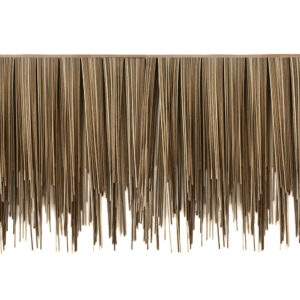
RAINCAPE is the ONETHATCH PALM style modelled on palm-leaf rain capes woven by hand: a layered, interlaced texture that gives a Mexican palapa roof its character. Sometimes called Mexican raincape thatch, it is a synthetic Mexican palm thatch that keeps this look in HDPE instead of fresh palm leaves, which need rethatching every few years.
No. ONETHATCH makes moulded palm thatch panels rather than a thatch roll or runner. Each 980 × 670 mm panel is screwed to the battens through its own binder strip, course by course, for an even, layered depth, and installed to specification it needs no solid deck behind it. If you have been pricing a Mexican palm thatch runner or an artificial palm thatch roll, ask for a free sample panel and compare the detail for yourself.
No. Installed to specification, ONETHATCH PALM (RAINCAPE) needs no solid deck or membrane, so it goes straight onto open battens and the palapa keeps its light, airy underside. Lay the courses at 220 mm (9 in) spacing, about 4.9 panels per m², on a roof pitch of at least 18° (about 4:12).
Yes. Specify the FR version, rated Class A to ASTM E108 (Intertek report 220927005SHF-001), where the local code or your insurer requires a fire-rated roof covering; the standard NFR version carries no fire rating. Near kitchens and grills, the designer must also address appliance clearances and local fire requirements.
It can be, provided the whole palapa is designed for it: on the Riviera Maya, the frame, batten spacing and fixings must be engineered for local wind loads. RAINCAPE panels are fixed with stainless roofing screws through the moulded binder strip. The published wind test is for the NIPA style in the same range, which showed no loss of attachment at 160 mph (260 km/h) in ASTM D3161 testing at PRI, a laboratory result rather than a site design wind speed.


 English
 Japanese
 Arabic
 Spanish
 French
 Portuguese
 Italian
 German
 Chinese (China)
 Thai
 Vietnamese
 Indonesian
 Korean
 Chinese (Taiwan)
 Russian
Reviews
There are no reviews yet.