

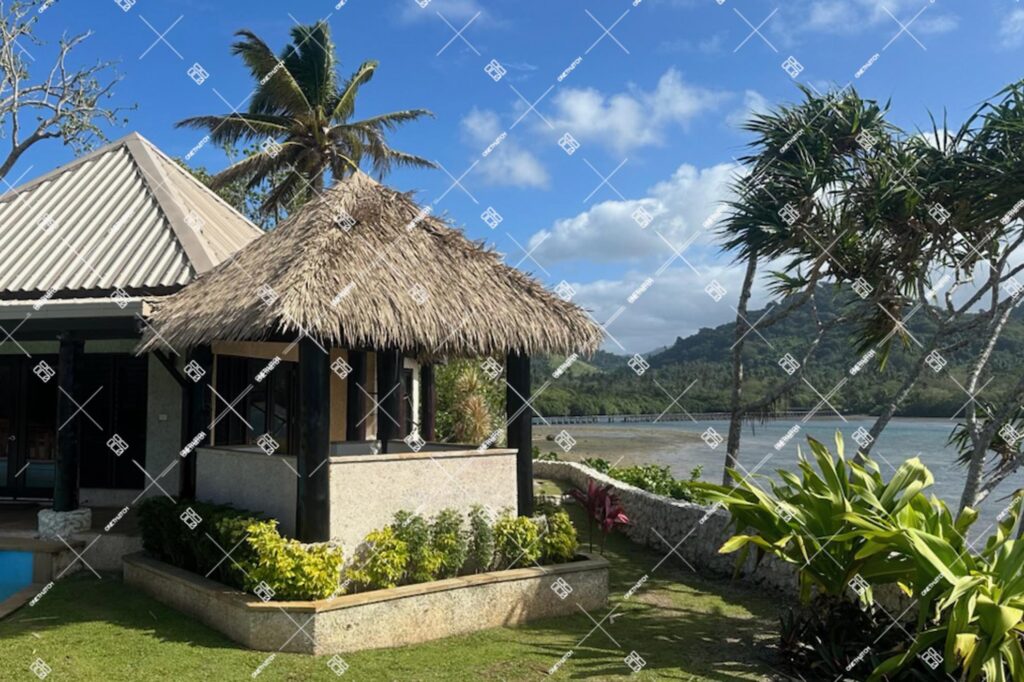
Is Synthetic Thatch Fire-Resistant?
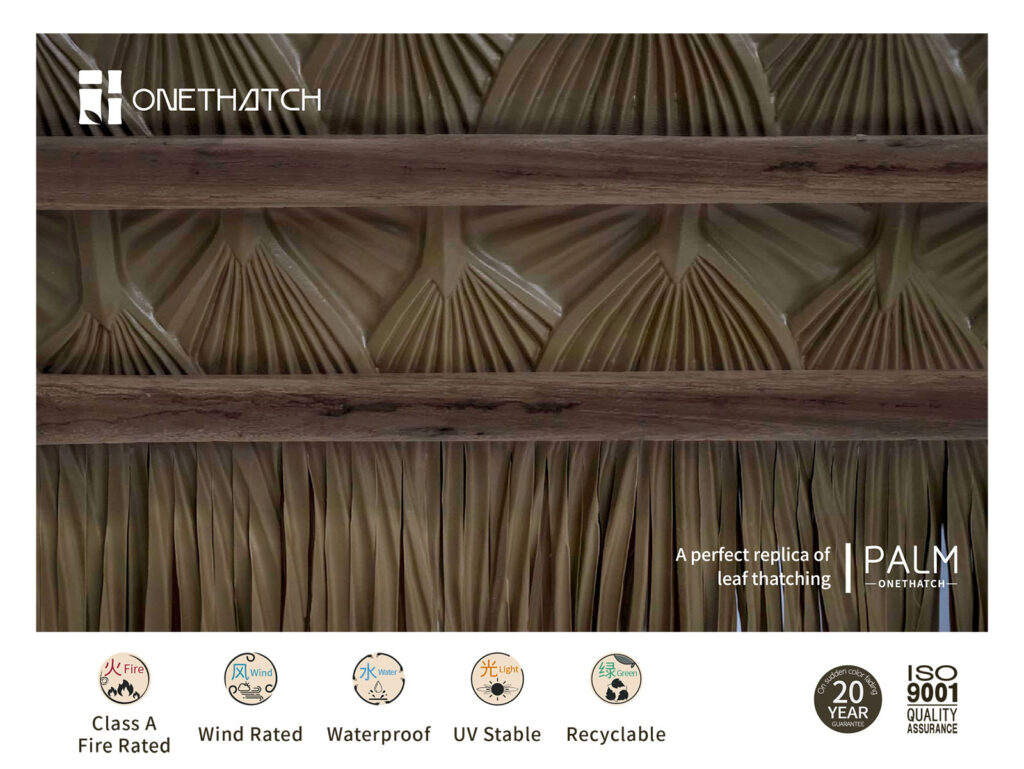
It depends on the product: only a tested product should be called fire-resistant. Fire-rated (FR) synthetic thatch is made with flame-retardant material and tested to a roofing fire standard; non-rated (NFR) synthetic thatch is not. The FR version of ONETHATCH PALM is rated Class A to ASTM E108, the highest fire class for roof coverings (Intertek report 220927005SHF-001).
This is the most common question we hear from resort owners, architects and insurers, because natural palm and grass thatch burns readily and is often restricted by fire authorities. Synthetic thatch fire-rated to Class A (the FR version) lets resorts, restaurants, theme parks and palapa bars keep the thatched look with a documented fire rating.
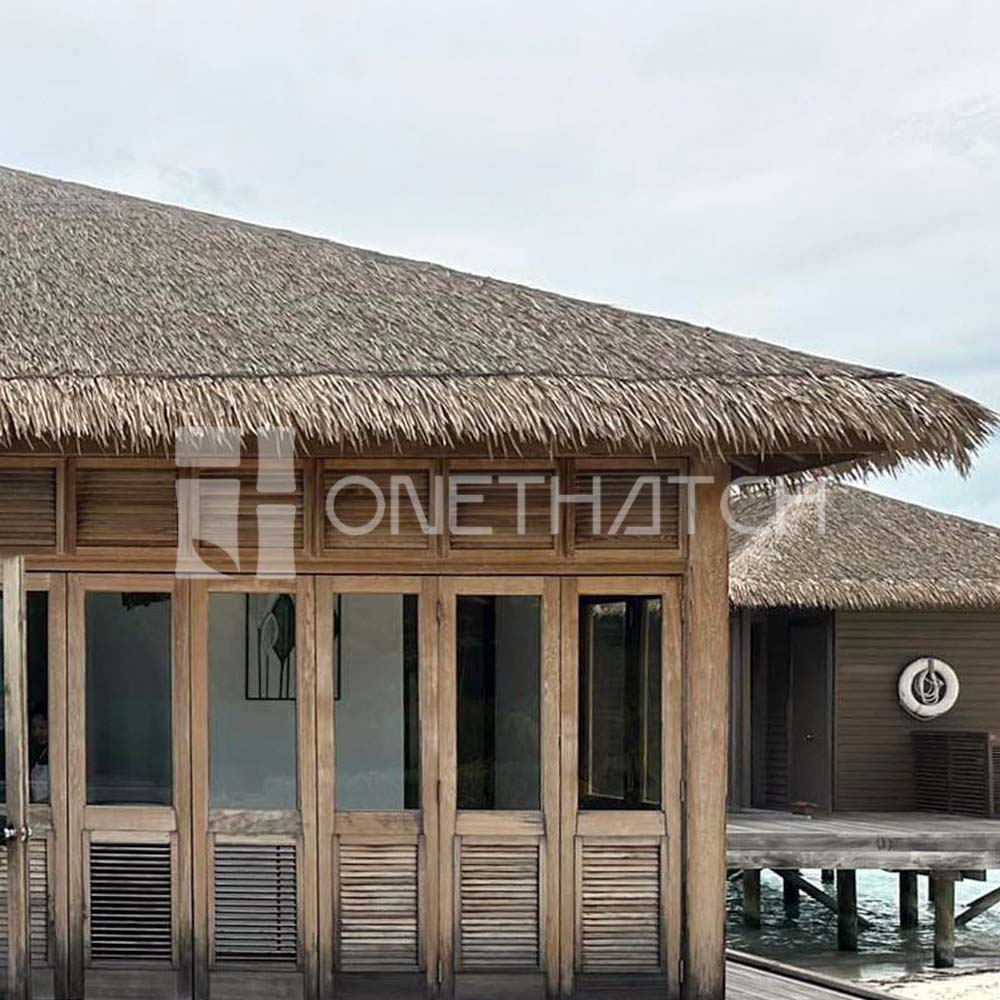
What Does Class A Fire Rated Mean?
ASTM E108 (equivalent to UL 790) is the standard fire test for roof coverings in the United States. It classifies roof coverings as Class A, B or C, and Class A is the highest rating: the roof covering is effective against severe fire exposure.
A fire rating applies to the product and assembly that were tested. When you compare products, ask for the test report itself and check the standard, the class, the laboratory, the report number and which version of the product was tested. For ONETHATCH, the Class A rating applies to the FR version of ONETHATCH PALM, and the report is available for your permit and insurance submissions.
Synthetic Thatch vs Natural Thatch
| Feature | Natural thatch (palm or grass) | ONETHATCH PALM, FR version |
|---|---|---|
| Fire | Burns readily; needs repeated fire-retardant spraying | Class A to ASTM E108 (Intertek) |
| Fire documentation | Usually none | Test report available for permit and insurance submissions |
| Re-thatching | Every few years in tropical climates | None; 20-year warranty |
| Colour in the sun | Bleaches to grey | Passed 5,000 h ASTM G155, no significant colour change |
| Maintenance | Pest and fire-retardant treatments | Occasional rinse |
Why Resorts and Restaurants Choose Fire-Rated Synthetic Thatch
- Documented fire rating. A Class A report gives fire authorities and insurers something concrete to review, with documentation available for project review.
- Guest and staff safety. Restaurants, bars and villas often have cooking, heaters, candles and torches close to the roof, so a fire-resistant roof covering such as FR artificial thatch matters.
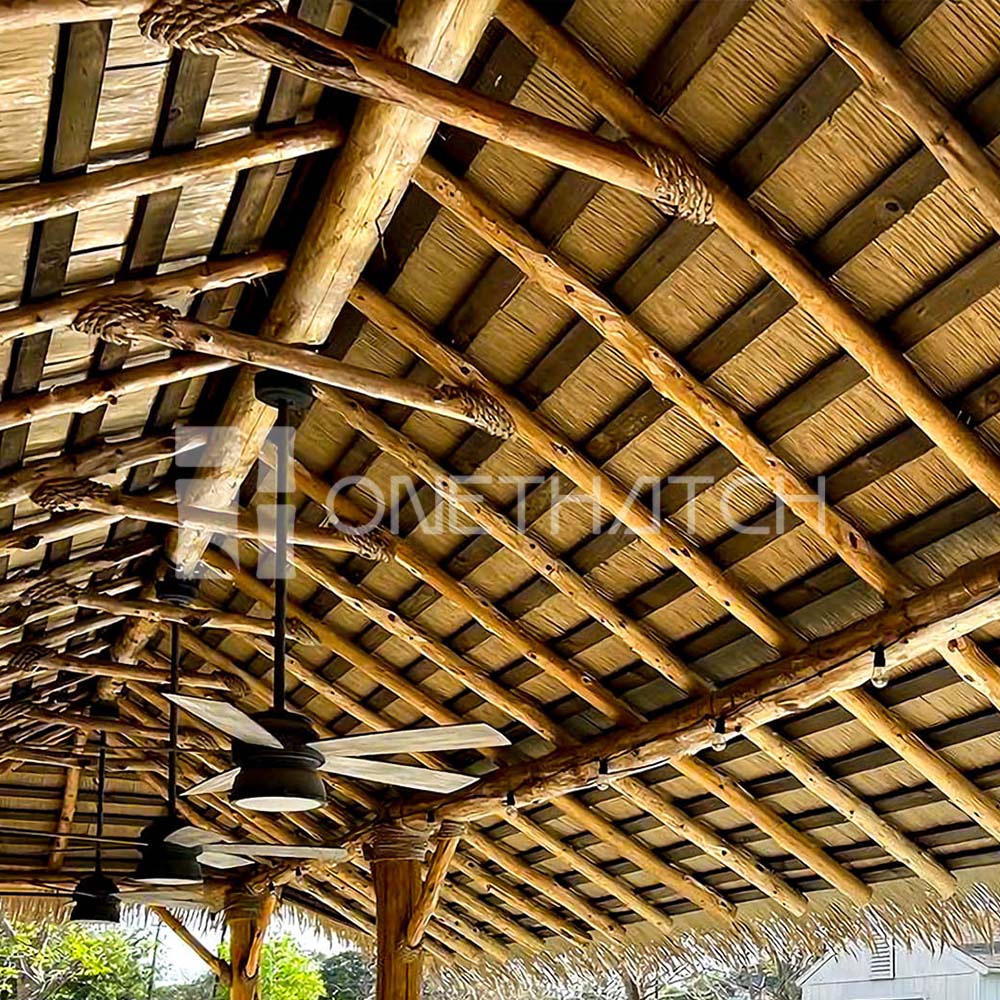
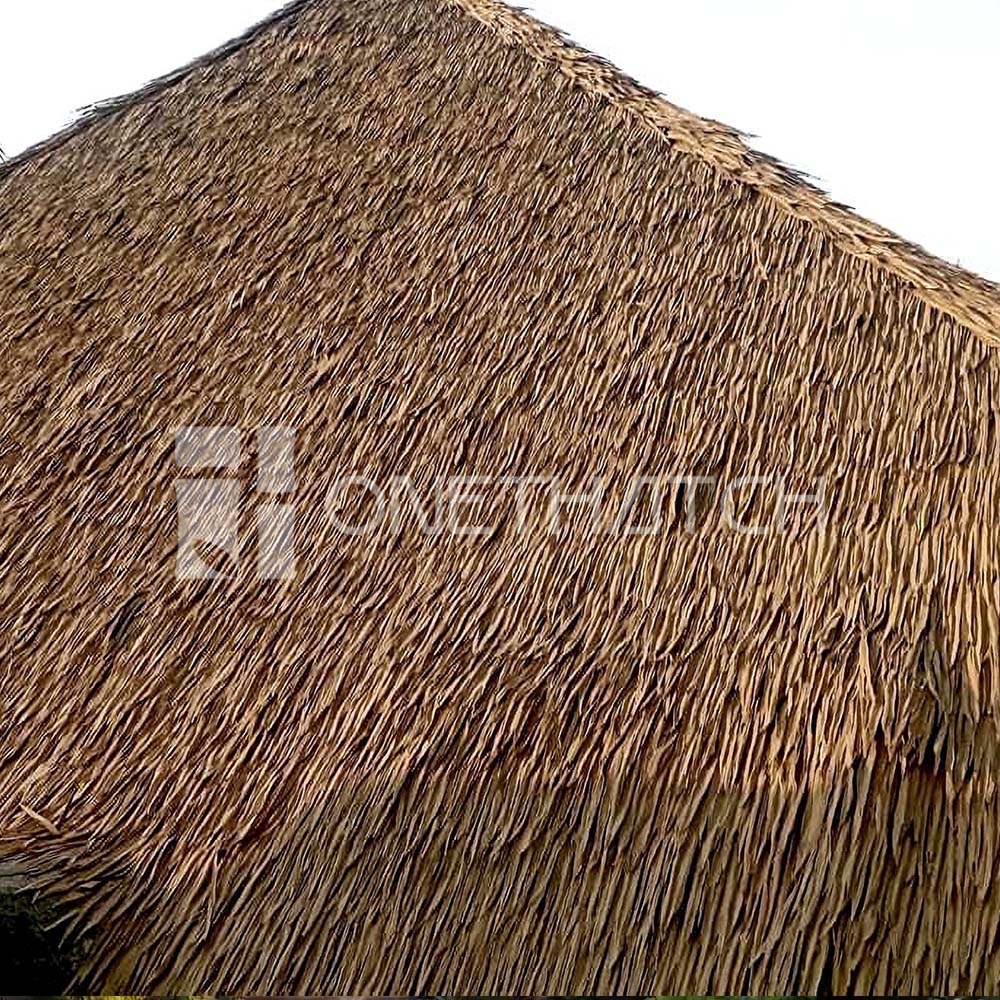
- The look guests expect. Keep the tropical palapa thatch look without the risk of a leaf roof.
- Lower running costs. No re-thatching and no repeated fire-retardant spraying; a 20-year warranty covers UV degradation, fading and structural failure.
- Material. An eco-friendly choice: PVC-free, recyclable HDPE made in a solar-powered factory.
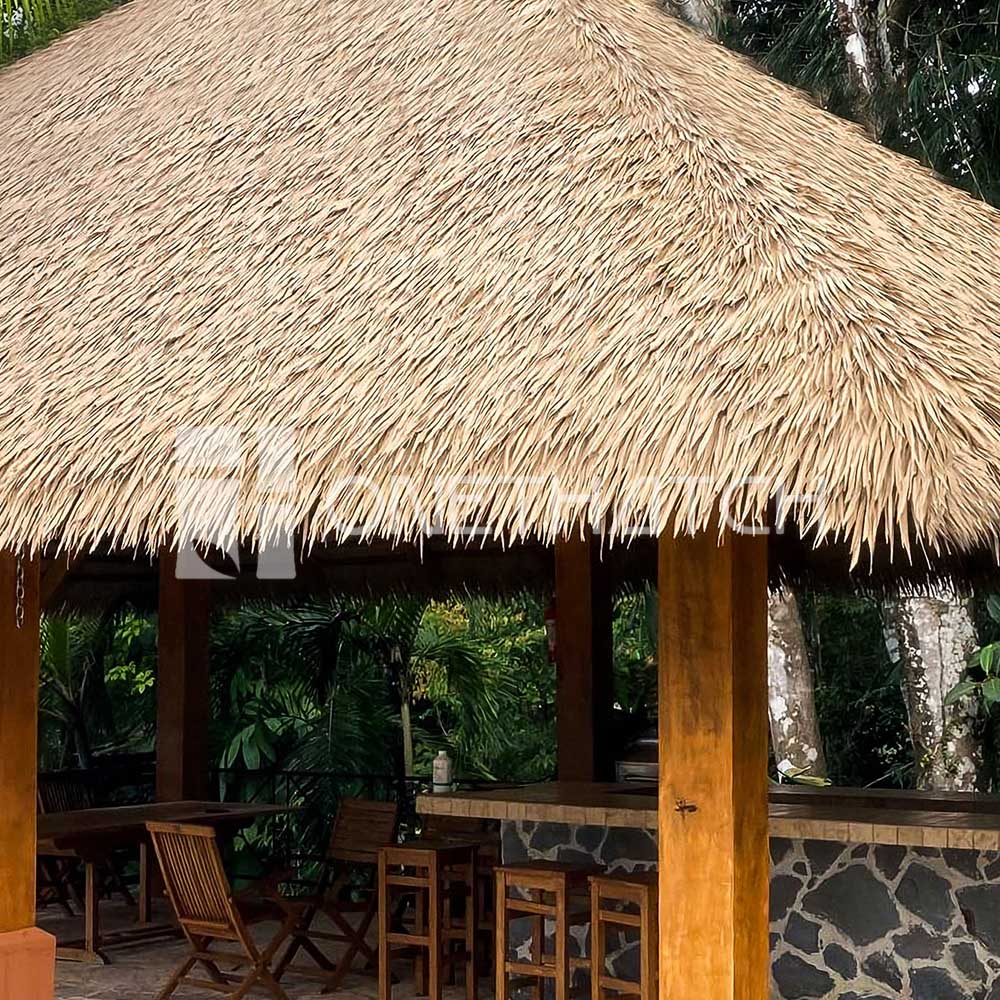
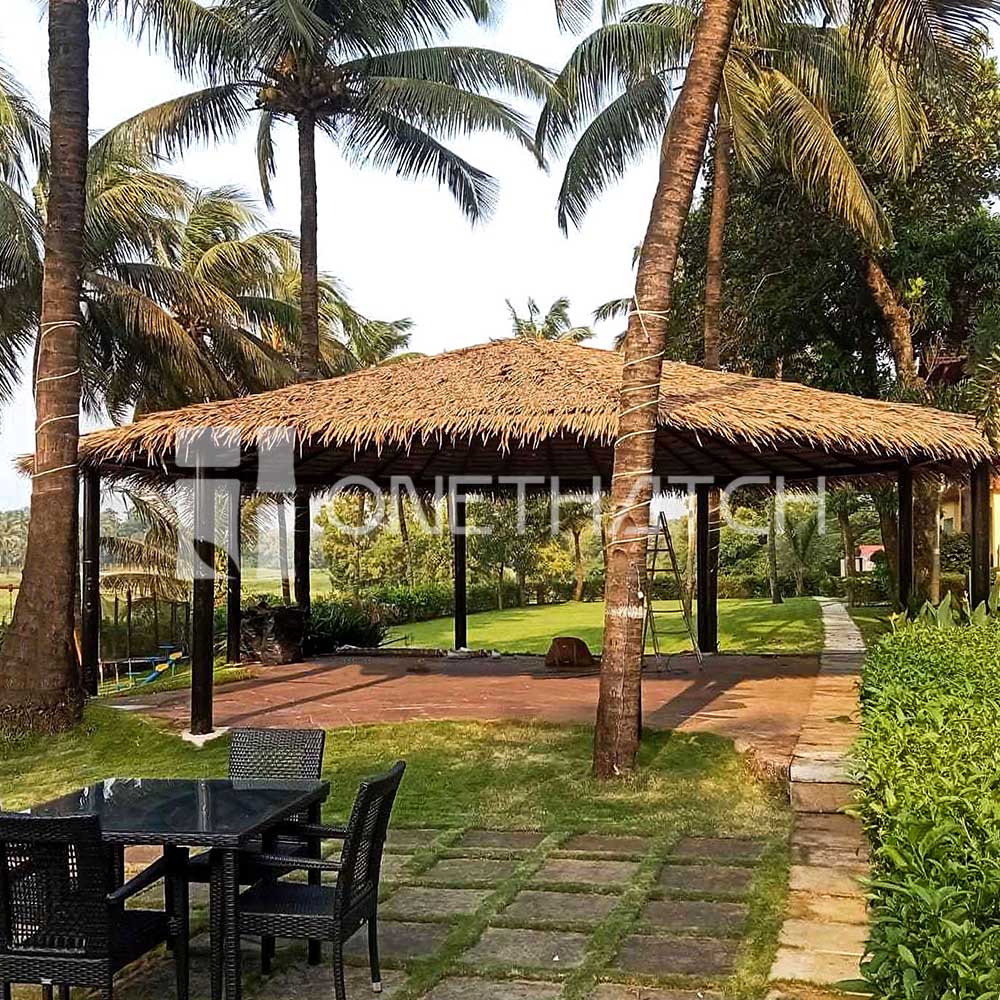
Applications for Class A Fire Rated Synthetic Thatch
- Palapas and beach bars: the classic island look of thatched roofs, with a documented fire rating.
- Resort villas, cabanas and bungalows: roofs over guest rooms, where fire safety matters most.
- Restaurant roofs: thatched dining pavilions and outdoor kitchens.
- Theme parks and waterparks: themed roofs over queues, shops and food outlets.
- Hotels, eco-lodges and tourism developments: any commercial project where the fire authority reviews the roof covering.
How to Choose a Fire-Rated Synthetic Thatch
- Ask for the test report. Check the standard (ASTM E108), the class (A), the laboratory, the report number and which product version was tested.
- Talk to your fire authority and insurer early. Confirm what they need to see for your project and location.
- Check the warranty scope. Look for a written warranty and what it covers; ONETHATCH PALM carries 20 years covering UV degradation, fading and structural failure.
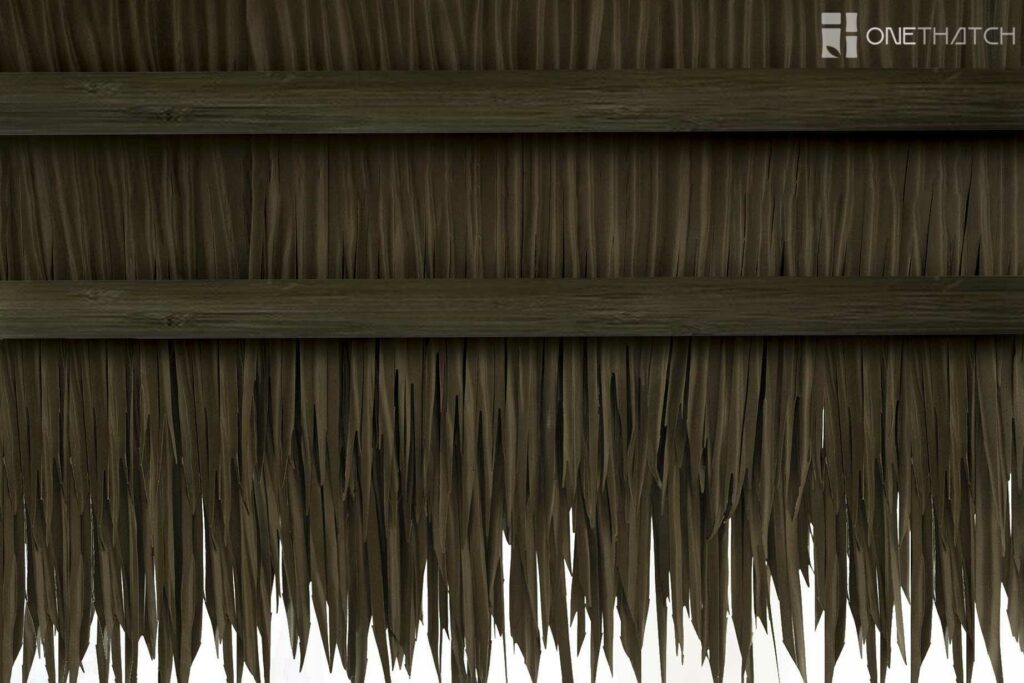
- See a sample. Compare the texture and colour with the look you want.
- Install to specification. Fix the panels with stainless roofing screws as the manufacturer specifies, so the roof performs as tested. Compare styles in our synthetic palm thatch range.
The Bottom Line
If you are planning a resort villa roof, a restaurant renovation or a palapa bar, the question to ask is not just “is it synthetic?” but “is it fire-rated, and can you show me the report?”. The FR version of ONETHATCH PALM is rated Class A to ASTM E108, carries a 20-year warranty and is moulded from real palm leaves. Send your roof drawings or photos through our commercial enquiry form and our engineer will calculate the quantities.
FAQ
Is synthetic thatch fire-resistant?
Only the fire-rated versions. The FR version of ONETHATCH PALM is rated Class A to ASTM E108 (Intertek report 220927005SHF-001). An NFR version, with no fire rating, is also available where no rating is required.
Why do insurers and fire authorities ask for a test report?
A report shows which standard the roof covering was tested to and the class it achieved, so they can assess the risk. Requirements vary by country and insurer, so confirm them early in the project.
How long does synthetic thatch last compared with natural thatch?
Natural palm or grass thatch has to be re-thatched every few years in tropical climates. ONETHATCH synthetic thatch carries a 20-year warranty; for ONETHATCH PALM it covers UV degradation, fading and structural failure.
Can fire-rated synthetic thatch be used for commercial projects?
Yes. Resorts, restaurants, hotels and theme parks use it; see synthetic thatch roofing projects in Costa Rica, the Maldives, Mexico and the Caribbean.
How is ONETHATCH PALM (NIPA) installed?
The panels are fixed in overlapping courses to battens with stainless roofing screws, never nails or staples. See our ONETHATCH PALM (NIPA) installation guide.

