

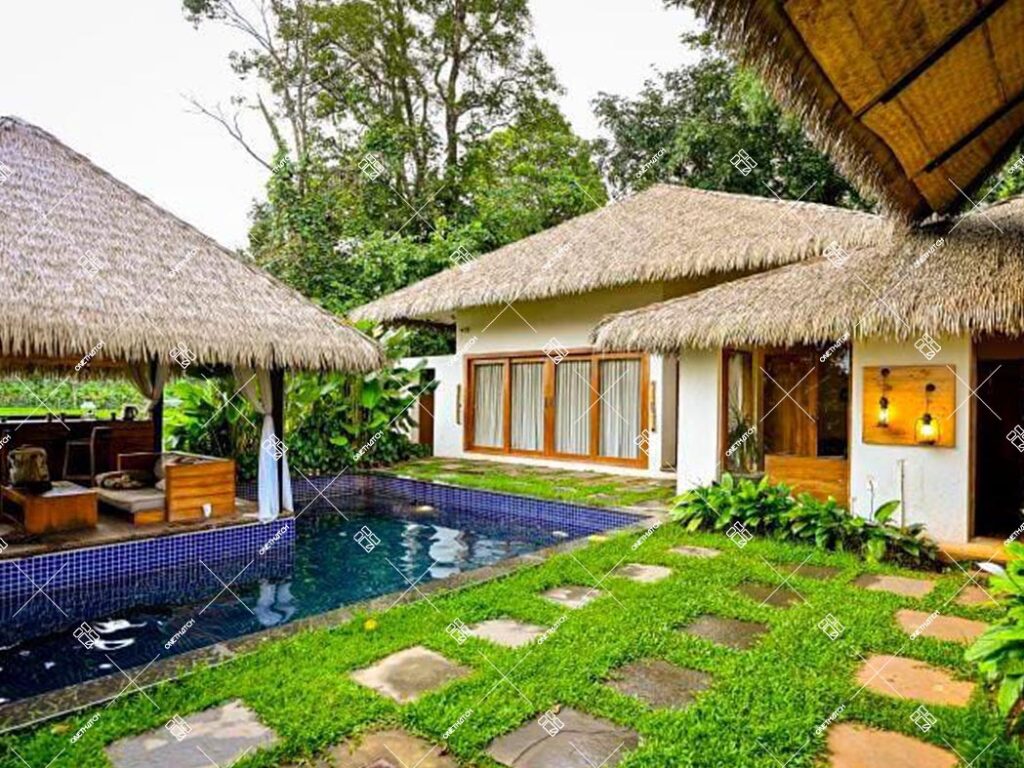
A kajan roof (also written cadjan) is the woven coconut-palm thatch that gives Maldivian resorts their island look. It is beautiful, but natural kajan has to be re-thatched often, burns readily and hosts insects and mould. That is why many luxury resorts and developers in the Maldives now specify synthetic palm thatch instead: it keeps the kajan look, the fire-resistant FR version is rated Class A to ASTM E108, and ONETHATCH synthetic thatch carries a 20-year warranty.

What Is a Kajan Roof?
Kajan is made from coconut palm leaves that are split, woven into flat thatch panels and tied in overlapping rows onto a timber roof frame. In the Maldives the woven thatch is called fangi, and weaving it is known as fangi vinun, a craft still practised on many islands. The craft is passed down within island communities, and a well-made kajan roof is part of the architectural identity of the Maldives, Sri Lanka and southern India.
The same material is sold under other names, including cadjan, traditional kajan roofing, coconut leaf roofing, palm weave roofing and beach hut thatch.
Why Traditional Kajan Roofs Need Frequent Replacement
A resort roof in the Maldives faces some of the harshest conditions a natural material can meet:
- Equatorial UV. Sun dries the leaf, bleaches it grey and makes it brittle.
- Salt air and monsoon rain. Wet leaf that cannot dry out quickly starts to rot and grow mould.
- Insects, birds and rodents. Organic thatch is food and nesting material, so it usually needs pest treatment.
- Fire. Dry palm leaf ignites easily, a real concern above restaurants, bars and villas with guests inside.
For an operating resort this means re-thatching cycles, closed villas while the roof is replaced, and recurring labour and material costs.

Natural Kajan vs ONETHATCH Synthetic Thatch
| Feature | Natural kajan | ONETHATCH synthetic thatch |
|---|---|---|
| Material | Coconut palm leaves, woven by hand | UV-stabilised, recyclable, eco-friendly HDPE moulded from real palm leaves |
| Re-thatching | Every few years, sooner on exposed sites | None; 20-year warranty |
| Fire | Burns readily | FR version rated Class A to ASTM E108 (Intertek) |
| Colour in the sun | Bleaches to grey | Passed 5,000 h ASTM G155 with no significant colour change (Micom Laboratories, Canada) |
| Wind | Depends on tying and condition | ONETHATCH PALM (NIPA) tested with no loss of attachment to 160 mph (260 km/h), ASTM D3161 |
| Pests and mould | Needs treatment | No plant material to feed on; HDPE does not rot |
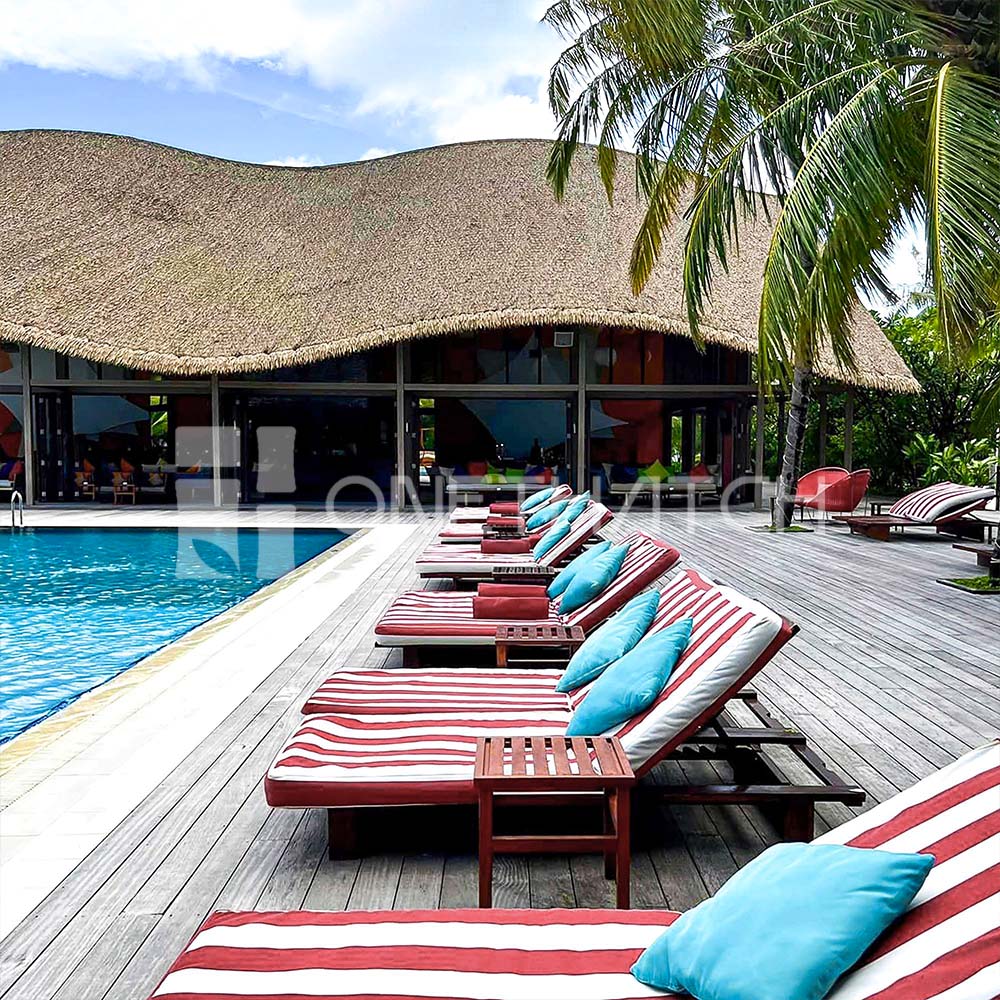
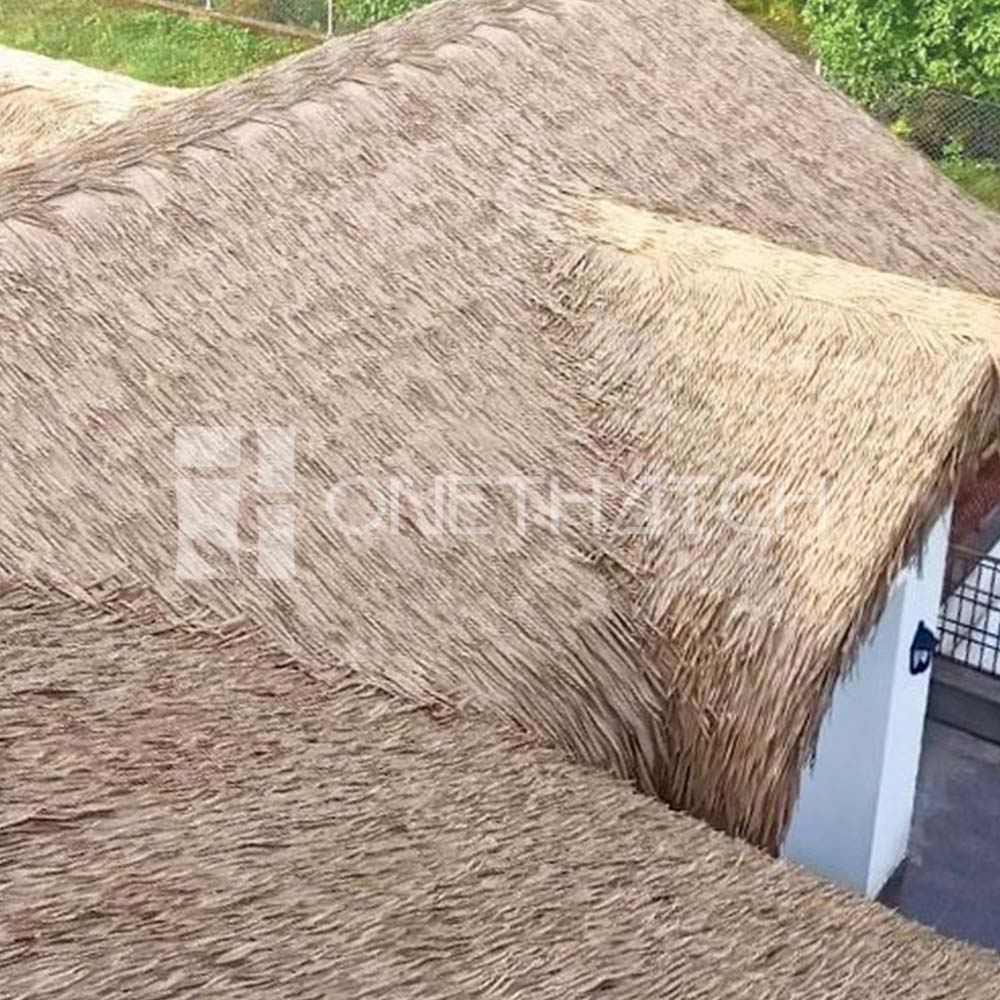
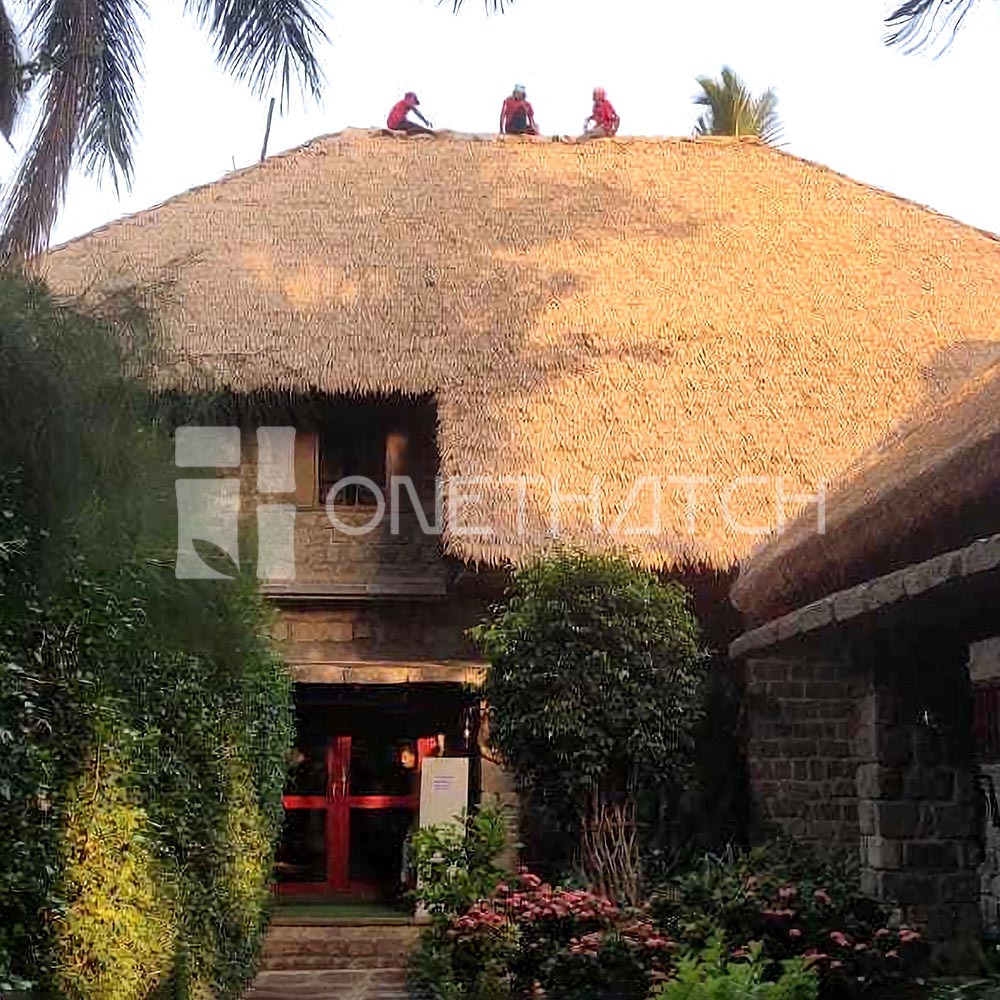
ONETHATCH synthetic thatch is moulded from real palm leaves, so from the beach or the jetty it reads as a natural leaf roof. The FR version of ONETHATCH PALM is rated Class A to ASTM E108 (Intertek report 220927005SHF-001), the highest fire class for roof coverings. ONETHATCH PALM (NIPA), installed with stainless roofing screws to ONETHATCH specifications, was tested with no loss of attachment up to 160 mph (260 km/h) using the ASTM D3161 fan method at PRI Construction Materials Technologies.
Where Maldives Resorts Use Synthetic Thatch Roofing
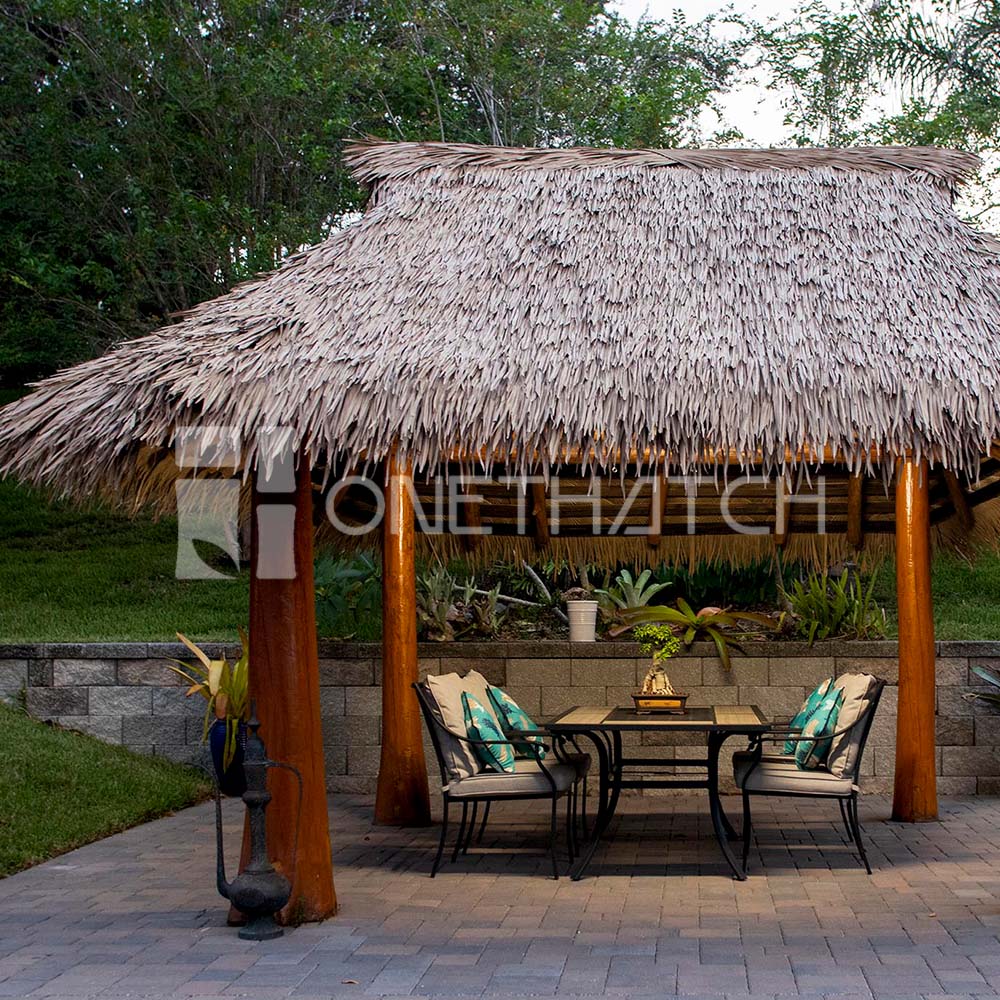
- Overwater villas and beach villas, where re-roofing means taking a room out of sale.
- Open-air restaurants and pool bars, where a fire-rated roof (the Class A FR version) supports the fire-safety case.
- Spa pavilions and yoga decks, which need a quiet, natural look without pest treatment.
- Arrival jetties and beach pavilions, the most exposed roofs on the island.
For a kajan look we usually recommend ONETHATCH PALM (NIPA): its fine, layered leaf matches woven coconut thatch from the ground. See also what engineered thatch is and how it is made and what a Class A fire rating means for resort roofs.

Ordering Synthetic Thatch for a Maldives Project
- Samples in Malé. ONETHATCH samples are held in Malé, so your architect and operator can see and handle the panels before ordering.
- Stock and lead time. ONETHATCH PALM (NIPA) is held in stock; production lead time is 1–2 weeks.
- Shipping. Orders under about 200 m² go by courier; larger projects go by sea freight.
- Quantities. Send your roof drawings, photos or roof area, and our engineer will calculate the panels you need, including hip and ridge.
More detail on local supply is on our synthetic thatch for the Maldives page, or send your project details through our commercial enquiry form.
 English
  Japanese
  Arabic
  Spanish
  French
  Portuguese
  Italian
  German
  Chinese (China)
  Thai
Thai  Vietnamese
  Indonesian
  Korean
  Chinese (Taiwan)
  Russian