

A thatched roof is a promise to your guests: shade, character, a sense of being somewhere special. The material underneath decides whether that promise holds.
There is no single best synthetic thatch for every project. There is a best synthetic thatch for yours, and you can find it by asking five questions: what is it made of, what has it been tested for, what does the warranty actually cover, who makes it, and how does it look in your hand. This guide walks through each one, so you can compare suppliers on evidence rather than adjectives.
What should synthetic thatch be made of?
Start with the resin, because everything else follows from it.
Virgin HDPE (high-density polyethylene). Tough, flexible, and naturally stable outdoors when it carries a proper UV package. Virgin means new resin, not mixed regrind of unknown history.
No mineral filler. Some makers add powdered mineral (think chalk) to cut cost and stiffen the leaf. It saves money on day one, but plastic expands and contracts with heat, and a filled, stiff leaf can crack around its fixings. ONETHATCH thatch has no mineral filler, so each panel stays soft and supple.
Colour compounded through. The colour should run right through the material, not sit on the surface as paint that sand and rain can wear off.
A real UV stabiliser system. UV light is what ages plastic outdoors. Ours was developed with BASF’s light-stabiliser laboratory in Shanghai.
PVC-free and recyclable. ONETHATCH synthetic thatch is PVC-free and 100% recyclable, made in a solar-powered plant.
HDPE vs PVC, nylon and metal: how the materials compare
| Material | Strengths | Watch-outs |
|---|---|---|
| Virgin HDPE, no filler (ONETHATCH) | Flexible, UV-stabilised, PVC-free, 100% recyclable; natural texture moulded from real leaves | Needs a proper UV package: ask for the weathering standard, lab and report number |
| PVC | Easy to mould and colour | Contains chlorine; flexible PVC relies on plasticisers that can migrate out over time, leaving the leaf stiff and brittle; burning PVC releases hydrogen chloride gas; hard to recycle |
| Nylon (PA) | Strong fibre | Absorbs moisture; outdoor colour and strength depend on its UV stabilisation, so ask for test data |
| Aluminium or metal thatch | Non-combustible, rigid | Reads as metal up close, heats up in the sun and can drum in heavy rain; a very different look and feel from leaf |
| Natural palm and Mexican thatch | Authentic texture on day one | Dries, frays and sheds; needs re-thatching every few years plus insect, mould and fire treatments |
For a roof guests sit under, HDPE gives the best balance of natural look, flexibility and peace of mind.
The tests to ask for, and the report numbers behind them
Any supplier can say “UV resistant” or “built for hurricanes”. Ask for the report number, the lab and the standard. Here is what each test proves, and the result ONETHATCH states for each, named by standard, lab and report number.
| Question | Standard | What it proves | ONETHATCH result |
|---|---|---|---|
| Will the colour hold in the sun? | ASTM G155 accelerated weathering | Colour change after hours of intense UV, heat and moisture | 5,000 h, no significant colour change (Micom MI-25-17428-1); applies to thatch, bamboo poles, panels, fencing and matting |
| Will it stay on in a storm? | ASTM D3161 | Attachment under high wind | PALM (NIPA): no loss of attachment at 160 mph (260 km/h), lab test, screwed to spec (PRI 2756T0002.1) |
| Does it shed wind-driven rain? | Florida TAS 100 | Performance in wind-driven rain | PALM (NIPA): passed |
| Is it fire rated? | ASTM E108 | Roof covering fire classification | FR version of PALM and REED: Class A (Intertek 220927005SHF-001); the standard version has no fire rating |
Two habits protect you. First, check that the report covers the exact product you are buying, not a sister product. Second, check how it was installed in the test, then install it the same way. Test results are lab results, and your frame and battens still need to be engineered for local wind loads. Our guide to synthetic thatch in hurricanes, heavy rain and building codes explains the wind and rain tests in more depth.
What a warranty should cover
A warranty is only as good as its wording. Before you sign, read it for:
- Length and type: is it a limited warranty, and for how many years? ONETHATCH thatch carries a 20-year limited warranty.
- What is covered: cracking, breaking and colour change of the base material.
- Conditions: installation to the published spec, normal use, and what voids it.
- Who stands behind it: the manufacturer, or a reseller who may not be there in ten summers.
- Product-specific terms: thatch, bamboo and fencing behave differently, so each line should have clear terms.
Samples, references and the factory behind the brand
Hold the samples. Photos flatter. Ask for free samples, bend the leaf, look at the texture in daylight and compare the colour against your timber and sand. ONETHATCH sends free samples on every line.
Know who makes it. ONETHATCH is the brand of Jinyang Industrial (Xiamen), a family manufacturer since 1996 with ISO 9001 certification. We ship to 80+ countries.
Ask for real references. Projects using ONETHATCH thatch include Kuda Rah Resort in the Maldives. Ask any supplier for named projects and photos you can verify, not anonymous testimonials.
Read reviews with a buyer’s eye. Look for owners describing the roof after several seasons, the climate it lives in and how it was installed. A review without those details tells you little.
Best synthetic palm thatch vs best synthetic reed thatch
The right look depends on the architecture, and so does the structure underneath.
Choosing the best synthetic palm thatch. For palapas, tiki bars, beach umbrellas and tropical resorts, ONETHATCH PALM comes in three looks from one 980 × 670 mm panel: RAINCAPE (Mexican rain-cape palapa), NIPA (neat, close-layered nipa/atap) and FAN (rugged fan palm). It screws onto open battens at 220 mm (9 in) courses, needs no solid deck or membrane when installed to spec, and PALM (NIPA) is held in stock.
Choosing the best synthetic reed thatch. For the Cape reed, water reed or lapa look, ONETHATCH REED uses 1000 × 500 mm panels at 200 mm (8 in) spacing over a solid sub-deck, with eave, starter, field, hip and ridge pieces, in Sundried and Aged finishes. Made to order.
Grass and straw looks. STRAW (BALI, CARIBBEAN, TAHITIAN) gives the alang-alang and island-grass look over a solid sub-deck.
Choosing the best artificial thatch roof for a public building. If guests, heaters or kitchens are nearby, specify the FR version (ASTM E108 Class A for PALM and REED) from the start. More in our guide to Class A fire-rated synthetic thatch.
Natural thatch vs synthetic: what you no longer have to do
Natural Mexican thatch, palm-frond shades and grass roofs carry real craft, and real upkeep. A natural roof needs a thatch sealer or preservative to slow rot and insects, fire-retardant treatments that wash out in the rain, and re-thatching every few years.
Synthetic thatch skips all of that. No thatch sealer, no spray treatments, no re-thatching cycle. An occasional rinse keeps it fresh. The same holds for Asian-style roofs on bamboo houses and garden pavilions: the alang-alang or nipa look, without the decay.
Sustainability and LEED projects
ONETHATCH synthetic thatch is PVC-free, made without mineral filler, 100% recyclable and produced in a solar-powered plant. If your project is pursuing LEED, ask your supplier early for the material documentation your consultant will need.
Your best synthetic thatch checklist
- Virgin HDPE, no mineral filler, colour compounded through, PVC-free.
- Named UV stabiliser system.
- Weathering test: hours, standard, lab and report number.
- Wind and wind-driven rain results for the exact product, with the lab, the report number and the tested installation method.
- Class A FR option where fire safety matters.
- Written, limited warranty from the manufacturer.
- ISO 9001 manufacturer with a track record and named references.
- Free samples in your hand before you order.
FAQ
What is a thatched roof?
A thatched roof is a roof covered in layers of plant material, such as palm leaves, reed or straw, laid in overlapping courses to shed rain. Synthetic thatch recreates that look with moulded panels, so you get the texture without the rot, insects and re-thatching.
What is the best synthetic thatch for a resort?
The best synthetic thatch for a resort is virgin HDPE with no filler, backed by named tests for weathering, wind and fire (standard, lab and report number), and a written warranty. ONETHATCH PALM and REED meet those criteria, with a Class A FR version for public spaces.
Is HDPE or PVC better for synthetic thatch?
HDPE. It stays flexible without plasticisers, is PVC-free and 100% recyclable, and with a proper UV package holds its colour outdoors. PVC relies on plasticisers that can migrate out, leaving the leaf stiff and brittle.
Does synthetic thatch need a thatch sealer?
No. Synthetic thatch needs no sealer, preservative or fire spray; the colour and UV protection are built into the material, and the FR version has its retardant built into the material too.
Which tests should a synthetic thatch supplier be able to name?
What matters is the named standard, the lab and the report number behind every claim: accelerated weathering (ASTM G155), wind attachment (ASTM D3161), wind-driven rain (TAS 100) and fire classification (ASTM E108 for the FR version). ONETHATCH states them for every result, as in the table above.
How should I judge synthetic thatch reviews?
Look for verifiable projects, the climate the roof lives in, how long it has been installed and how it was fixed. Then ask the supplier for samples and named references.
Choose with confidence
Ask hard questions, then hold the answer in your hand. Request free samples of ONETHATCH PALM, REED or STRAW, with the warranty terms, and see the difference for yourself. To size your roof first, read how many thatch panels you need, or contact us for samples and a quote.
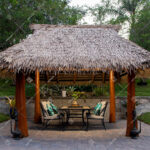 7 reasons to choose synthetic palm thatch
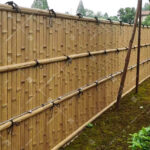 Kenninji-Gaki, the classic Japanese bamboo fence
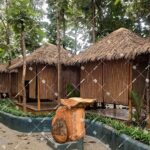 How to install ONETHATCH PALM (NIPA), step by step
 English
 Japanese
 Arabic
 Spanish
 French
 Portuguese
 Italian
 German
 Chinese (China)
 Thai
 Vietnamese
 Indonesian
 Korean
 Chinese (Taiwan)
 Russian