


A thatched roof on the coast lives a hard life. Sun all day, salt on the wind, a tropical downpour every afternoon of the rainy season, and once in a while a storm that makes every owner hold their breath.
So the question we hear most from resorts, architects and homeowners is simple: how does synthetic thatch behave in hurricanes and heavy rain? This guide answers it with the tests ONETHATCH has actually passed, explains what those tests mean and what they do not, and shows which panels go on open battens and which need a solid deck. Lifespan questions have their own guide: how long does a thatched roof last.
Can synthetic thatch withstand hurricanes?
Synthetic thatch can be tested for wind, and ONETHATCH PALM (NIPA) passed ASTM D3161 at 160 mph (260 km/h) with no loss of attachment (PRI report 2756T0002.1). That is a strong laboratory result. It is not a hurricane rating.
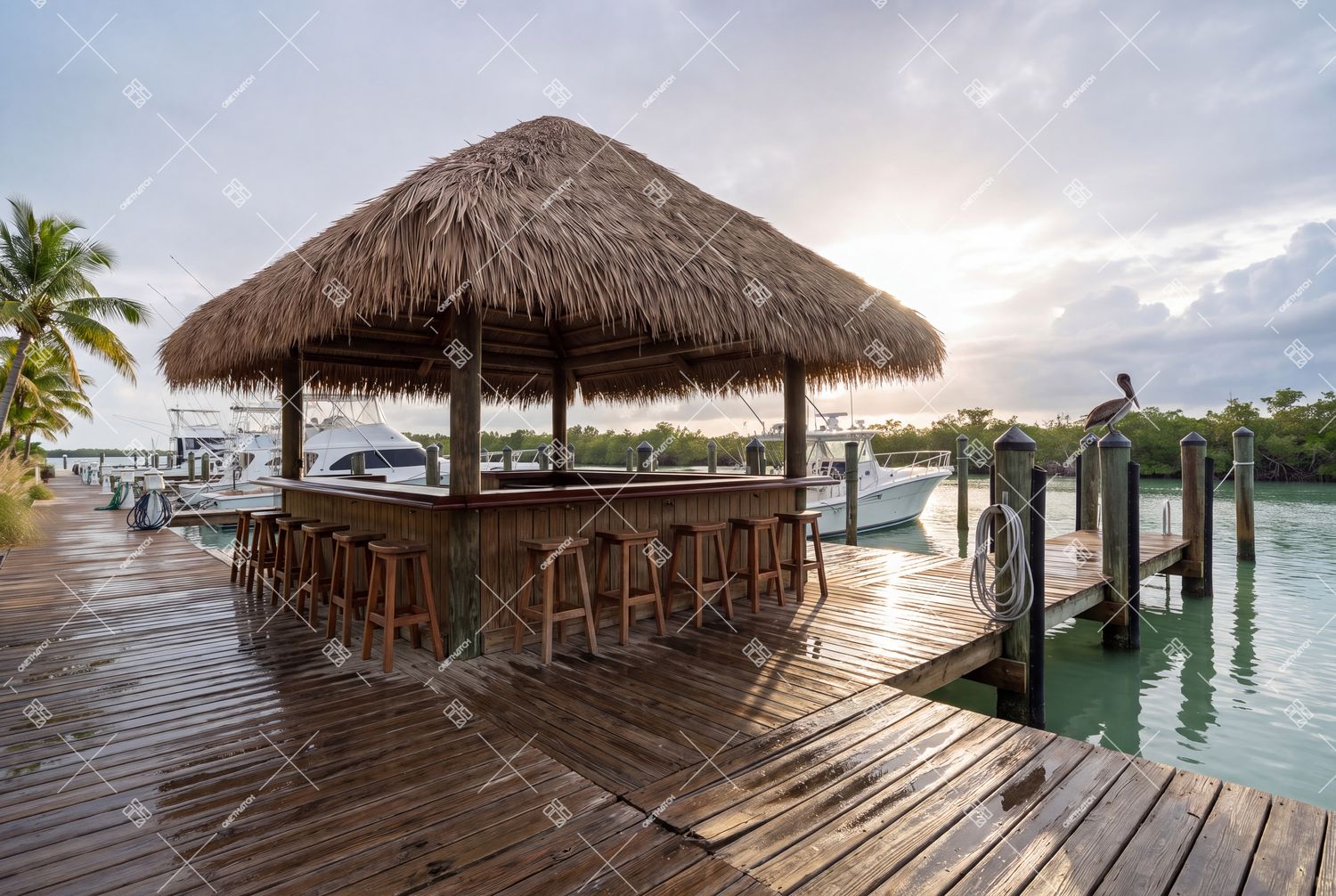
Here is the difference, in plain words.
What ASTM D3161 at 160 mph means
ASTM D3161 is a fan-induced wind test for roof coverings. A panel assembly, screwed down to specification, faces a high-speed airflow for a set time while the lab checks whether any panel lifts or detaches. PALM (NIPA) held on at 160 mph with no loss of attachment.
What it does not mean
- It is not a design wind speed for your site. Your engineer sizes the frame, battens and connections for local wind loads.
- It is not a hurricane category. A real storm brings gusts, flying debris and hours of load that a lab test does not reproduce.
- It applies to PALM (NIPA) fixed to specification with stainless roofing screws. It does not transfer to REED or STRAW, and it does not cover a frame that was never engineered for the wind.
In short: the thatch layer has been tested hard; the structure beneath it still has to be designed for your coast.
Heavy rain: what TAS 100 shows
Tropical rain rarely falls straight down. It drives sideways on the wind, straight at the eaves and up under every course.
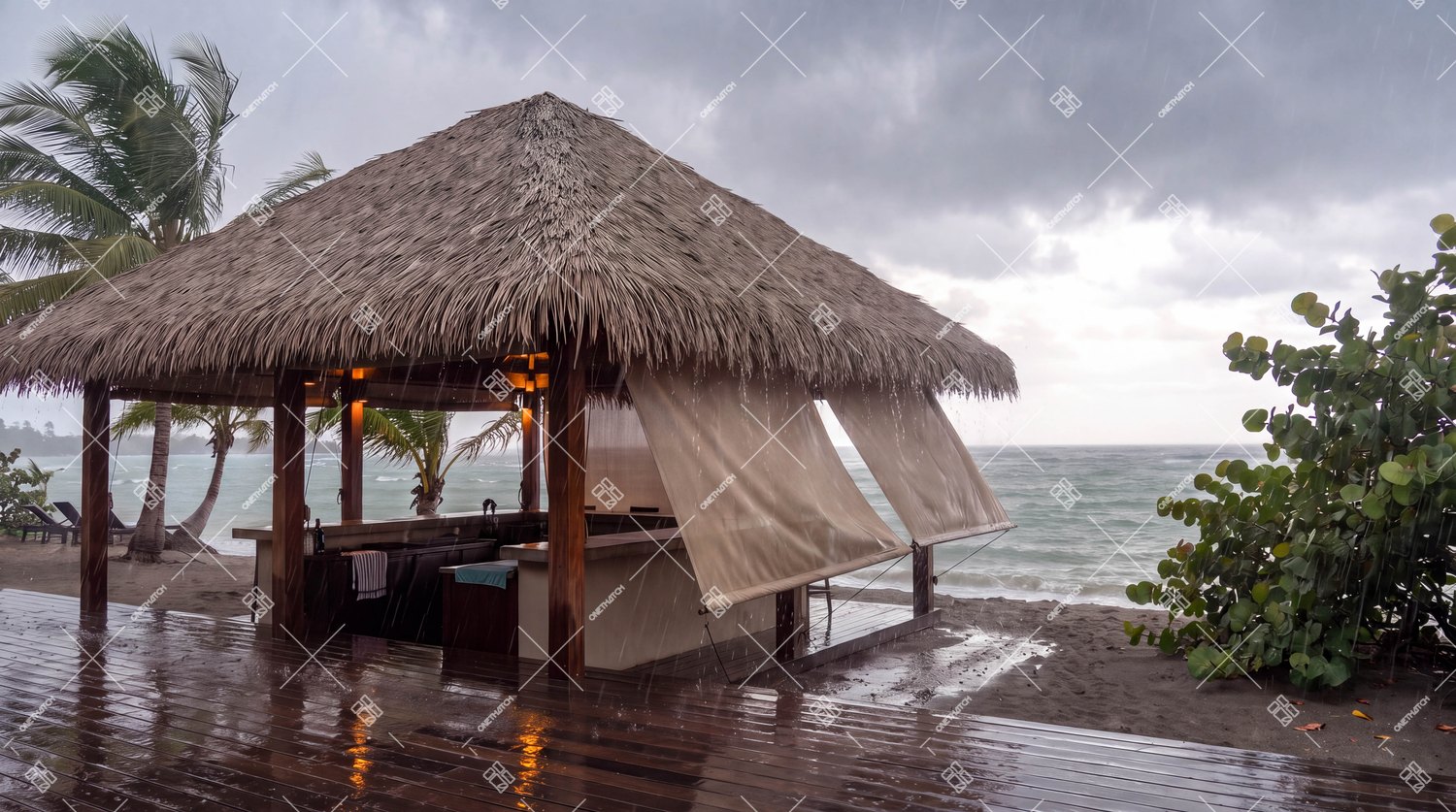
ONETHATCH PALM (NIPA) passed Florida TAS 100, a wind-driven rain test for roof coverings. Installed to specification on open battens at 220 mm / 9 in courses, PALM sheds rain through overlapping layers and pitch, the same principle a natural palm roof uses, without a solid sub-deck or membrane.
One honest note: we do not describe any thatch roof as sealed or 100% water-tight. A thatch roof sheds water. Installed to specification at the right pitch, PALM keeps the rain out of the space below; a poor pitch, missing courses or skipped screws will not.
Deck or battens? The sub-deck rule, product by product
The single most important specification on a thatch roof is what goes underneath it. Our rule is simple.
| Product family | Styles | Substrate | Spacing and coverage | Pitch |
|---|---|---|---|---|
| PALM | NIPA, FAN, RAINCAPE | Open battens | 220 mm / 9 in, about 4.9 panels per m² | 18° (about 4:12) or steeper |
| REED | Sundried, Aged | Solid sub-deck | 200 mm / 8 in, about 5 panels per m², four stainless screws per panel | From 18° |
| STRAW | BALI, CARIBBEAN, TAHITIAN | Solid sub-deck | 200 mm, about 5 panels per m² | Ask us for your roof |
PALM’s open-batten build keeps the thatched ceiling visible from below, a big part of the palapa experience, and it keeps the structure light and fast to build. REED and STRAW are moulded as finer, denser textures, and they rely on the solid deck beneath them.
RAINCAPE vs natural Mexican raincape thatch
Natural mexican raincape thatch is woven from palm leaves by skilled craftsmen and gives a palapa its unmistakable shaggy, layered skirt. It is beautiful, and it is also plant material: it thins, rots and loosens in storms, and it needs re-thatching every few years. ONETHATCH RAINCAPE gives the same woven rain-cape look in UV-stabilised HDPE, fixed course by course with stainless roofing screws to open battens, with matching ridge and hip panels.
Building codes, permits and HOAs
A synthetic thatch roof is a roof covering, and in most places it is permitted like one. What the authority asks for depends on where you build and what the building is used for.
The International Building Code and Florida
In the United States, many jurisdictions adopt the International Building Code, which sets rules for roof coverings, including fire classification and wind resistance; your local version and your engineer decide what applies. Florida adds its own layer. Florida Product Approval and the High-Velocity Hurricane Zone (HVHZ) rules in Miami-Dade and Broward ask for specific approvals. ONETHATCH does not hold Florida Product Approval or an HVHZ approval, and it does not hold UL 1897 (an uplift test for roof systems). We tell you that up front so your permit plan starts from facts. TAS 100 is a test we passed; it is not an approval.
The tribal exemption tiki hut rule
In Florida, traditional chickees built by members of the Miccosukee or Seminole tribes are exempt from the state building code. This tribal exemption tiki hut rule covers that traditional work, not a roof built by a general contractor with any manufactured material, so a synthetic thatch roof normally goes through regular permitting. Ask your building department early.
Fire and the NFPA 101 Life Safety Code
Restaurants, bars and other gathering places are often reviewed by the fire marshal under the NFPA 101 Life Safety Code and the local fire code. If fire performance matters, specify the FR version: FR PALM and FR REED are rated Class A to ASTM E108 (Intertek report 220927005SHF-001). The standard NFR version has no fire rating. More in our guide to FR synthetic thatch and ASTM E108 Class A.
HOAs and insurance
Homeowners’ associations usually care about looks and documents. Bring a sample, photos and the test summary (standard, lab and report number) to the review; the realism of the leaf texture tends to do the rest. Insurers decide cover and premium themselves; what we give you is evidence, ASTM D3161, TAS 100 and, for FR versions, ASTM E108, so the conversation starts with facts.
Heat, insulation and rain noise
Synthetic thatch is a roof covering, not insulation. On an open-batten palapa, the shade and airflow do the cooling, exactly as they do under a natural palm roof. On a closed building, insulation belongs in the structure, above or below the deck, designed by your architect. How loud rain sounds depends mostly on what is under the thatch: an open pavilion, a solid deck or an insulated roof.
The colour is compounded right through the UV-stabilised HDPE, and the panels passed 5,000 hours of ASTM G155 accelerated weathering with no significant colour change (Micom MI-25-17428-1), so the tropical sun does not bleach them grey.
Natural thatch in rain and storms
Natural thatch keeps rain out through thickness and pitch. Water runs from stem to stem down the slope, and only the top layer gets wet. That works beautifully while the thatch is thick and fresh. As leaves and reeds dry, thin and rot, the layer loses that protection, storms pull bundles loose, and the next re-thatching comes closer.
Hurricanes, rain and thatch: questions buyers ask
Can synthetic thatch survive a category 5 hurricane?
No roof covering can be honestly sold as category 5 hurricane proof; what we can show is a lab test. PALM (NIPA) passed ASTM D3161 at 160 mph (260 km/h) with no loss of attachment, screwed to specification. Whether a roof survives a storm also depends on the frame, connections and debris, so your engineer designs for local wind loads.
Does synthetic thatch keep the rain out completely?
Installed to specification, PALM sheds rain through overlapping courses and passed Florida TAS 100 wind-driven rain testing. We do not call any thatch sealed or 100% water-tight: it sheds water rather than sealing it out, which is why pitch, spacing and screws matter.
Why don’t thatched roofs leak?
Thatched roofs stay dry because water runs down the stems from layer to layer on a steep pitch, so only the outer surface gets wet. When natural thatch thins or rots, that path breaks and leaks start; synthetic panels keep their overlap and shape.
Is thatch a good insulator?
Thick natural thatch insulates well because of the air trapped in its depth. Synthetic thatch panels are thinner and are a roof covering, not insulation, so add insulation in the roof build where a building needs it.
Does a thatched roof need extra insulation?
For an open palapa, no: shade and airflow keep it cool. For a closed, heated or air-conditioned building, yes: insulate the structure as you would under any roof covering.
Is natural reed (carrizo) water-resistant?
Natural reed and carrizo shed rain while they are thick and fresh, but they absorb moisture, so they slowly rot and need replacing. Synthetic panels are HDPE, which does not rot, so they keep their form.
Is coconut-leaf thatch rain-resistant?
Coconut-leaf thatch sheds rain when it is new and laid thickly, but it dries, splits and rots fast in the tropics, so it needs re-thatching every few years. PALM keeps the palm-leaf look without that cycle.
How does a thatched roof protect against weather and pests?
Natural thatch protects through thickness, but its plant fibres feed insects, shelter rodents and absorb rain. Synthetic thatch is UV-stabilised HDPE: nothing to eat and nothing to rot.
How does a thatched roof protect from rain and cold?
Natural thatch sheds rain down its slope and traps air for warmth. With synthetic thatch, the panels shed the rain and the building’s insulation, under the deck, keeps out the cold.
Is synthetic reed weatherproof?
REED is made for sun, rain and salt air: UV-stabilised virgin HDPE, colour compounded through and tested to 5,000 hours of ASTM G155. It goes over a solid sub-deck from an 18° pitch. Its wind and rain tests have not been run separately, so we quote the PALM results only for PALM.
Plan your roof with the facts
Send us your drawings and location, and we will prepare a quantity take-off, recommend the right substrate for your style, and send free samples, with the tests we hold listed by standard for your engineer, HOA or building department. Explore the synthetic palm thatch range, read the PALM (NIPA) installation guide, or see how resorts use it on a tiki hut or tiki bar roof.
 7 reasons to choose synthetic palm thatch
 Kenninji-Gaki, the classic Japanese bamboo fence
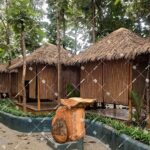 How to install ONETHATCH PALM (NIPA), step by step
 English
 Japanese
 Arabic
 Spanish
 French
 Portuguese
 Italian
 German
 Chinese (China)
 Thai
 Vietnamese
 Indonesian
 Korean
 Chinese (Taiwan)
 Russian