

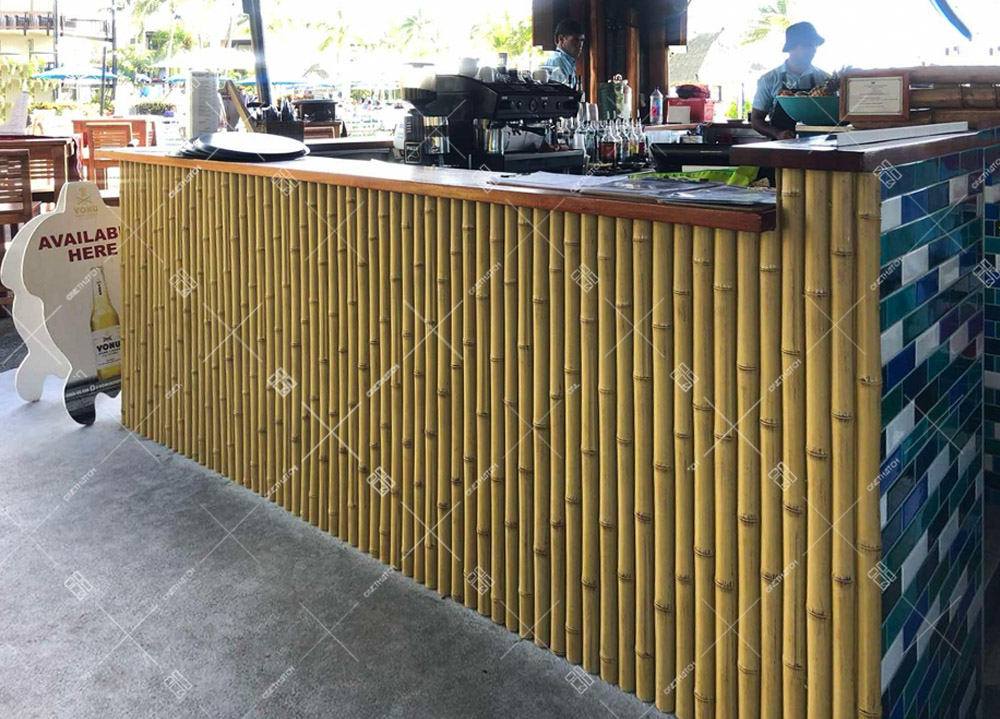
Bamboo wall cladding gives a bar, lobby, restaurant, bathroom or patio a warm, tropical or Zen character in a single surface. Natural bamboo indoors needs sealing, and outdoors it greys, splits and grows mould. Synthetic bamboo wall cladding keeps the look without that upkeep: ONETHATCH panels and poles are moulded from real bamboo in weatherable ASA resin, need no sealer or varnish, and carry a 20-year warranty.
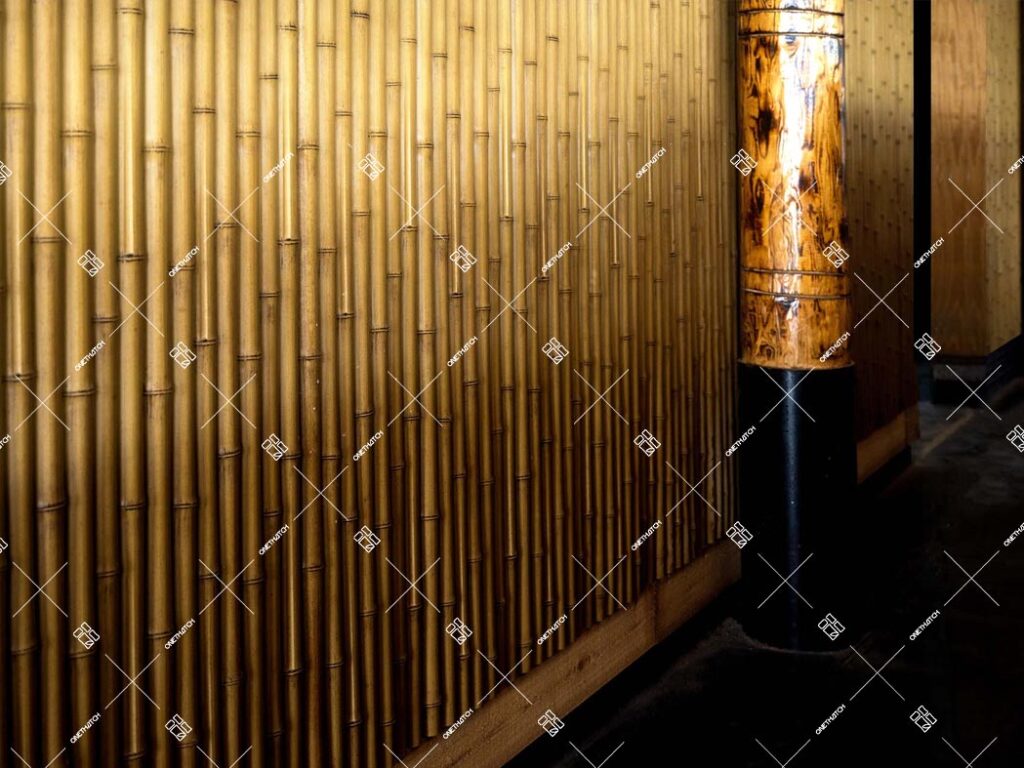
Synthetic Bamboo Wall Cladding from ONETHATCH
- Bamboo slat panels: rows of synthetic bamboo on a backing panel, in natural and black tones. They are the quickest way to clad a feature wall, a bar front or a courtyard wall, and create a tropical or Zen dining space.
- Half-round (split) bamboo poles: flat on the back, so they sit tight against a wall. Use them for wall panels, bar fronts and trims.
- Full-round bamboo poles: in several diameters, from slim canes to large poles, for columns, trims and bold feature walls.
- Woven bamboo mat: HDPE woven mat for ceilings and wall panels, fixed to 4 mm plywood first.
Where to Use Synthetic Bamboo Wall Cladding
- Bars and restaurants: bar fronts, back walls and ceilings in tiki bars, beach clubs and Asian restaurants.
- Hotel lobbies and spas: feature walls that set a tropical or Zen mood from the entrance.
- Bathrooms and wet areas: synthetic bamboo is not affected by humidity, so it suits bathroom walls and pool changing rooms, where natural bamboo would mould.
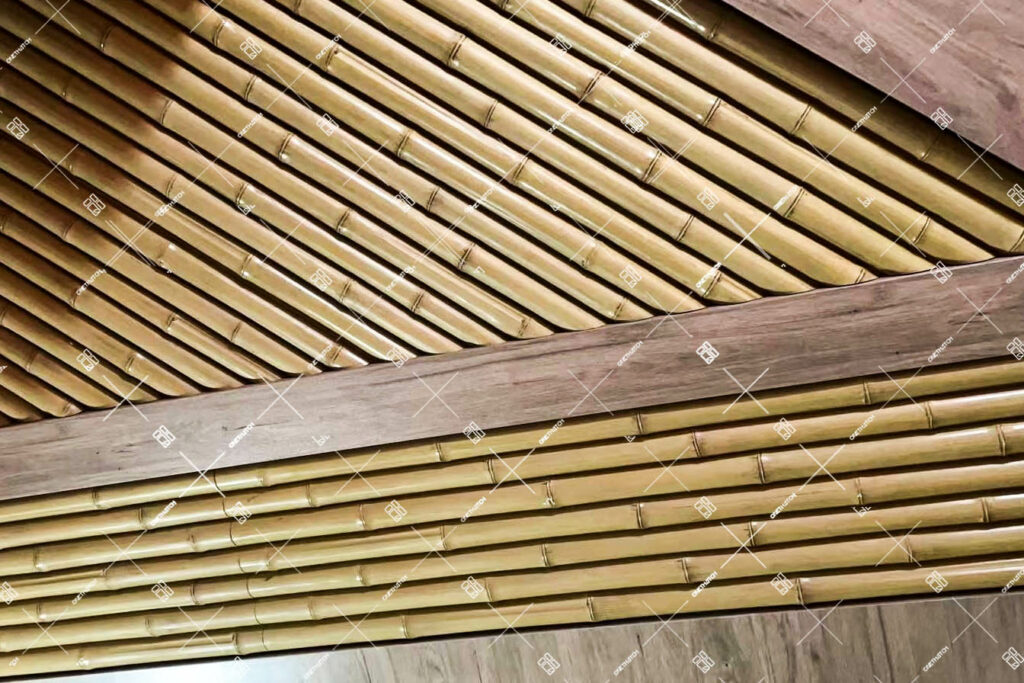
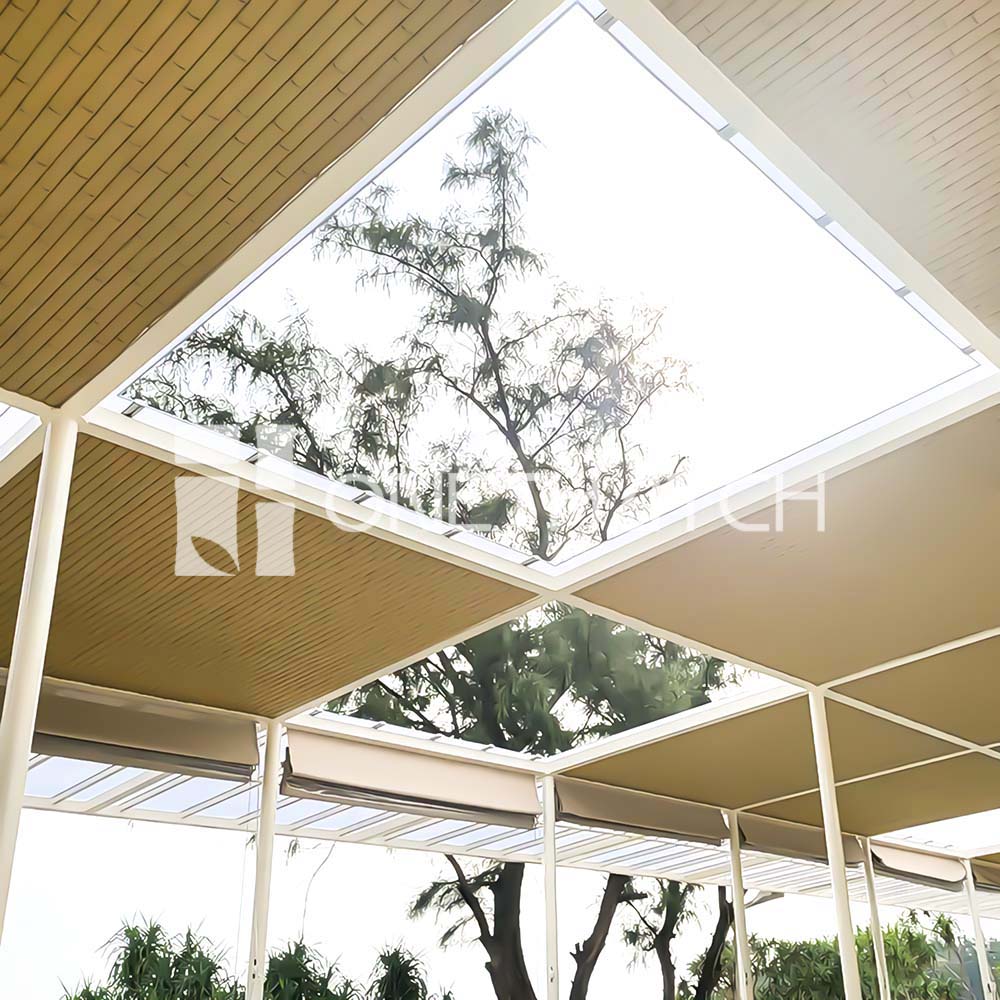
- Ceilings: HDPE woven bamboo mat, fixed to 4 mm plywood first, with bamboo poles as trims; slat panels also work on pergola ceilings.
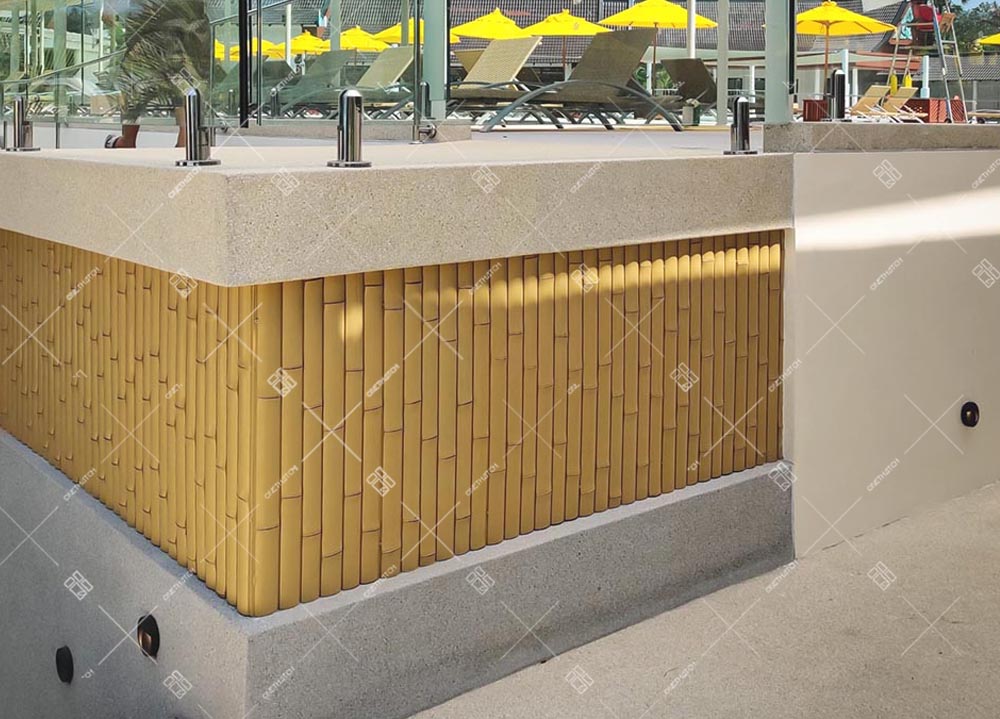
- Patios and courtyards: refresh plain outdoor walls with bamboo slat panels or half-round poles.
- Homes and offices: balcony walls, reception desks and accent walls.

Natural Bamboo Cladding: Rolls, Split Screens, Guadua and Tonkin Cane
Many people searching for bamboo wall cladding start with natural bamboo. These are the most common options, and what to expect from each:
- Bamboo rolls: whole natural canes wired together into a flexible roll. They are inexpensive and quick to fix to a wall or bar front, but outdoors the canes fade, split and need regular sealing.
- Split bamboo screens: halved canes joined into a lighter, more open screen. The look is airy, but split cane is thinner and weathers faster than whole cane.
- Guadua bamboo: a large-diameter South American bamboo used for bold feature walls and structures. It is heavy and needs treatment against insects and fungi.
- Tonkin cane: a slim, straight, pale cane from southern China, popular for fine wall cladding and garden screens. Indoors it looks elegant; in humid or wet areas it can mould.
ONETHATCH does not sell natural bamboo. If you like one of these looks but need it to last outdoors, in a wet area or in a busy commercial space, our synthetic slat panels give the rhythm of a bamboo roll or screen, and our round poles come in several diameters for a slim-cane or large-pole look. Send us a photo of the look you want and we will suggest the closest match.
Why Choose Synthetic over Natural Bamboo for Walls
Designers value natural bamboo as a renewable material, and indoors in a dry room it can work well. Synthetic bamboo is the better fit where the wall is outdoors, in a wet area or in a busy commercial space:
- Colour that lasts: ONETHATCH synthetic bamboo passed 5,000 hours of ASTM G155 accelerated weathering at Micom Laboratories (Canada) with no significant colour change.
- No finishing: no sealer, varnish or oil, before or after installation.
- No mould, rot or insects: there is no plant fibre for them to feed on.
- Easy to work: cut with ordinary woodworking tools and fix with screws.
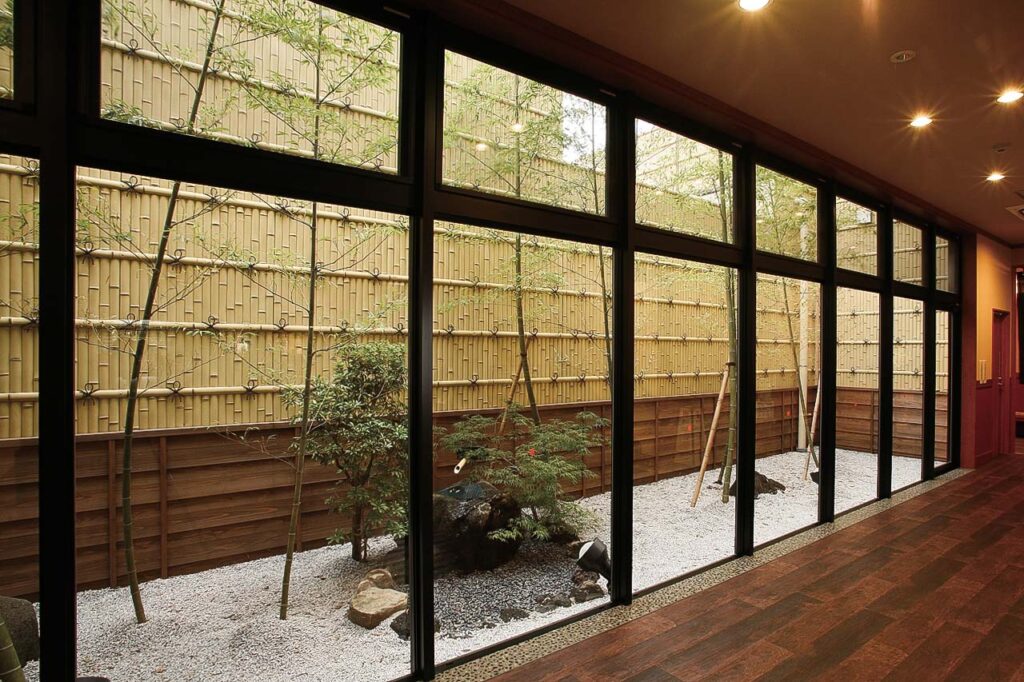
Synthetic bamboo cladding is decorative, not structural: fix it to a wall or frame designed for the load.
ONETHATCH makes all its synthetic bamboo in its own factory in Xiamen, so sizes and colours can be made to order. Send your wall dimensions or drawings through our commercial enquiry form, or see our bamboo fence panels for outdoor screening.
 English
  Japanese
  Arabic
  Spanish
  French
  Portuguese
  Italian
  German
  Chinese (China)
  Thai
Thai  Vietnamese
  Indonesian
  Korean
  Chinese (Taiwan)
  Russian