


Is synthetic thatch worth it? If you love the thatched look but not the upkeep, yes, once you count the full cost of owning a thatched roof rather than the day it goes up. A natural roof brings a cycle of rethatching every few years, pest and fire-retardant treatments, closures while the work is done and, often, harder questions about thatched property insurance. A synthetic thatch roof replaces that cycle with an occasional rinse and inspection, backed by a 20-year limited warranty.
Your roof is one of the most important investments in any building. It shelters your guests, protects everything beneath it and sets the mood of the whole space, so it deserves to be chosen with the years ahead in mind.
That’s why we created synthetic thatch as a long-term investment: the warm, layered beauty of natural thatch roofing, without the re-thatching and treatments that come with it. Enjoy the look of a natural thatched roof and leave the worries of one behind with ONETHATCH.
What does a natural thatched roof cost to own?
A natural thatched roof may cost less on day one, but it keeps asking for more. In hot, humid and coastal climates it needs rethatching every few years, plus pest control, fire-retardant treatment and patching in between. None of that shows in the first quote, and all of it comes back, cycle after cycle.
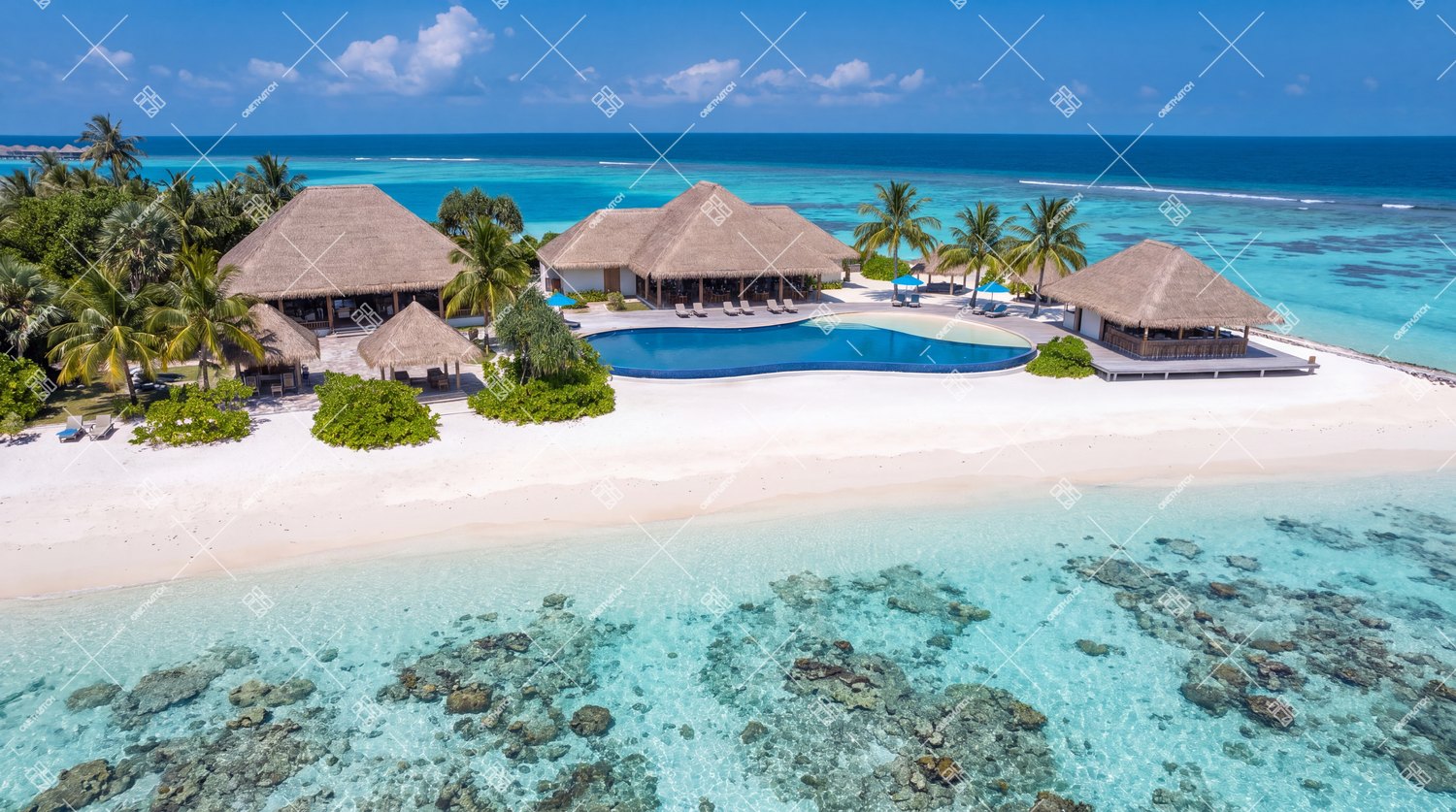
How does synthetic thatch change each cost?
Our synthetic thatch is designed to take those recurring jobs off your calendar. Crafted from UV-stabilised HDPE with the colour compounded right through, ONETHATCH synthetic thatch needs no re-thatching, sealing or pest treatment once it is installed, just an occasional rinse and inspection. No pesticides, no chemical fire-retardant sprays, no specialist upkeep. And the FR version’s Class A test report (ASTM E108) supports your insurance discussions.
Over the life of the roof, that means no re-thatching seasons, no pest control rounds and no fire-retardant treatments, where natural thatch needs re-thatching every few years. ONETHATCH® PALM carries a 20-year limited warranty, like the rest of our synthetic thatch.
Cost-of-ownership checklist: natural vs synthetic thatch
Use this checklist when you compare proposals. It leaves out figures, because every roof is different, but it shows where the effort and the budget go, year after year.
| Cost driver | Natural thatch | Synthetic thatch |
|---|---|---|
| Re-thatching | Every few years | None |
| Pest control | Regular treatment | No pest treatments |
| Fire protection | Fire-retardant treatment | No retardant sprays; FR version rated Class A to ASTM E108 |
| Patching and sealing | Patching between cycles | No sealing; an occasional rinse and inspection |
| Closures | Bars, villas or decks closed during re-thatching and repairs | No re-thatching closures |
The hidden cost: closing for repairs
For a resort or restaurant, re-thatching is more than a bill for materials and labour. While the thatchers work, a beach bar, villa or dining deck may stand closed in the middle of the season, and guests notice.
A synthetic roof has no re-thatching cycle, so there is no re-thatching season to plan around. Your palapa stays open, golden and ready for the next sunset.
Is thatched property insurance more expensive than standard home insurance?
It can be. Insurers weigh fire risk, and a natural thatched roof is made of combustible plant material, so thatched buildings are often insured on specialist terms, with their own inspections and premiums, and thatched property insurance becomes its own conversation. Every insurer, country and building is different, so the reliable answer comes from your own broker.
Will synthetic thatch lower my insurance premium?
We cannot promise any change to your premium: that decision belongs to your insurer. What we can give you is evidence. The FR (fire-retardant) versions of ONETHATCH PALM, REED and STRAW are rated Class A to ASTM E108, tested by Intertek, and we share the test report so you can put it in front of your insurer, broker or building authority. The standard NFR versions carry no fire rating, so specify FR if fire performance matters for your cover. Read more about FR synthetic thatch for resorts and palapas.
What insurers look at on a thatched building
Every insurer has its own questions, but for thatched property insurance the same few themes come up again and again. Prepare them early and the conversation is shorter and calmer.
- The roof covering and its fire documentation. Natural thatch is combustible plant material. For synthetic thatch, the FR versions of PALM and REED are rated Class A to ASTM E108 (Intertek report 220927005SHF-001); the standard NFR versions carry no fire rating. Bring the standard, the lab and the report number.
- Heat sources near the roof. Kitchens, grills, chimneys, patio heaters and torches close to the eaves all matter, on any thatched roof.
- Distance to neighbours. Many codes and insurers look at how close a thatched building stands to boundaries and other buildings.
- Wiring and detection. Electrical work in the roof space and fire detection are common questions.
- Upkeep records. For natural thatch, insurers may ask when it was last re-thatched or treated. A synthetic roof has no re-thatching cycle to record.
Ask your broker before you finalise the design, not after: knowing what your insurer wants to see can decide whether you specify the FR version.
Owning a synthetic thatch roof: quick answers
How long will a synthetic thatch roof serve?
It is backed by a 20-year limited warranty, and its real life depends on climate, exposure and installation. We compare natural and synthetic roofs in detail in how long does a thatched roof last.
Does the roof structure change the cost?
Yes, the base under the thatch matters. ONETHATCH PALM (NIPA) is fixed to open battens at 220 mm, about 4.9 panels per m², with no solid sub-deck or membrane needed when installed to specification. REED and STRAW go over a solid, waterproofed sub-deck at 200 mm, about 5 panels per m², so that deck is part of the build.
Is artificial palm thatch expensive?
The price of artificial palm thatch depends on your project, so we quote each roof from its drawings rather than publish a price list. What drives the cost:
- Roof area and shape. Square metres, pitch, hips, ridges and cones set the panel count.
- Product and version. PALM, REED or STRAW, and the FR version where a fire rating is needed.
- Substrate. PALM goes on open battens; REED and STRAW need a solid sub-deck, which is part of the build.
- Ridge and hip length. Matching hip & ridge panels are counted separately.
- Destination. Freight to your port or site; PALM (NIPA) is stocked in the USA, China, Panama, Thailand and India, while other thatch is made to order.
- Installation. Your local crew’s labour; panels are screwed down, so no thatcher is needed.
Set against the whole life of the roof, the comparison that counts is the one in the checklist above: no re-thatching, no pest or fire-retardant treatments and no closures, backed by a 20-year limited warranty. Send your roof drawing for a free quantity take-off, free samples and a quote. Request a quote.
Natural vs synthetic thatch price: what the whole roof really costs
Compare a quote for natural thatch with a quote for synthetic thatch and the natural one usually looks cheaper per square metre. That number is only the start. Add up everything the roof needs, from the port to the last screw and through the years after opening, and the picture changes.
| Cost line | Natural palm thatch | ONETHATCH PALM synthetic thatch |
|---|---|---|
| Material price per m² | Lower | Higher |
| Shipping | Bulky bundles of leaf: little roof per container | About 7,000 m² of PALM in one 40-foot high-cube container |
| Roof structure | Closely spaced battens and more rafters; often premium rot-resistant hardwood such as yellow balau | Courses 220 mm (9 in) apart on open battens: fewer rafters and battens, a lighter frame |
| Installation | A skilled thatching crew, slow hand work, many ties or fixings | Your own crew screws panels in place: faster, with fewer fasteners |
| Upkeep | Pest and fire-retardant treatments, patching, loose leaves | Very little upkeep: no re-thatching, no treatments, an occasional rinse |
| Re-thatching | A full re-thatch every few years in tropical climates | No re-thatching cycle |
| Closures | The bar, restaurant or villa shuts while the roof is redone | No shutdowns for roof work |
| Storms | Leaves loosen, tear or blow off | PALM (NIPA) passed ASTM D3161 wind testing at 160 mph (260 km/h) and Florida TAS 100 |
| Warranty | None | 20-year limited warranty |
Where synthetic thatch saves before it is even installed. One container carries about 7,000 m² of PALM, so freight per square metre of roof drops sharply. Because each course covers 220 mm (9 in), the roof needs fewer rafters and battens, and you do not have to build it from costly hardwood such as yellow balau. Fewer battens means fewer screws, fewer hours on the roof and a lower labour bill.
Where it saves every year after opening. No re-thatching, no treatments and no closing the bar while a crew strips and replaces the roof. A wind-tested roof also takes much of the worry out of storm season. The lab result is not a design wind speed, so your engineer still sets the fixing pattern for your site.
When does synthetic thatch pay for itself? In tropical climates a natural palm roof usually needs its first full re-thatch within about five years. On most projects that is where synthetic thatch breaks even: you have paid once, while the natural roof is being paid for a second time. From then on, every year is a saving, under a 20-year limited warranty.
Standard (NFR) or fire-retardant (FR)? The standard NFR version brings every saving above at the lowest material price. The FR version, rated Class A to ASTM E108, costs more at first but keeps all the same benefits, and it is the version to show an insurer or building authority that asks for a fire-rated roof covering. Ask your insurer what they need to see before you choose, and we will confirm the test standard, result and report number with your quote.
A long-term investment, not a purchase. Higher price per square metre, lower cost per year: that is why resorts, restaurants and homeowners switch to synthetic thatch. Send us your roof drawing for a free quantity take-off, free samples and a quote for your destination.
Is synthetic thatch worth it for a home as well as a resort?
Yes. The same freedom from re-thatching applies to a backyard tiki hut as to a beach club: no re-thatching, no pest or fire-retardant treatments, and panels fixed with stainless roofing screws.
 7 reasons to choose synthetic palm thatch
 Kenninji-Gaki, the classic Japanese bamboo fence
 How to install ONETHATCH PALM (NIPA), step by step
 English
 Japanese
 Arabic
 Spanish
 French
 Portuguese
 Italian
 German
 Chinese (China)
 Thai
 Vietnamese
 Indonesian
 Korean
 Chinese (Taiwan)
 Russian