


A reed roof is the most sculptural roof there is. The soft, combed slopes of a North Sea Reetdach. The deep, rounded eaves of a Norfolk cottage. The steep cone of a South African thatched lapa, cool and shaded on a hot afternoon.
ONETHATCH REED brings that look to resorts, restaurants, lodges and private homes as synthetic reed thatch: moulded panels with the fine, dense texture of water reed thatch and Cape reed, in a Sundried or Aged finish. No moss. No nesting birds. No re-thatching cycle. Just the silhouette people love, backed by a 20-year limited warranty.
This guide compares natural reed with synthetic reed, explains what the fire rules in Europe and South Africa actually ask for, and shows where a synthetic reed roof fits best.
What is synthetic reed thatch?
Synthetic reed thatch is a roofing panel moulded to look like bundled reed, made to be screwed down by a roofer rather than laid stem by stem by a thatcher.
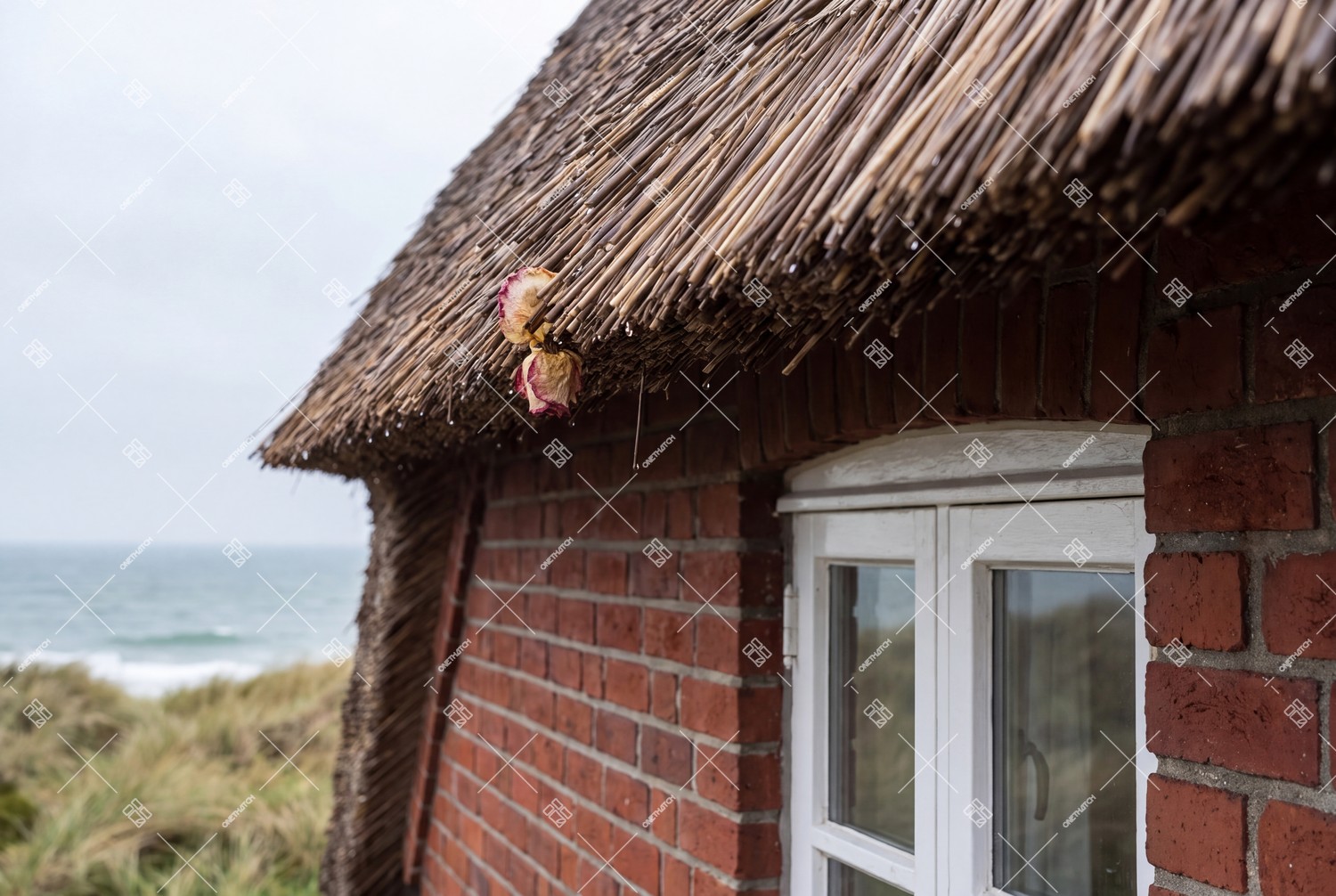
ONETHATCH REED field panels measure 1000 × 500 mm. They are made from UV-stabilised virgin HDPE with no mineral filler, PVC-free and 100% recyclable, with the colour compounded right through, so a scratch shows the same colour as the surface. A complete roof uses four piece types: eave, starter, field, and hip & ridge pieces, so the edges and peaks look as finished as the slopes.
The look is Cape reed, water reed and lapa: fine, upright stems with the slightly ragged, sun-warmed tips of a freshly combed roof. Choose Sundried for a golden new-roof glow, or Aged for the soft, silvered tone of a roof that has seen a few summers. REED is made to order, and free samples are available so you can hold the texture against your design before you decide.
When buyers search for thatch reed panels, they usually want two things: a roof that reads as real reed from the ground, and a roof that does not keep a thatcher on call. REED is designed for both.
Reed roof names around the world
Reed roofs go by many names, and the words matter when you compare quotes. Here is what the most common ones mean.
| Name | Where you hear it | What it describes |
|---|---|---|
| Water reed thatch | UK, Northern Europe | Natural Phragmites reed harvested from wetlands and laid in thick bundles |
| Norfolk reed | England | Water reed grown in the Norfolk Broads, the classic English reed |
| Reetdach / rieten dak | Germany, the Netherlands, Denmark | A natural reed roof on the North Sea and Baltic coasts |
| Schilfdach | Austria, Hungary | A reed roof, often of reed from Lake Neusiedl |
| Cape Reed / dekriet | South Africa | A natural restio reed from the Western Cape, used on lapas and lodges |
| African thatch | Australia, USA | A trade name for the Cape reed look |
| Kamysh / trostnik | Russia, Eastern Europe | Wetland reed for roofs, gazebos and reed mats |
| Carrizo | Mexico | Cane or reed, often woven into mats for ceilings and shade |
| Yoshi-buki | Japan | Reed thatching, a cousin of grass (kaya) thatch |
| Synthetic reed thatch | Worldwide | A moulded panel with the reed look, such as ONETHATCH REED |
Cape reed thatch tiles, african thatch and dekriet are names you will meet when you shop for the Cape look; all of them point back to the same natural restio reed from the Western Cape.
Natural reed vs synthetic reed: how they compare
Natural reed is a beautiful craft material. It also asks a lot of its owner. Here is the honest side-by-side.
| Natural water reed / Norfolk reed | Natural Cape reed (dekriet) | ONETHATCH REED (synthetic) | |
|---|---|---|---|
| Look | Thick, combed, soft-edged | Fine, dark-tipped, upright | Cape reed / water reed / lapa look, Sundried or Aged |
| Material | Harvested wetland reed | Harvested restio reed | UV-stabilised virgin HDPE, colour compounded through |
| Moss, birds, rodents | A constant battle in damp climates | Insects and nesting birds | Nothing to rot, nest in or eat |
| Ongoing care | Moss removal, ridge renewal, eventual re-thatching | Treatments, repairs, eventual re-thatching | An occasional rinse and inspection |
| Fire | Combustible plant material | Combustible plant material | FR version: ASTM E108 Class A; NFR version: no fire rating |
| Pitch | Needs a steep roof to shed rain | Needs a steep roof to shed rain | From 18° |
| Substrate | Battens or rafters | Battens or poles | Solid sub-deck |
| Weathering proof | None | None | 5,000 h ASTM G155, no significant colour change |
| Warranty | Workmanship only, from the thatcher | Workmanship only, from the thatcher | 20-year limited warranty |
Where a reed roof belongs: region by region
ONETHATCH ships to more than 80 countries. Wherever your project is, we prepare a quantity take-off from your drawings and send free samples. Here is how a synthetic reed roof fits the climates and building styles of the main reed-roof markets.
The UK: Norfolk reed cottages and garden tiki huts
Britain’s reed-thatched villages are living heritage, and for listed buildings the planning authority often expects traditional materials, so always check first. Where synthetic thatch UK buyers find their fit is in new builds with no heritage constraint: garden rooms, pub gardens, holiday parks, glamping lodges and every tiki hut UK venues add for the summer season. Damp winters are hard on natural reed; moulded HDPE simply has nothing to rot.
The North Sea and Baltic coasts: Germany, the Netherlands and Denmark
Nowhere loves the Reetdach more than the North Sea and Baltic coasts. Thatched houses on Sylt and Rügen, the farmhouses of Schleswig-Holstein, Lower Saxony and Mecklenburg-Western Pomerania, the rieten daken of the Netherlands: these roofs define whole landscapes. Wind, salt and damp test them hard, and moss is the thatcher’s oldest enemy.
A synthetic reed roof suits the buildings around those houses: a porch canopy, a garden pavilion, a beach bar, a hotel terrace. From Berlin and Brandenburg to the Dithmarschen coast, a local roofer fixes REED with stainless screws onto a solid deck. It is carpentry-style work, not traditional thatching. Austria and Switzerland know the same craft as the Schilfdach, often laid by a specialist reed thatcher with reed from Lake Neusiedl, and the same rules apply. Before you build, read our fire section below: German fire rules are strict, and we explain exactly what REED is tested to.
Belgium and Normandy
The thatched farmhouses of Flanders, the Campine and Normandy, with their irises planted along the ridge, are some of Europe’s most romantic roofs. In the south of France, roofing reed even has its own regional word. REED is a natural match for new garden buildings, restaurants and holiday homes that want that warm, rounded look in a Belgian or French setting.
South Africa and the thatched lapa
In South Africa the thatched lapa is the heart of the home: the place for a braai, a long lunch and a cool breeze. Natural Cape reed gives it a fine, dark-tipped texture that resorts and lodges worldwide now ask for by name. REED reproduces the Cape reed look for lapas, safari-style lodges, boma bars and restaurants from the Cape to the Gulf, with nothing to rot and nothing for insects to nest in. Thatched roofs in South Africa fall under their own fire rules, so ask your local authority early.
Russia and Eastern Europe: the kamysh roof
Reed roofs are still part of village life in the south of Russia, the Danube delta and Hungary, where wetland reed grows close at hand. Natural reed there is often sold in standard bundles or as reed mats for gazebos, fences and shade. A synthetic reed panel gives the same look to a gazebo, a terrace or a restaurant, with a solid deck beneath and no re-thatching to plan.
Mexico and Japan
In Mexico, woven carrizo mats shade terraces and line ceilings. In Japan, reed thatching survives on farmhouses and temple buildings, alongside grass thatch. In both, REED offers the reed texture for hospitality projects where natural material would need constant care.
Fire rules: what is tested and what is not
Fire is the first question any building authority or insurer asks about a reed roof, and it deserves a precise answer.
What we hold. The FR (fire-retardant) version of ONETHATCH REED is rated Class A to ASTM E108, the US roof-covering fire test (Intertek report 220927005SHF-001). The retardant is built into the formula, not sprayed on, so nothing washes off and nothing needs re-applying. The standard NFR version has no fire rating.
What we do not hold. In Germany, a roof only counts as “harte Bedachung” (hard roofing) with proof to DIN 4102-7 or a European BROOF(t1) classification. ONETHATCH REED does not hold either, so we never describe it as a hard roof. The same applies to European BROOF classifications in the UK, Belgium, the Netherlands and Austria.
What that means for your project. Your building authority decides how a synthetic reed roof is classified. Until it confirms otherwise, plan as you would for a natural reed roof, including the boundary distances that state building codes set for soft roofing, and bring the ASTM E108 rating and its Intertek report number (220927005SHF-001) to the conversation. For insurance, the same named result gives your broker real evidence to review; the decision on cover and premium stays with your insurer. Read more in our guide to FR synthetic thatch and ASTM E108 Class A.
Pitch, deck and fixing at a glance
Natural reed needs a steep roof to shed rain. REED works from an 18° pitch, which opens up low canopies, porch roofs and wide pavilions that a natural reed roof could never cover.
- Solid sub-deck under every REED roof
- 200 mm / 8 in spacing, about 5 panels per m²
- Four stainless screws per panel
- Eave, starter, field and hip & ridge pieces for a finished edge
See panel sizes and colours in the ONETHATCH REED synthetic reed thatch range.
Synthetic reed thatch: questions buyers ask
Is there a synthetic alternative to a reed roof?
Yes: ONETHATCH REED is a synthetic reed thatch panel with the look of water reed, Cape reed and a lapa roof. It is moulded HDPE fixed with stainless screws over a solid sub-deck, with no moss, no pests and no re-thatching cycle, backed by a 20-year limited warranty.
What are the advantages of a reed roof, and its drawbacks?
A natural reed roof is beautiful, locally grown and well insulated by its sheer thickness. Its drawbacks are moss, birds and rodents, combustibility, the need for a steep pitch, insurance questions and eventual re-thatching by a scarce specialist. Synthetic reed keeps the look and removes the upkeep; for insulation, add it under the deck as on any roof.
Natural reed or synthetic reed: which should I choose?
Choose natural reed for a listed building or a heritage restoration where tradition is the point. Choose synthetic reed for hospitality, new builds and coastal sites where you want the look without the maintenance calendar, and where a documented fire rating (FR version) helps the approval.
What is the difference between Cape reed and ordinary straw thatch?
Cape reed is a stiff restio reed with a fine, dark tip; ordinary straw is the hollow stalk of a cereal crop, softer and quicker to wear. On a roof, Cape reed gives a crisper, more upright texture, which is the look REED is moulded to reproduce.
Are thatching grass and reed the same thing?
No. Thatching grass (such as Japanese kaya or alang-alang) is a fine, leafy grass; reed is a taller, stiffer wetland plant. Reed gives a denser, combed surface, grass a softer, shaggier one. For the grass look, see our straw thatch range.
Which reed mats are suitable for roofing?
Reed mats are thin, woven rolls made for fences, shade screens and ceilings, not a roof covering on their own. A lasting reed-look roof needs thick bundles laid by a thatcher, or engineered panels such as REED over a solid deck.
Can a gazebo have a reed roof?
Yes. Gazebos are among the most popular reed-roof projects, and REED’s 18° minimum pitch suits the gentle cone of a garden gazebo better than natural reed, which needs a steep roof. Fit a solid deck first, then screw the panels down.
Why are reed roofs still used in parts of Russia and Eastern Europe?
Because reed grows in the wetlands nearby, it is cheap to harvest locally and it insulates well against hot summers and cold winters. That tradition is strongest in the south, close to the great river deltas.
Can I build a whole house with a synthetic reed roof?
Yes, a house roof is possible with REED: it goes over a solid sub-deck from an 18° pitch. Your architect and engineer design the structure, insulation and ventilation, and your building authority confirms the fire classification before you build.
What does renewing a natural reed roof involve?
Renewing a reed roof means stripping worn reed, replacing it with new bundles and rebuilding the ridge, a job for a specialist thatcher that closes the building while the work is done. A synthetic reed roof has no re-thatching cycle.
Bring the reed look to your project
Send us your roof drawings and we will prepare a panel count for eave, starter, field and hip & ridge pieces, plus free samples in Sundried and Aged. Explore ONETHATCH REED synthetic reed thatch or request your samples and quote today.
 7 reasons to choose synthetic palm thatch
 Kenninji-Gaki, the classic Japanese bamboo fence
 How to install ONETHATCH PALM (NIPA), step by step
 English
 Japanese
 Arabic
 Spanish
 French
 Portuguese
 Italian
 German
 Chinese (China)
 Thai
 Vietnamese
 Indonesian
 Korean
 Chinese (Taiwan)
 Russian