

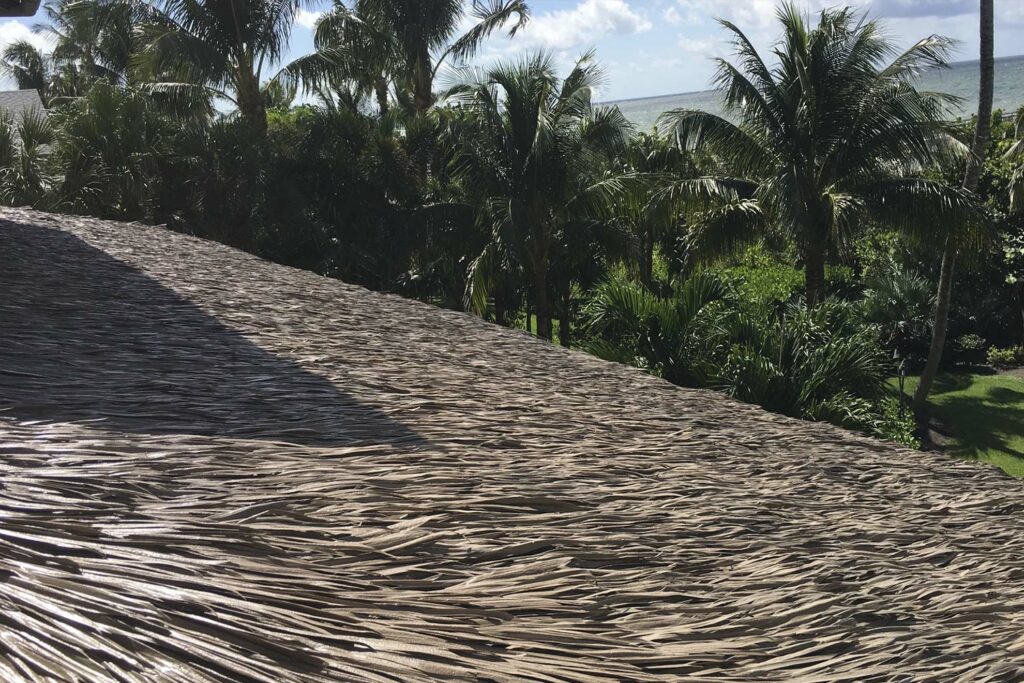
The best tiki hut roof is one that looks like natural palm but does not need re-thatching every few years. Synthetic palm thatch panels do exactly that: they are moulded from real palm leaves in UV-stabilised HDPE, screwed to battens like a normal roof covering, and do not rot or attract pests. For a backyard tiki hut, a pool-side tiki bar or a resort palapa, here is how to choose and use them.
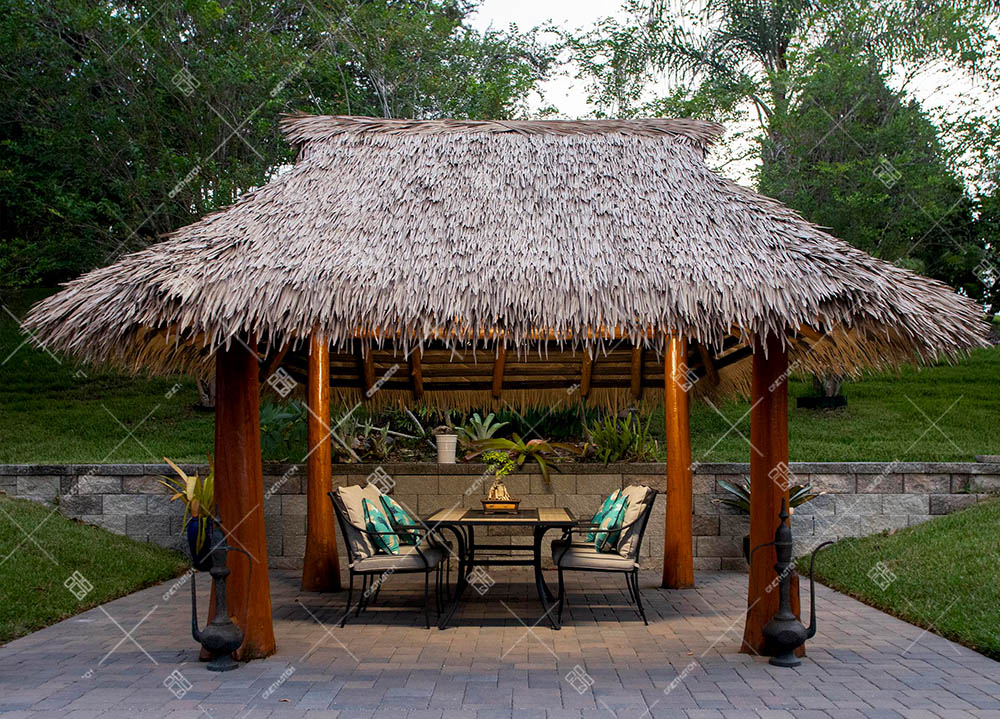
Why Palm Thatch Is the Classic Tiki Hut Roof
A tiki hut is defined by its roof. Layered palm leaf, with its shaggy edge and deep shadows, is what makes a simple timber frame read as a tropical island bar. Natural palm, whether Fiji palm thatch or a Mexican thatch roll, gives that look, but outdoors it dries, fades to grey, rots in wet seasons and needs treating against pests and fire. That is why many new tiki huts, especially commercial ones, are roofed with synthetic palm thatch; here are 7 reasons to choose synthetic palm over natural palm.
Choosing a Synthetic Palm Style for Your Tiki Hut
ONETHATCH makes three palm styles, each moulded from a different real leaf:
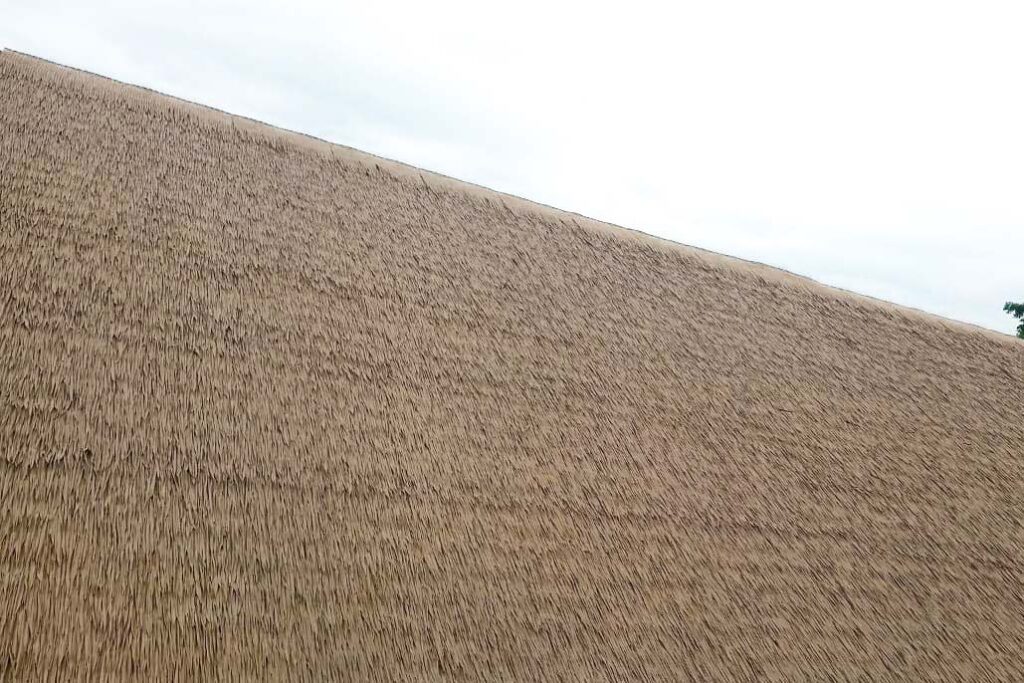
- ONETHATCH PALM (NIPA): a fine, layered leaf from the nipa palm of Southeast Asia. It gives a neat, dense roof face and is our stocked style.
- ONETHATCH PALM (FAN): a broad fan-palm leaf for a bolder, more open texture.
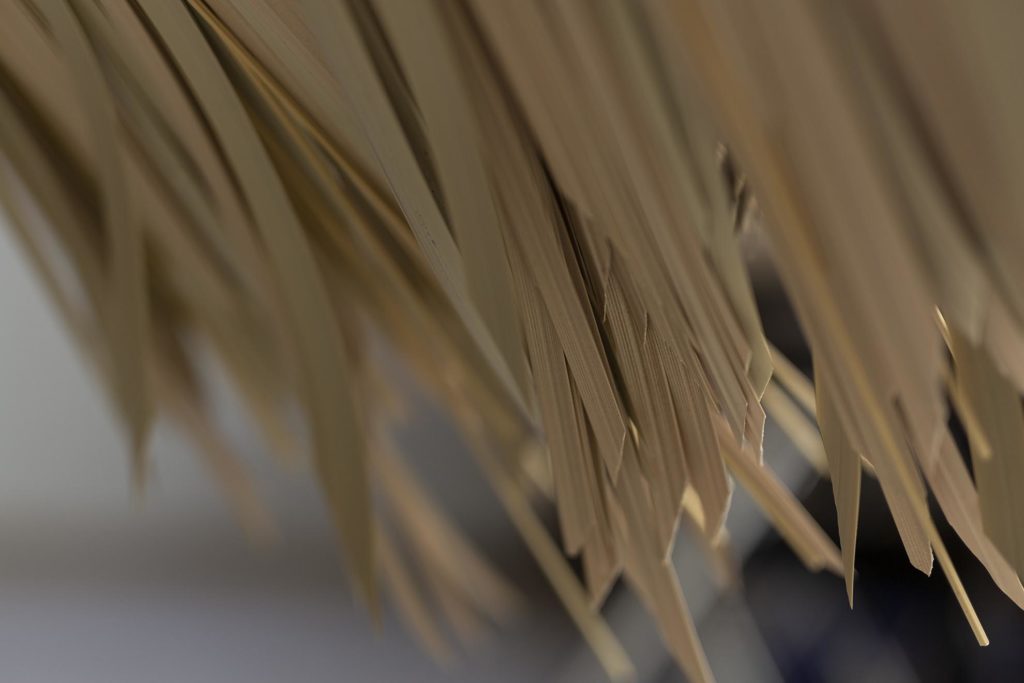
- ONETHATCH PALM (RAINCAPE): a long, loose leaf in the style of Mexican raincape palm thatch, for the shaggy look of a classic tiki bar or palapa. It is sometimes called Mexican palm thatch, Mexican thatch or false thatch.
The FR version of ONETHATCH PALM is rated Class A to ASTM E108, which matters for commercial tiki bars and restaurants; an NFR version is available for private gardens where no rating is required.
What You Can Roof with Synthetic Palm Thatch
- Backyard tiki huts and tiki bars
- Gazebos, pergolas and patio covers
- Pool cabanas and outdoor kitchens
- Palapas and thatched umbrellas
- Resort beach bars and restaurant pavilions
How a Synthetic Thatch Tiki Hut Roof Is Installed
Synthetic palm panels are fixed in overlapping courses to battens, starting at the eave and working up to the ridge, with the ridge finished by matching Hip & Ridge panels. Unlike natural palm thatch rolls, ONETHATCH panels are fixed with stainless roofing screws, never nails or staples. Many homeowners install a backyard tiki hut roof themselves with a drill, a saw and a helper; for commercial projects, our engineer calculates the quantities from your drawings. See our installation guide for the details.
How Long Does a Synthetic Tiki Hut Roof Last?
ONETHATCH synthetic thatch roofing carries a 20-year warranty; for ONETHATCH PALM it covers UV degradation, fading and structural failure. ONETHATCH thatch passed 5,000 hours of ASTM G155 accelerated weathering at Micom Laboratories (Canada) with no significant colour change. By comparison, natural palm has to be re-thatched every few years in tropical climates. Read more about how long a thatched roof lasts.
Get a Tiki Hut Roof Quote
Send us your tiki hut’s roof size or drawing, and tell us the style you like; we will work out the panels you need and can send a sample first. Contact our team, or use our commercial enquiry form for bars, restaurants and resorts.
 English
  Japanese
  Arabic
  Spanish
  French
  Portuguese
  Italian
  German
  Chinese (China)
  Thai
Thai  Vietnamese
  Indonesian
  Korean
  Chinese (Taiwan)
  Russian