

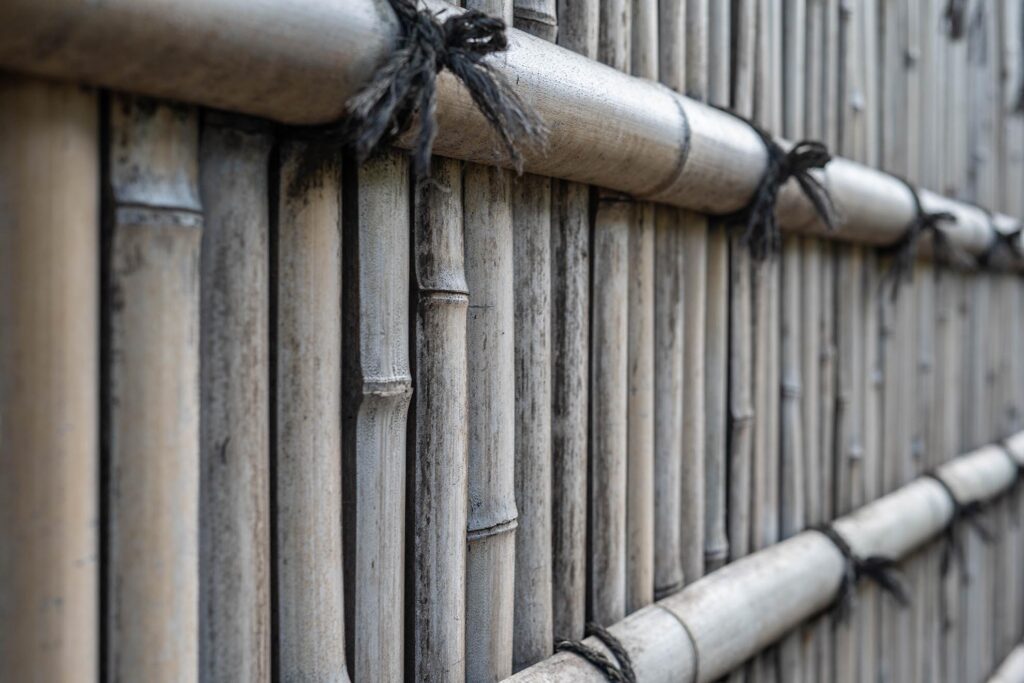
How long a natural bamboo fence lasts depends mostly on treatment and exposure. Untreated bamboo outdoors usually starts to grey, split and grow mould within its first few years, especially in full sun, rain or contact with soil. Well-treated bamboo that is kept off the ground, sheltered from constant rain and re-sealed regularly lasts considerably longer. Unlike many timbers, real bamboo contains no natural compounds that resist decay, so the durability of outdoor bamboo comes almost entirely from treatment and good detailing. For a fence or privacy screen that must keep its look for many years, a synthetic bamboo fence (also called a faux bamboo fence or artificial bamboo fence) is the low-maintenance alternative.
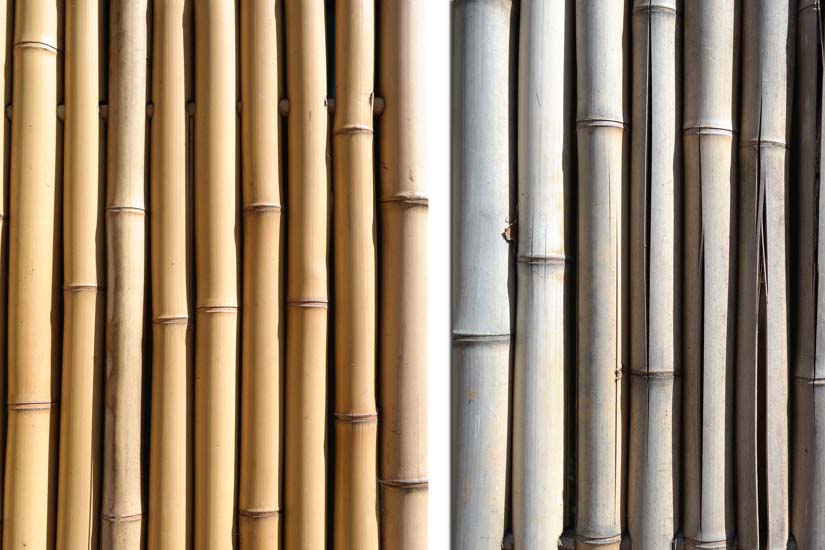
How to Treat a Bamboo Fence
Because of its low natural durability, bamboo poles should be treated against insects and fungi soon after harvest. One of the most common methods is to impregnate the canes with a borax and boric acid solution, which replaces the sugars in the fibres with salts that insects will not eat. Treated bamboo fences last far longer than untreated ones, as long as the canes are kept out of contact with soil and protected from standing water.
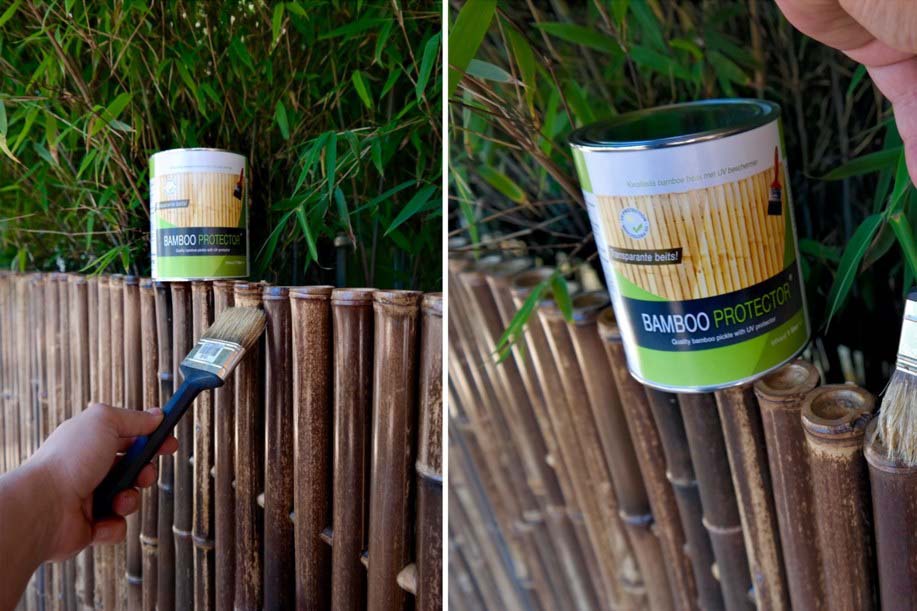
How Long Does a Bamboo Sealant Last?
Most bamboo fences are also finished with a clear coat or bamboo sealant, which slows down moisture and UV damage. The coating weathers too, so on an exposed fence it has to be cleaned and re-applied regularly, often every year. Once the coating fails, moisture gets into the cane, and mould and splitting follow.
Why ONETHATCH Developed a Synthetic Bamboo Fence
Over the years we have received many enquiries from resort owners, theme parks, zoos and restaurants whose natural bamboo fences had faded, discoloured and grown mould within a few years of opening. Natural bamboo fencing is cheap to buy, but the cost of re-sealing, repairing and replacing it adds up. ONETHATCH developed its synthetic bamboo fence and plastic bamboo screens for those buyers; see how it is used in bamboo fence solutions for hotels, resorts and spas.
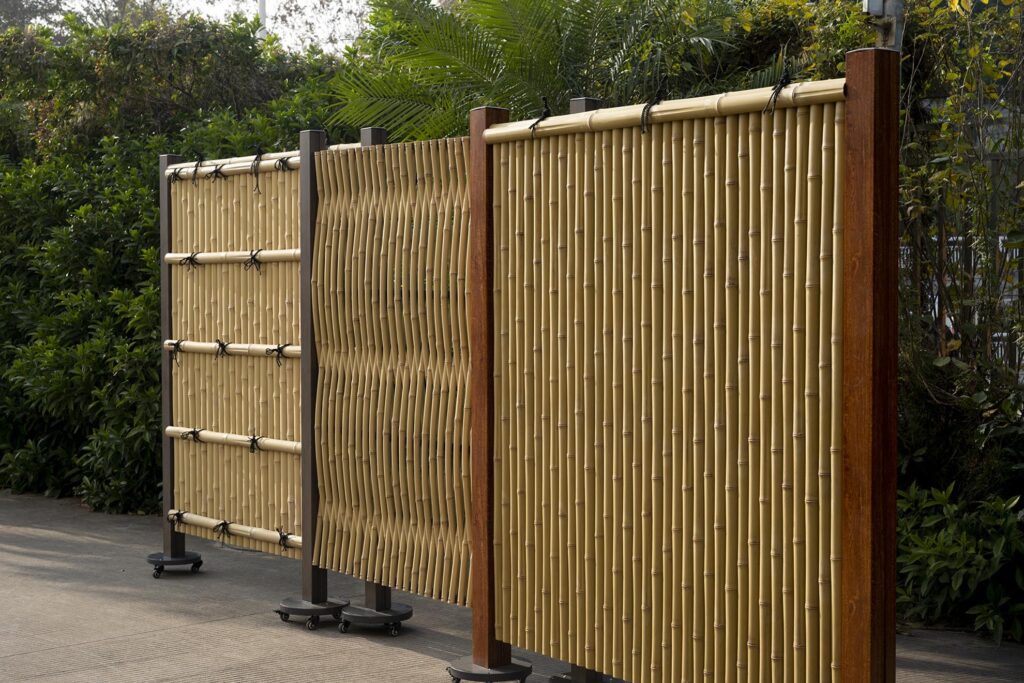
How Long Does a Synthetic Bamboo Fence Last?
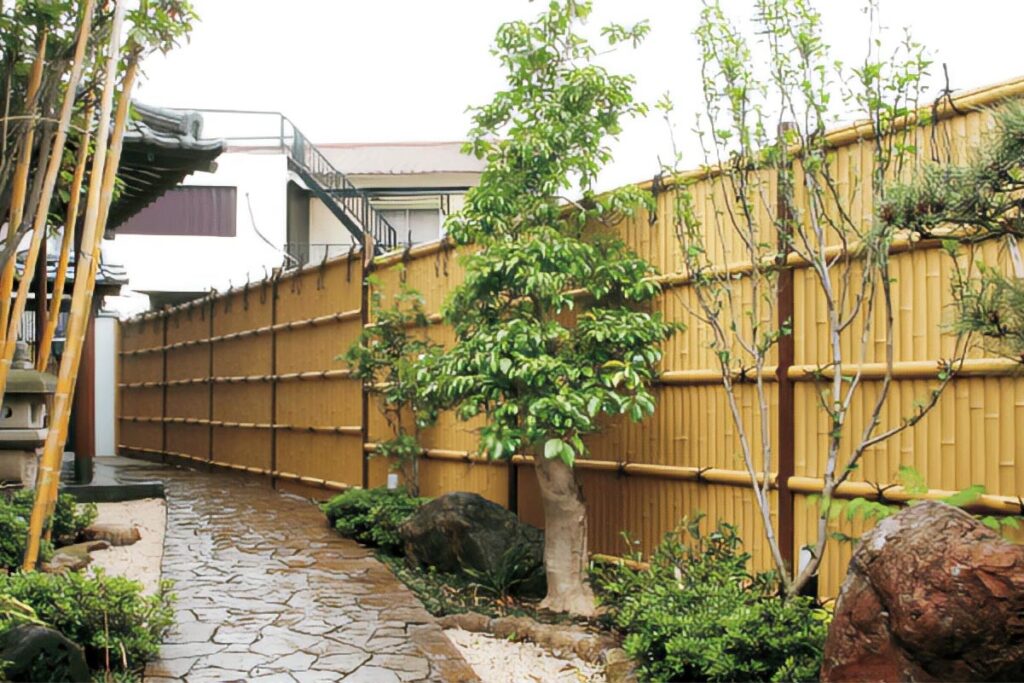
ONETHATCH synthetic bamboo fences combine weatherable ASA synthetic bamboo panels with a powder-coated aluminium frame. The synthetic bamboo passed 5,000 hours of ASTM G155 accelerated weathering at Micom Laboratories (Canada) with no significant colour change, and carries a 20-year warranty. One reference: ONETHATCH synthetic bamboo fencing at Banyan Tree resort in the Maldives has been in use for six years (as of 2026) with no visible colour change. Read how one luxury resort solved its bamboo fencing problem.
We make fence panels in traditional regional styles. Some are used as privacy fences or a bamboo privacy screen, others as garden dividers or as a backdrop for a tea garden. Learn more about Japanese bamboo fence styles and their history.
How to Order a Synthetic Bamboo Fence
Synthetic bamboo fences are made to order. Send us a site plan or CAD file, photos, and the lengths and heights you need through our commercial enquiry form, and our team will suggest a style and prepare quantities. Browse the styles on our bamboo fencing page.
Japanese Fence Styles We Make
Our synthetic bamboo fence panels reproduce traditional Japanese styles on a powder-coated aluminium frame.
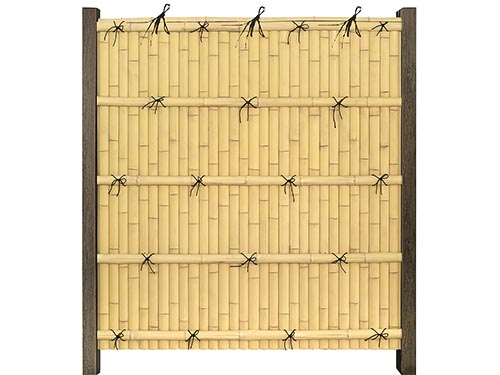
Split bamboo set vertically and held by horizontal rails (oshibuchi).
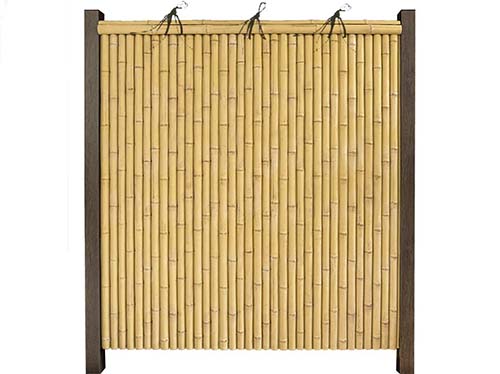
Thin bamboo in tight vertical rows, like horsetail stems.

Thin bamboo laid horizontally, like the misu blinds of old Japan.

Slim bamboo poles set vertically: a finer version of kenninji-gaki.
 English
  Japanese
  Arabic
  Spanish
  French
  Portuguese
  Italian
  German
  Chinese (China)
  Thai
Thai  Vietnamese
  Indonesian
  Korean
  Chinese (Taiwan)
  Russian