


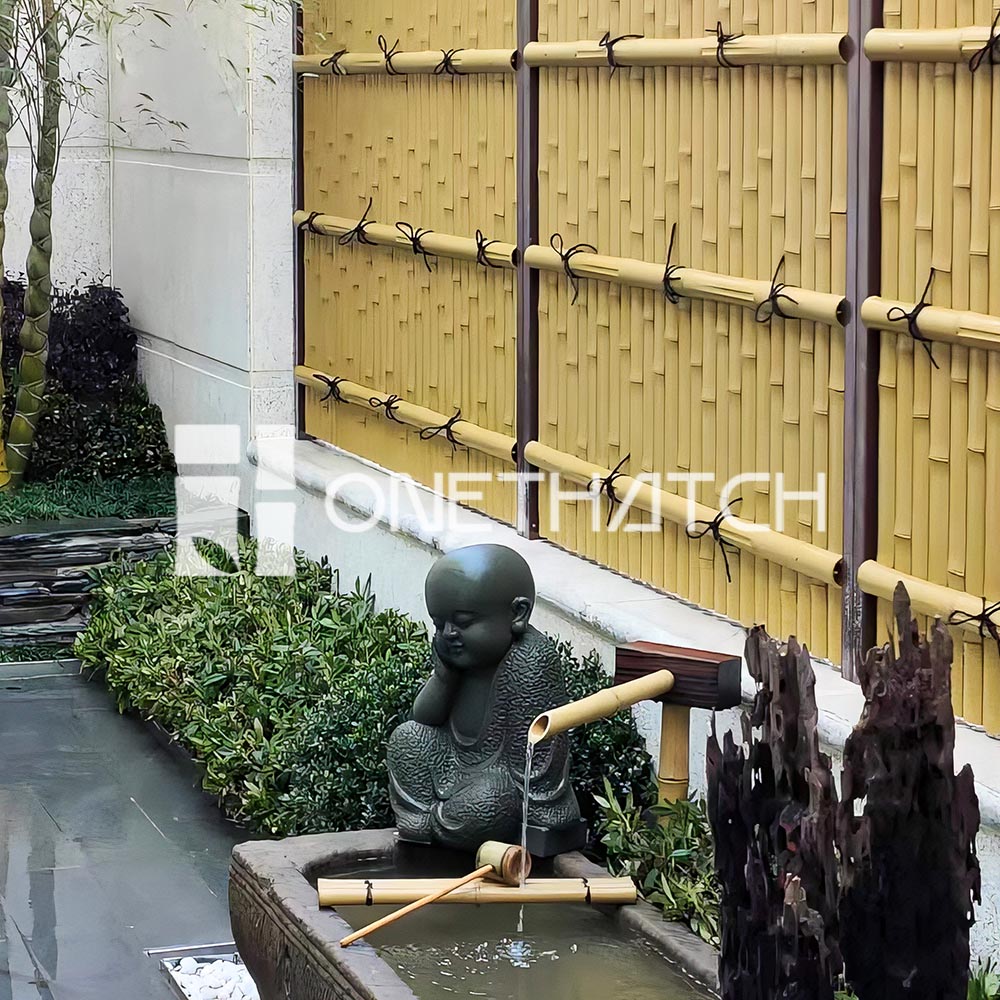
Japanese bamboo fences (takegaki, 竹垣) are garden fences and screens made from bamboo canes tied with dark rope in set patterns, such as the solid kenninji-gaki privacy screen or the open, low yotsume-gaki. They mark boundaries, frame views and give privacy, and each style has its own name, history and way of being built. This guide covers where the fences come from, the most popular styles, how a traditional fence is built and cared for, and when a synthetic bamboo fence makes more sense for a garden or resort.
Key Takeaways
- Japanese bamboo fences, or takegaki, grew up with Japanese gardens and tea gardens, and many styles are named after the Kyoto temples where they were first seen.
- Popular bamboo fencing styles include kenninji-gaki, misu-gaki, tokusa-gaki, shimizu-gaki, yotsume-gaki and kinkakuji-gaki, ranging from solid privacy screens to low, open boundary fences.
- Natural bamboo is beautiful and renewable but needs regular maintenance outdoors; synthetic bamboo fencing keeps the look with far less upkeep.
The Art of Japanese Bamboo Fencing
Bamboo fences are part of the language of the Japanese garden. They divide spaces, hide what should not be seen, guide the eye toward what should, and set a calm backdrop for plants, stones and water. Their use spread from temple and tea gardens into private homes, and from Japan to gardens around the world.
History of Japanese Bamboo Fences
Bamboo has been used for fences in Japan for many centuries. The styles in use today largely took shape alongside the tea ceremony and the Zen temple gardens of Kyoto, and many carry the names of those temples: Kennin-ji, Kinkaku-ji, Ryoan-ji and Koetsu-ji among them. Garden makers today work with dozens of named styles, and each one can be varied in height, spacing and detail.
Cultural Significance
In Japan, bamboo symbolises strength, flexibility and good fortune, and it features in New Year decorations. In a tea garden, bamboo fences divide the outer and inner gardens and prepare guests for the tea ceremony, marking the shift from everyday life to a quieter space. Their simplicity and connection to nature reflect Japanese ideas of beauty.
Craftsmanship and Techniques
Building a traditional Japanese bamboo fence is a craft learned over years. The work involves:
- Selecting, cutting and splitting bamboo canes to consistent sizes
- Setting the canes in the pattern of the chosen style
- Tying the joints with black palm-fibre rope using decorative knots, such as the ibo-musubi
- Using fine nails or wire to reinforce the main joints
The result is a fence that is as much a piece of garden design as a practical boundary.

Popular Styles of Japanese Bamboo Fences
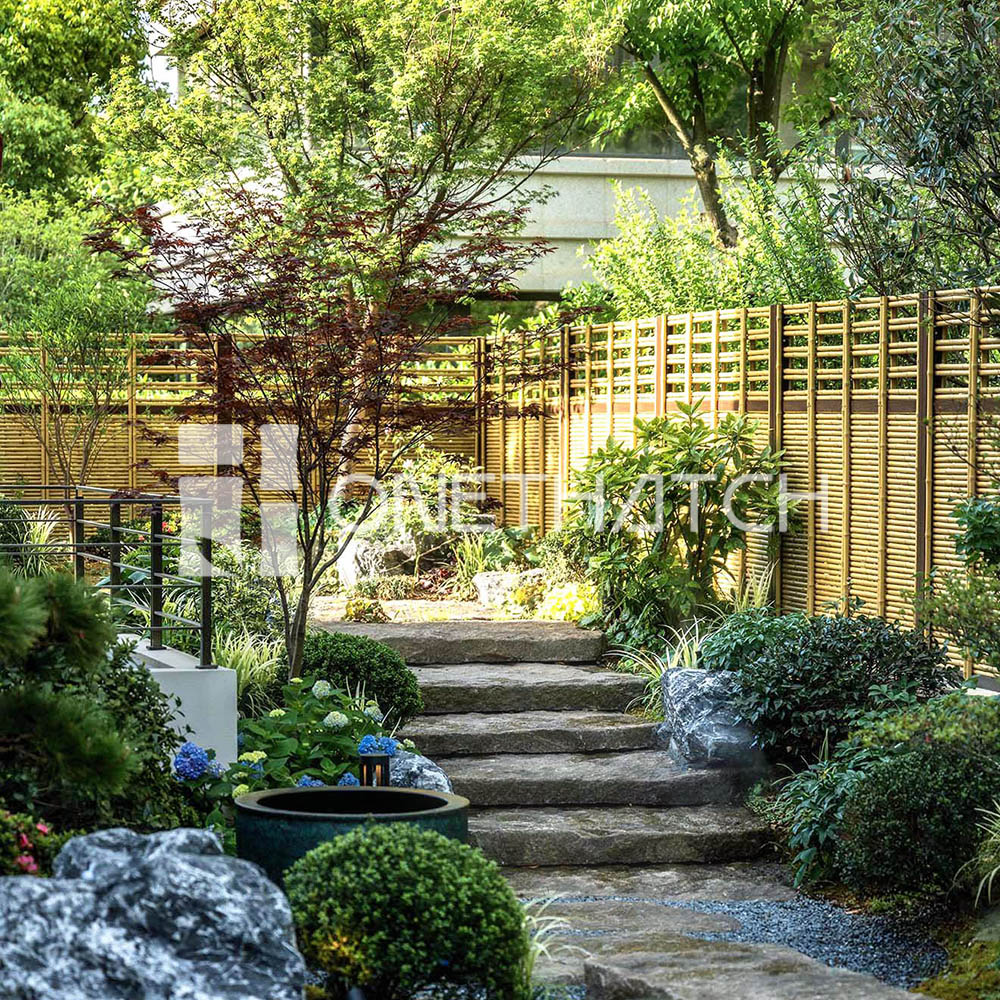
Japanese bamboo fences range from solid privacy screens (shahei-gaki) to low, open fences (sukashi-gaki) that mark a boundary without blocking the view. Below are some of the most popular Japanese bamboo fence styles.


Yotsume-Gaki and Kinkakuji-Gaki
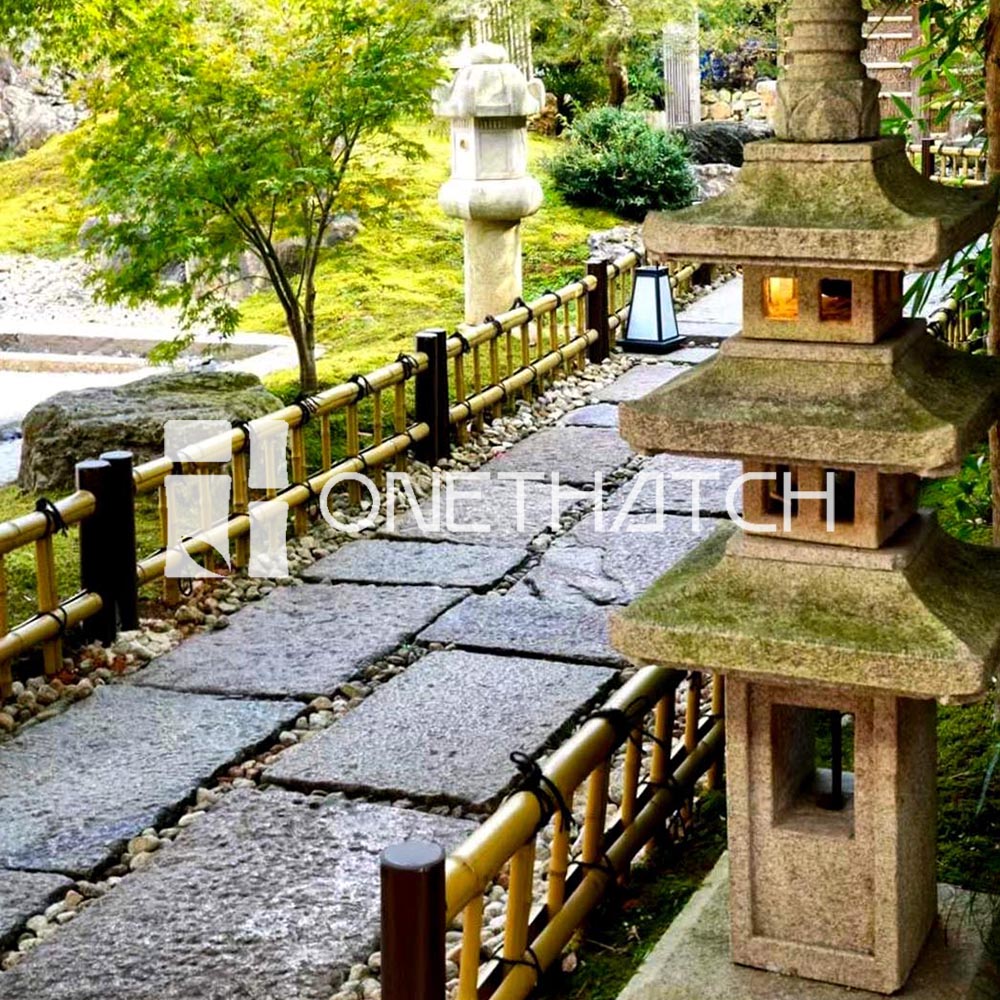
Yotsume-gaki and kinkakuji-gaki are low, open fences. Yotsume-gaki is a simple lattice of vertical and horizontal canes with square openings, tied at each crossing and set between posts. Kinkakuji-gaki, named after the Golden Pavilion temple in Kyoto, is a knee-high fence of vertical canes capped with a split-bamboo top rail. Both mark the edge of a path or planting bed without blocking the view, and are often set on top of low stone walls.
Kenninji-Gaki Bamboo Fence
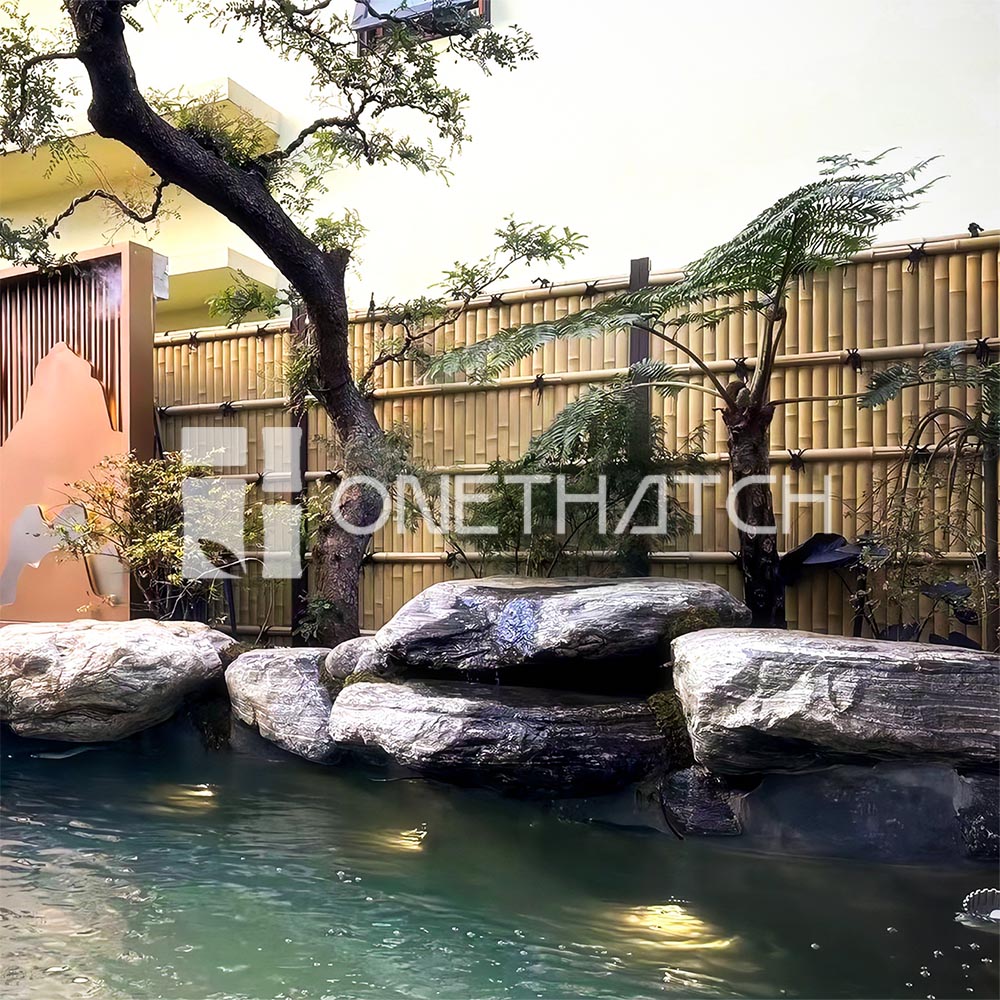
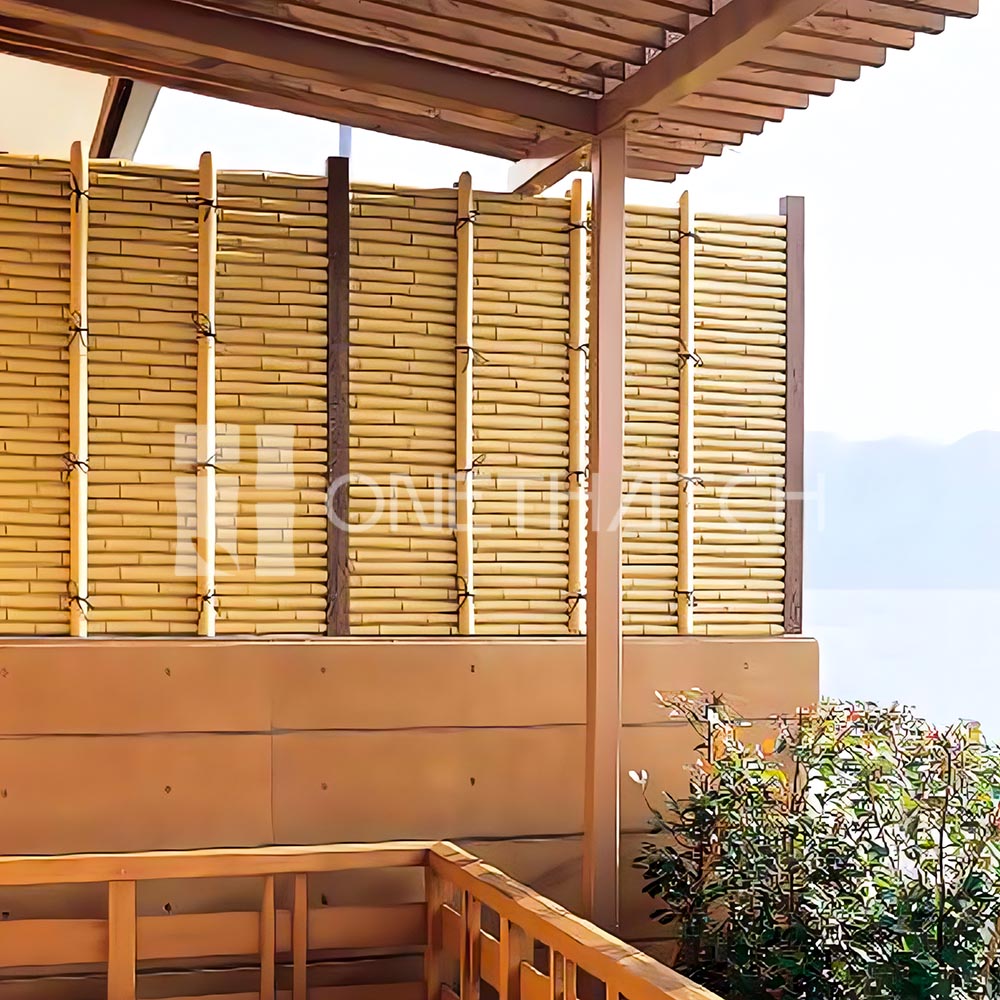
Kenninji-gaki (建仁寺垣) is the most common screening fence in Japan, used wherever a garden needs full privacy. It is named after Kennin-ji, the oldest Zen temple in Kyoto. Split bamboo is set vertically, side by side, and held by horizontal split-bamboo rails tied with black rope. The result is a solid, calm bamboo screen with a strong horizontal rhythm, and it is the style ONETHATCH reproduces in its synthetic Kenninji Gaki bamboo fence.


Shimizu-Gaki Bamboo Fence
Shimizu-gaki is one of the most refined bamboo screens in Japan. Its structure is similar to the kenninji fence, but it is built with slim, roughly 25 mm bamboo poles for the verticals. The slender canes give it a delicate appearance, but they also make natural shimizu-gaki more fragile and harder to maintain.


Materials and Tools
Traditional fences use bamboo canes for the fence itself and pressure-treated hardwood for the posts, which stand in the ground. Both are affected by the weather. For a longer-lasting fence you can use synthetic bamboo poles and aluminium posts instead. Joints are tied with black palm-fibre rope or waxed cord, and the main joints can be reinforced with fine nails or wire.
Tools: a fine-toothed saw or bamboo saw, a bamboo splitter, a drill and screwdriver, screws, a string line, a level, a post-hole digger and a shovel.
Building Steps and Techniques
Start by setting the main posts, typically about 1800 mm apart, plumb and in line. The posts carry the whole fence. Then:
- Fix the horizontal rails (or crosspieces) to the posts.
- Set the vertical canes against the rails in the pattern of your style.
- Tie the canes to the rails, using decorative knots such as the ibo-musubi where they show.
- Trim the tops of the canes to a clean line, or a decorative pattern.
ONETHATCH also supplies ready-made synthetic bamboo fence panels on a powder-coated aluminium frame, which avoids most of the cutting and tying on site. Watch the video below to see how a panel goes together, and send us your layout for a quantity estimate.

Maintenance and Care
A natural bamboo fence needs regular care. Clean it with diluted white vinegar or a mild detergent, and re-apply a protective sealant regularly to slow down moisture and UV damage. With good care a natural fence stays attractive for several years; without it, bamboo outdoors greys and splits quickly. (More detail: how long does a bamboo fence last?)
A synthetic bamboo fence needs only an occasional rinse. ONETHATCH synthetic bamboo fencing carries a 20-year limited warranty.
Aesthetic Appeal
As decorative fencing, bamboo brings a natural, calm and slightly exotic look to a garden. It gives privacy while blending into the planting, and it works in traditional Japanese gardens, tropical landscapes and modern designs alike.
Alternatives to Natural Bamboo Fences
Natural bamboo fences are beautiful and renewable, but they have drawbacks outdoors:
- They discolour, grow mould and decay in sun, rain and humidity.
- They need regular cleaning and re-sealing.
- They have to be repaired and eventually replaced.

If you love the look but want something that lasts with little upkeep, consider synthetic bamboo fencing.
Synthetic Bamboo Fencing
ONETHATCH synthetic bamboo fencing is moulded from real bamboo in weatherable ASA resin and mounted on a powder-coated aluminium frame. It:
- Reproduces the texture and nodes of natural bamboo
- Passed 5,000 hours of ASTM G155 accelerated weathering at Micom Laboratories (Canada) with no significant colour change
- Does not rot, mould or attract insects
- Keeps a consistent colour and size across long runs
- Carries a 20-year limited warranty
ONETHATCH synthetic bamboo fencing has been in use at Banyan Tree resort in the Maldives for six years (as of 2026) with no visible colour change.

Using Synthetic Bamboo in Your Garden
Synthetic bamboo panels make privacy screens and garden dividers, and synthetic bamboo poles can form arbours, trellises and edging along paths. It is decorative, not structural, so fix it to a frame or posts designed for the load.
Summary
Japanese bamboo fences combine history, culture and craft, and there is a style for almost any garden, from a solid kenninji-gaki screen to a low yotsume-gaki lattice. Build a traditional Japanese bamboo fence yourself if you enjoy the craft and the care it needs, or choose synthetic bamboo for a fence that keeps its look with little maintenance.
Frequently Asked Questions
How long does a bamboo fence last?
A natural bamboo fence lasts longest when the canes are treated, kept off the ground and re-sealed regularly; untreated bamboo outdoors weathers within a few years. A synthetic bamboo fence lasts much longer: ONETHATCH synthetic bamboo fencing, made from weatherable ASA, carries a 20-year limited warranty.
What is a bamboo fence called in Japanese?
A Japanese bamboo fence is called takegaki (竹垣). Individual styles add their name before -gaki, as in kenninji-gaki or misu-gaki.
Is a bamboo fence a good idea?
Yes, it is a good choice for privacy fencing and a natural look. Natural bamboo is renewable and attractive but needs regular care outdoors; synthetic bamboo suits projects that need a long service life with little maintenance.
What makes a synthetic bamboo fence a sustainable choice?
It is made from recyclable resin and does not need to be replaced every few years, and no chemical treatments are applied to it. That avoids the repeated harvesting, treating and transport of replacement bamboo.
Looking for more materials for gardens and resorts? See our collection of commercial-grade tropical décor materials, or send your project details through our commercial enquiry form.
 English
 Japanese
 Arabic
 Spanish
 French
 Portuguese
 Italian
 German
 Chinese (China)
 Thai
 Vietnamese
 Indonesian
 Korean
 Chinese (Taiwan)
 Russian