

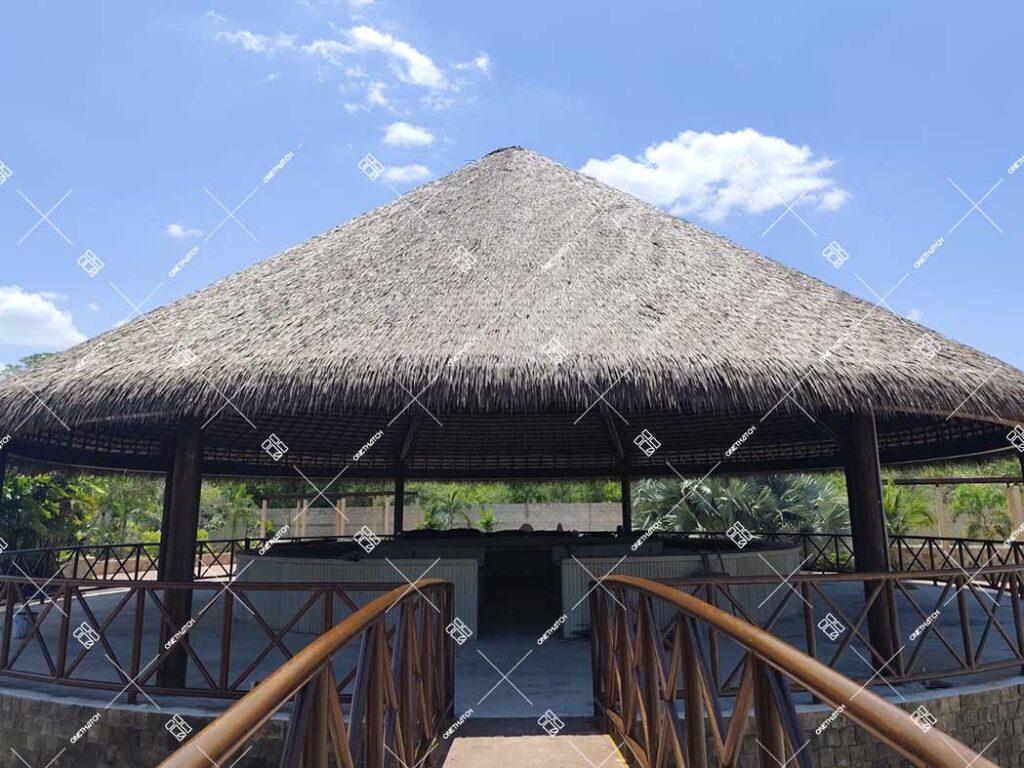
Engineered thatch is synthetic thatch roofing made to look like natural palm thatch but built to last: panels moulded from real leaves in UV-stabilised polymer, fixed to battens like a conventional roof covering. For a resort villa or overwater villa in the Maldives, a beach bar in Cancún or a backyard tiki hut, it gives the look of traditional thatch without the mould, rot, pests, fire risk and re-thatching cycles of natural leaf.
What Is Engineered Thatch?
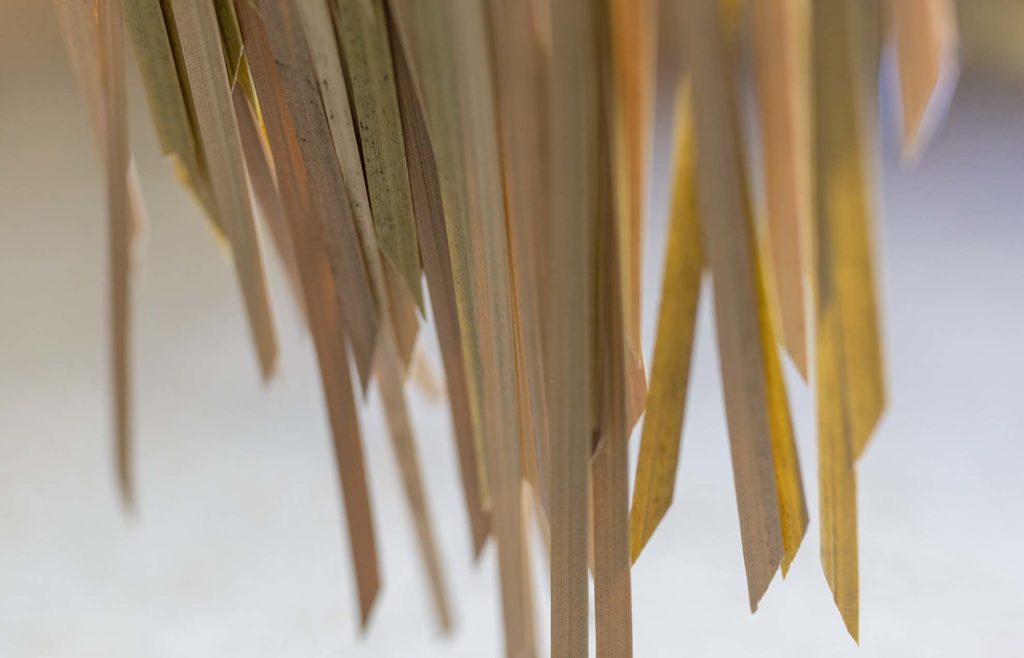
Engineered thatch, also called synthetic thatch roofing or artificial thatch, replaces natural leaf with a moulded panel. ONETHATCH makes its engineered thatch from high-density polyethylene (HDPE) with a UV-stabiliser system, developed with BASF’s light-stabiliser laboratory in Shanghai. The moulds are taken from real palm leaves, so every panel carries natural leaf texture, and the panels layer on the roof the way natural thatch does.
The ONETHATCH style most often specified is ONETHATCH PALM (NIPA), moulded from nipa palm; nipa thatch is the traditional roof of the Philippines, Indonesia, Malaysia and Vietnam. The 980 × 670 mm thatch panels are fixed to battens with stainless roofing screws.
How ONETHATCH Engineered Thatch Is Tested
- Fire: the FR version of ONETHATCH PALM is rated Class A to ASTM E108 (Intertek report 220927005SHF-001). An NFR version is available where no fire rating is required.
- Wind: ONETHATCH PALM (NIPA), installed with stainless roofing screws to ONETHATCH specifications, was tested with no loss of attachment up to 160 mph (260 km/h), within the Category 5 range of the Saffir-Simpson scale, using the ASTM D3161 fan method at PRI Construction Materials Technologies (report 2756T0002.1).
- Wind-driven rain: it also passed Florida TAS 100 for the High-Velocity Hurricane Zone (PRI report 2756T0003.1).
- UV: ONETHATCH thatch passed 5,000 hours of ASTM G155 accelerated weathering at Micom Laboratories, an independent Canadian laboratory, with no significant colour change (report MI-25-17428-1).
- Warranty: 20 years, covering UV degradation, fading and structural failure on ONETHATCH PALM.
Why Choose Engineered Thatch over Natural Palm
- No re-thatching. Natural palm has to be replaced every few years in tropical climates; engineered thatch does not rot or break down, so the roof stays maintenance-free. See 7 reasons to choose synthetic palm over natural palm.
- Fire-rated option. The fire-resistant FR version, rated Class A, supports permit and insurance submissions for venues with guests under the roof.
- No pests or mould. There is no plant material to feed insects, birds or fungi.
- Realistic texture. Moulded from real leaves, it reads as natural thatch from the ground.
- Predictable installation. Panels are fixed in courses on battens, and our engineer calculates the quantities from your drawing.
Where Engineered Thatch Is Used
- Luxury resorts: resort villas, water villas and beach bungalows
- Tiki bars, beach clubs, palapas and pool bars
- Spa pavilions, glamping tents and eco-lodges
- Theme parks, waterparks and zoos
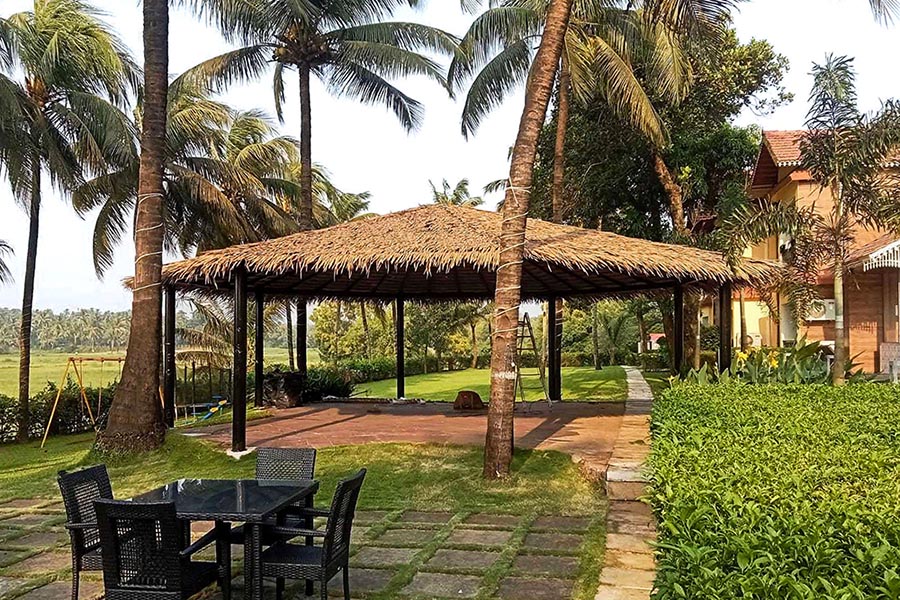
- Tiki hut thatch for backyard tiki huts and gazebos
A Lower-Impact Alternative to Natural Palm Roofing
ONETHATCH engineered thatch is made from 100% recyclable, PVC-free HDPE in a solar-powered factory. Because the roof is not re-thatched every few years, no palm fronds are harvested for it, and no chemical fire or pest treatments are sprayed on it.
Conclusion: Engineered Thatch for Tropical Roofing
Engineered thatch roofing keeps the look that makes a tropical roof worth building and removes most of what makes natural thatch hard to own. ONETHATCH has made synthetic thatch in its own factory since 1996, and each performance claim above is backed by an independent test report that is available to specifiers. Send your roof drawing, photos or roof area through our commercial enquiry form and our engineer will calculate the quantities.
 English
  Japanese
  Arabic
  Spanish
  French
  Portuguese
  Italian
  German
  Chinese (China)
  Thai
Thai  Vietnamese
  Indonesian
  Korean
  Chinese (Taiwan)
  Russian