


An alang-alang roof is the soft, shaggy grass roof you picture over a Balinese pavilion or a beach bar: long blades of alang-alang grass, dried, bundled and layered into a thick, golden thatch. At ONETHATCH, we recreate regional styles of synthetic thatch roofing like this one, each shaped by the place, culture and craft it comes from. ONETHATCH STRAW (BALI) is the style designed to capture the texture and colour of Bali thatch.
Pili grass and alang-alang thatching crown buildings on tropical islands throughout the Pacific and Indian Oceans. Alang-alang thatching has been used on the islands of Bali, Timor, Sumba and others for centuries, and it remains a common roofing tradition across the tropics. Pili grass has been used for roofs in Hawaii. It is unclear whether pili grass roofs are indigenous or were introduced from Polynesia, but this thatching has centuries of recorded use in the Hawaiian islands. The blades of these grasses are sturdy and strong.
Natural grass thatch is only as good as the crop it is cut from, and that quality decides how well the thatch roofing material holds up.
If you want the authentic look of a Pacific Islands thatched roof, you no longer have to depend on the grass harvest. In tropical climates a natural grass roof needs re-thatching every few years; our synthetic thatch skips that cycle, needs no pest or fire-retardant treatments and is backed by a 20-year limited warranty. Part of our synthetic thatch roofing collection, ONETHATCH STRAW (BALI) was designed to recreate the look of pili grass and Asian alang-alang grass thatching. Each panel is a careful blend of wide blades and fine golden strands, layered in varied tones. The result is a roof with the relaxed, sun-warmed character of a Bali beach bar, from the very first day.
What are alang-alang, pili grass, vetiver and piassava roofs?
They are four natural thatching traditions, each made from a different plant and each with its own look. All four are cut, dried and tied on by hand, and all of them weather, thin and need renewing over time.
| Natural thatch | Where it is traditional | The look |
|---|---|---|
| Alang-alang (cogon grass) | Bali and the Indonesian islands | Soft, shaggy, golden blades that turn silver-grey as they weather |
| Pili grass | Hawaii | Fine, dense bunchgrass with a warm brown tone |
| Vetiver | Thailand and parts of Southeast Asia | Leaves folded over split sticks into neat, tightly layered shingles |
| Piassava | Brazil | Coarse, dark palm fibre with a bristly, rustic edge |
Piassava thatch is the odd one out: it comes from palm fibre rather than grass, so its look is darker and coarser than the golden grass roofs of Bali and Hawaii.
More grass and straw roofs around the world
Alang-alang, pili grass, vetiver and piassava thatch are only the beginning. Wherever tall grass or grain grows, people have turned it into roofs, and each tradition has its own character.
| Natural roof | Where it is traditional | The look | The catch |
|---|---|---|---|
| Ilalang | Indonesia’s name for alang-alang, used across Java, Bali and Lombok | Golden, shaggy blades | Same cogon grass, same cycle: it bleaches, thins and needs re-thatching every few years |
| Sapê | Brazil, on kiosks, beach huts and country houses | Thick, rustic grass with a soft edge | Dries out, harbours insects and is a fire risk near the barbecue |
| Cogon grass (cỏ tranh) | Vietnam and the Mekong region | Tall, pale blades in thick layers | Wears quickly in monsoon rain |
| Rice straw | Rice-growing villages across Asia | Short, light golden stalks | The shortest-lived of all; soft straw breaks down fast |
| Kaya (miscanthus and reed) | Japan, the kayabuki farmhouses | Deep, sculpted layers, often very thick | Needs specialist thatchers and a community to re-roof |
| Straw and reed | Rural Italy and much of Europe | Neatly combed, rounded roofs | Needs regular renewal and strict fire care |
Every one of these roofs is renewed by hand, again and again. ONETHATCH STRAW keeps the golden, grassy character they share, moulded in UV-stabilised HDPE that does not rot, bleach grey or feed pests.
How does synthetic straw thatch compare with natural grass thatch?
It keeps the look and drops the upkeep. Here is how ONETHATCH STRAW (BALI) compares with a natural alang-alang roof:
| Natural alang-alang | Synthetic straw thatch | |
|---|---|---|
| Material | Dried grass | UV-stabilised HDPE, colour compounded right through |
| Colour over time | Bleaches and greys in the sun | No significant colour change after 5,000 hours of ASTM G155 (Micom Laboratories, Canada) |
| Upkeep | Re-thatching every few years, pest control, fire-retardant treatment | No re-thatching, sealing or pest treatment; an occasional rinse and inspection |
| Fire | Fire risk; needs fire-retardant treatment | FR version rated Class A to ASTM E108; NFR version carries no fire rating |
| Installation | Bundles tied on by a thatcher | 1000 × 500 mm panels fixed with stainless roofing screws over a solid, waterproofed sub-deck at 200 mm, about 5 panels per m² |
| Colours | Varies from harvest to harvest | Aged Thatch and Sundried Thatch |
Which thatch look suits a Bali hut?
For a classic Bali hut, gazebo or pavilion, the alang-alang look of ONETHATCH STRAW (BALI) is the natural match: layered, golden and relaxed. Choose Sundried Thatch for a fresh, golden roof, or Aged Thatch for the mellow tone of grass that has seen a few seasons.
Planning a different island mood? ONETHATCH STRAW (CARIBBEAN) brings the brown and light tan tones of island straw to a tiki bar, and ONETHATCH STRAW (TAHITIAN) recreates the palm thatch of a Fiji bure. For a palm-leaf or nipa look, explore our full synthetic thatch range.
Send us your roof drawing before you order and we will help you plan the layout: STRAW panels go over a solid, waterproofed sub-deck in 200 mm courses.
Lumbung villas and Bali-style retreats
The lumbung began as Bali’s rice barn: a raised timber store under a tall, steep, curving roof of alang-alang. Today, its silhouette crowns some of the island’s most charming villas, guesthouses and garden studios, and designers recreate it far beyond Indonesia.
That tall roof is exactly where natural grass struggles. The steeper and higher it rises, the harder it is to reach for re-thatching. ONETHATCH STRAW (BALI) gives a lumbung, a Bali-style tiki hut or a yoga pavilion the same golden alang-alang roof with no re-thatching cycle. Panels are fixed with stainless roofing screws over a solid sub-deck in 200 mm courses, about 5 panels per m². For curved or unusually steep roofs, send us your drawings and we will plan the layout with you.
Ordering synthetic alang-alang for outdoor roofs
ONETHATCH STRAW (BALI) is made for the outdoors. It is UV-stabilised virgin HDPE with the colour compounded right through, PVC-free and 100% recyclable, and ONETHATCH thatch passed 5,000 hours of ASTM G155 accelerated weathering with no significant colour change.
Buying is simple, wherever you are:
- Request free samples of Sundried Thatch and Aged Thatch to see the colours on site.
- Send your drawings or photos with the roof size, and check the quantities with your quote.
- Your roof is made to order and shipped direct to your project; we ship to more than 80 countries.
Every STRAW roof is backed by our 20-year limited warranty. To size it yourself first, see how many thatch panels you need.
Synthetic alang-alang roof: quick answers
How long does an alang-alang roof last?
In tropical climates, a natural alang-alang roof needs re-thatching every few years. A synthetic straw roof has no re-thatching cycle and is backed by a 20-year limited warranty; its real life depends on climate, exposure and installation.
Does a synthetic alang-alang roof need a sub-deck?
Yes. ONETHATCH STRAW (BALI) goes over a solid, waterproofed sub-deck in 200 mm courses, about 5 panels per m², fixed with stainless roofing screws.
Can I see the colours before I order?
Yes. Request samples and a quote and hold Aged and Sundried Thatch up against your own timber, stone and sky.
What is a straw roof called?
A straw roof is called a thatched roof, or simply thatch, and the craftsperson who lays it is a thatcher. Depending on the material and region, you will also hear names such as alang alang roof in Bali, sapê in Brazil or kayabuki in Japan.
What is the difference between grass thatch and straw thatch?
Grass thatch is made from wild grasses and reeds such as alang-alang, miscanthus or water reed, while straw thatch is made from the dry stalks of grain crops such as rice or wheat. In Japan, this is the difference between kayabuki (grass and reed) and warabuki (rice straw); grass thatch is usually denser and longer-lasting, straw thatch softer and quicker to wear. Synthetic straw thatch gives you the warm, golden look of both without either one’s renewal cycle.
Is a synthetic alang-alang roof covered by a warranty?
Yes. ONETHATCH STRAW (BALI) carries a 20-year limited warranty, so you know what to expect from your roof from the start. Natural alang-alang comes with no warranty at all, because no thatcher can promise how the grass will weather.
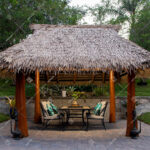 7 reasons to choose synthetic palm thatch
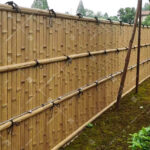 Kenninji-Gaki, the classic Japanese bamboo fence
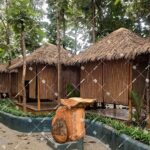 How to install ONETHATCH PALM (NIPA), step by step
 English
 Japanese
 Arabic
 Spanish
 French
 Portuguese
 Italian
 German
 Chinese (China)
 Thai
 Vietnamese
 Indonesian
 Korean
 Chinese (Taiwan)
 Russian