


A good fence does more than stop a view. It sets the mood of the whole garden.
These bamboo fence ideas are for anyone who wants that calm, crafted bamboo look without watching it grey, split and sag after a few summers. We walk through eight Japanese fence styles, backyard and garden layouts, colours, indoor room dividers and simple DIY routes, then put synthetic bamboo side by side with the screens you will see in every garden centre: reed rolls, willow hurdles, bark, heather and artificial hedges.
Every ONETHATCH fence is made from ASA resin moulded from real bamboo, mounted on powder-coated aluminium frames and covered by a 20-year limited warranty. The look of a temple garden in Kyoto. The peace of mind of an engineered material.
Bamboo fence ideas that start with the look
The style you choose decides how private, how formal and how airy your space feels. ONETHATCH makes eight traditional Japanese styles, each built as a ready-to-install panel of about 1900 mm high × 1800 mm wide, or made to your layout.
Vertical bamboo fencing for a tall, quiet line
Vertical bamboo fencing draws the eye upward and makes a narrow yard feel taller.
- Kenninji-gaki: split bamboo slats set tight and upright, tied with horizontal rails. A closed, elegant wall of bamboo, and the style Banyan Tree Maldives chose for its villas.
- Tokusa-gaki: round canes set shoulder to shoulder for a rhythmic, fully screened face.
In Japanese garden craft the upright infill canes are called tateko. Ours are moulded from real bamboo, so the nodes, grain and taper look right up close.
Horizontal and woven styles for a softer screen
Horizontal lines feel relaxed and widen a space.
- Misu-gaki: fine horizontal canes framed by upright posts, refined enough for an entrance court.
- Shimizu-gaki: close horizontal bamboo for a clean, private boundary.
- Katsura-gaki: a layered, textured face inspired by the famous imperial villa fence.
- Otsu-gaki: a woven over-and-under pattern with real handcrafted character.
Low lattice and wing fences
Not every idea needs a full screen. Kinkakuji-gaki and Ryoanji-gaki (standard panel 2000 × 900 mm) are low open lattices that edge a path, frame a lawn or guide guests along a walkway. Short wing fences, sode-gaki, are made to size to frame a gate, a lantern or a water feature.
Bamboo fence ideas for the backyard
Your backyard is where you live outdoors, so the fence should feel like part of the room, not a barrier.
A backyard bamboo fence works hardest in these places:
- Around the seating area. A run of Kenninji-gaki turns an exposed patio into a private outdoor lounge.
- In front of utilities. One or two panels hide air-conditioning units, bins and pool pumps.
- Along a long boundary. Panels join post to post in a continuous line, with posts finished with caps.
- Single- or double-sided. Choose double-sided where both faces are on show, such as between two gardens or two pool decks.
Bamboo fencing around above ground pool decks. A bamboo screen beside the deck gives swimmers privacy and hides the pool wall and pump from the house. Keep in mind that a decorative screen is not a pool safety barrier. If your local code requires a barrier, plan that first and treat the bamboo as the beautiful layer around it.
Bamboo fence ideas for the garden
In a garden, bamboo is the backdrop that makes planting glow. Some bamboo fence ideas for the garden:
- A green backdrop. Sundried canes behind maples, ferns and grasses give a warm, golden frame in every season.
- Garden rooms. Use Misu-gaki or Otsu-gaki panels to divide a vegetable plot, a meditation corner or a children’s play area.
- Path edging. Kinkakuji-gaki lattice outlines paths without closing the view.
- Your privacy level. Closed styles such as Kenninji-gaki and Tokusa-gaki block the view almost fully; open styles such as Misu-gaki and the lattices let light and breeze through.
Bamboo privacy fence ideas for resorts, hotels and restaurants
For hospitality, a fence is part of the guest experience. It frames a villa’s outdoor shower, screens service paths and gives a restaurant terrace the feeling of a private garden.
Banyan Tree Maldives uses ONETHATCH Kenninji-gaki. As of 2026 it has been in use for six years in sun, salt air and humidity, with no visible colour change. That matches what our lab testing shows: 5,000 hours of ASTM G155 accelerated weathering with no significant colour change (Micom report MI-25-17428-1).
Send your drawings and check the quantities with your quote: panels are built to your layout, so corners and odd lengths are planned before anything ships.
Bamboo fence colors
Colour does a lot of the design work.
- Sundried is the standard fence colour: the warm golden tone of freshly cured bamboo.
- Custom colours are available for projects, from deep Carbonized brown to Dark Chocolate, to match timber, thatch or interior finishes.
The colour is moulded through the material, not painted on. Some colours add a hand-painted weathering texture for a natural, aged look.
A bamboo room divider indoors
The same fence panels can stand indoors on base plates. A bamboo room divider zones an open-plan lobby, screens a spa reception or separates restaurant seating without building a wall. Unlike a light folding screen, it stands firm and carries the full detail of a Japanese garden fence.
DIY bamboo fence ideas: what you can do yourself
Our fence ships as a kit: panels on aluminium frames, posts and caps. That makes these DIY bamboo fence ideas realistic for a handy homeowner:
- Replace a tired wooden fence run with new posts and synthetic bamboo panels.
- Add a single wing fence beside a gate or entrance.
- Build a freestanding screen around a hot tub or outdoor shower.
- Build a simple open lattice or trellis fence from our loose synthetic bamboo poles (40, 50 and 75 mm stocked), fixed with stainless screws.
Want to hide an old chain-link fence? Set the bamboo fence on its own posts just in front of it, or remove the old fence first.
Bamboo fencing ideas compared: reed, willow, hedge and more
Garden centres are full of natural screening and plastic alternatives: quick to unroll, pleasant for a season. Here is how they honestly compare with a synthetic bamboo fence.
| Option | Often sold as | Where it falls short | ONETHATCH synthetic bamboo fence |
|---|---|---|---|
| Reed rolls | natural reed fencing roll, reed screening, reed screening roll, euro reed screening | Thin stems wired together; greys in the sun, sheds, sags and needs replacing every few seasons | Moulded ASA canes on an aluminium frame; 5,000 h ASTM G155 with no significant colour change |
| Peeled, dark and jumbo reed | peeled reed fencing, peeled reed screen, carbonized reed fence, natural jumbo reed bamboo fencing | Surface treatment wears off; stems split and wire ties rust | Colour moulded through; rigid panel on its own frame |
| Willow | woven willow fence, willow screening, willow fence roll, carbonized willow fencing, bamboo willow fence | Organic weave dries out, gaps open, rots where it meets the soil | Does not rot; engineered for sun, salt air, heat and cold |
| Whole cane rolls | bamboo cane screening, natural fence screening roll | Natural canes crack as they dry; wire binding loosens | Doesn’t crack; panel stays rigid |
| Heather brushwood | heather screening | Twigs drop and fade quickly; looks untidy within a few seasons | Crisp, even face year after year |
| Bark | bark screening | Rustic but brittle; flakes and attracts insects | No organic matter to decay |
| Border rolls | garden border roll, plastic border fencing | Low and flimsy; fine for edging only | Kinkakuji-gaki and Ryoanji-gaki lattices edge paths with real presence |
| Artificial hedge and ivy | faux ivy privacy fence screen | Plastic leaves look artificial up close and can fade and turn brittle | Real bamboo texture moulded from real bamboo |
| Expanding trellis | expandable fence privacy screen, extendable screening trellis | Light, wobbly, gaps at full stretch | Fixed panels on posts with caps |
| Mesh fabric | hdpe privacy fence screen | Flat shade-cloth look; flaps in wind | Three-dimensional bamboo, not a printed fabric |
| Chain-link inserts | chain link fence slat | The chain-link stays visible; slats loosen | A freestanding fence on its own posts |
Is synthetic bamboo better than natural reed fencing?
For a fence you want to keep, yes. Natural reed fencing is affordable to start with but weathers fast: it greys, thins and needs replacing every few years. A synthetic bamboo fence keeps its colour and shape, and the 20-year limited warranty backs it.
How does a willow hurdle panel compare?
A willow hurdle panel has lovely cottage charm, but it is a living material once it is outside: it dries, splits and rots at the base. Synthetic bamboo gives you a crafted natural look with none of that decay.
Is artificial hedge screening a good alternative?
Artificial hedge screening gives instant green, but plastic leaves rarely fool the eye at close range and often fade and turn brittle in strong sun. If you want greenery, plant real climbers or planters in front of a bamboo fence: you get living colour and a backdrop that lasts.
What about bark screening and heather?
Bark screening and heather brushwood look rustic for a season, then flake, drop twigs and fade. They suit a temporary cover-up, not a finished garden.
Can I get an artificial bamboo privacy screen with planter?
An artificial bamboo privacy screen with planter usually means plastic leaves in a trough. ONETHATCH does not make planter screens. For a better result, stand real planters in front of a short run of synthetic bamboo fence: real plants, real-looking bamboo, no plastic foliage.
Bamboo screening sizes: rolls by the metre, panels by the layout
In Australia, New Zealand and the UK, screening is sold by roll size. ONETHATCH works the other way round: tell us the run, and we plan the panels to fit it.
| Size you see in stores | What it usually is | The ONETHATCH way |
|---|---|---|
| Bamboo screening 1.8m x 3m | A 1.8 m high roll that covers 3 m of an existing fence | Panels about 1.9 m high × 1.8 m wide on their own posts, customised so a 3 m run ends neatly at a post |
| Bamboo screening 1.8m x 4m | The same height in a longer roll, common in the UK | The same 1.9 m panels, set out to your exact length |
| Bamboo screening 2m x 4m | A taller 2 m roll | A custom-height panel made to your layout |
| Bamboo fencing 2.4m x 1.8m | A 2.4 m long, 1.8 m high roll, a New Zealand favourite | Standard 1.9 m height, with panel widths customised to fill the 2.4 m bay |
| Bamboo fence 4ft x 8ft | A US roll, 4 ft high and 8 ft long | Low Kinkakuji-gaki or Ryoanji-gaki (about 3 ft high × 6 ft 7 in wide), or a custom-height panel |
The difference is more than numbers. A roll is a length of material that depends on the fence behind it; a panel is a finished fence with its own frame and posts. On a resort, around a pool-plant room or a service yard, that shows: a roll on an old fence looks temporary to every guest who walks past.
The roll types you will see
- Bamboo cane screening roll. Whole natural canes wired side by side. It looks sturdy, but the canes crack as they dry and the wire rusts.
- Bamboo slat roll and split bamboo fencing roll. Split canes, flat side out, wired into a flexible strip; UK shops call it bamboo split slat screening. The split edges splinter and grey in the sun.
- Bamboo rod screens. An Australian favourite: thin natural bamboo rods threaded on wire, often used to cover a Colorbond fence. Light and quick, but they sag and fade.
- Synthetic bamboo reed fencing. Thin plastic tubes in a roll that imitate reed or cane from a distance. It is still a roll tied onto another fence, and thin plastic can turn brittle in strong sun.
Every one of them is a cover-up for the fence behind it. An ONETHATCH framed panel is the fence.
Bamboo blinds and shades are not fences
Bamboo blinds, an outdoor bamboo shade, a roll up reed shade or a carbonized reed blind all hang from a beam or window frame to filter sun. They are window treatments, not boundaries. Woven from natural bamboo or reed, they fade, mould in humid air and fray at the cords when left outside.
If you want shade overhead, consider a pergola with synthetic bamboo poles as top fill (25 + 35 mm mixed diameters are typical) or a thatched roof. If you want privacy at ground level, a fence panel does the job and stays put in the wind.
Why synthetic bamboo outlasts rolls and hedges
- Engineered material. ASA resin moulded from real bamboo. It is engineered to withstand sun, salt air, heat and cold, and it doesn’t crack.
- UV protection by design. Our UV stabiliser system was developed with BASF’s light-stabiliser engineers in Shanghai.
- Tested, not promised. 5,000 hours of ASTM G155 accelerated weathering with no significant colour change.
- Built to install. Powder-coated aluminium frames, and posts with caps, delivered as a kit.
- Backed. 20-year limited warranty, from an ISO 9001 certified manufacturer and a family company making these products since 1996.
- Virtually maintenance-free. No oiling, no re-tying, no replacing rolls every spring.
FAQ
What are the best bamboo privacy fence ideas?
The best bamboo privacy fence ideas use a closed style, such as Kenninji-gaki or Tokusa-gaki, at around 1.9 m high to block standing eye lines. Pair them with planting in front and a lighter style, such as Misu-gaki, where you want light and breeze.
What types of privacy screen mats are there?
The main types are reed, split or whole bamboo cane, willow, heather, bark, artificial hedge and plastic mesh. All of them are rolls or mats tied onto an existing fence. A synthetic bamboo fence is a different category: rigid panels on their own aluminium frames.
Which bamboo mat is best for the garden?
For a short-term cover-up, a split bamboo roll is the neatest of the mats. For a garden you want to enjoy for years, choose a synthetic bamboo fence panel instead: it doesn’t crack, keeps its colour and carries a 20-year limited warranty.
What is the difference between reed and bamboo screening?
Reed is a thin, hollow grass stem, so reed screening is light, fine-textured and easy to damage. Bamboo canes are thicker and stronger, with visible nodes. Synthetic bamboo goes further, with canes moulded from real bamboo in weather-resistant ASA.
Do you sell bamboo fencing in rolls?
No. ONETHATCH makes rigid panels on powder-coated aluminium frames, not rolls, and we do not make gates. Panels are made to your layout, single- or double-sided.
What size is bamboo screening?
Bamboo screening rolls are usually 1.8 m or 2 m high and 3 to 5 m long. ONETHATCH fence panels are about 1.9 m high × 1.8 m wide as standard, and every panel can be customised to your layout, so the run fits your site rather than the roll.
Bring your fence idea to life
Send us a sketch, a site plan or a few photos of your space. We will suggest the style, colour and layout, quote your run and send free samples so you can feel the canes for yourself. To plan your budget, see what drives the cost of a bamboo fence. Explore ONETHATCH bamboo fencing or request a quote.
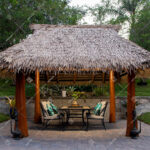 7 reasons to choose synthetic palm thatch
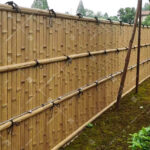 Kenninji-Gaki, the classic Japanese bamboo fence
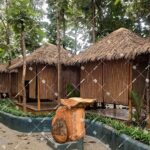 How to install ONETHATCH PALM (NIPA), step by step
 English
 Japanese
 Arabic
 Spanish
 French
 Portuguese
 Italian
 German
 Chinese (China)
 Thai
 Vietnamese
 Indonesian
 Korean
 Chinese (Taiwan)
 Russian