


The warmth of hand-woven bamboo, on a wall that shrugs off humidity, salt air and busy service. That is the promise of synthetic bamboo matting. But the promise is only as good as the synthetic bamboo material underneath, and “faux bamboo” covers everything from a printed vinyl sheet to a hand-woven mat that looks and feels like the real craft.
This guide explains what ONETHATCH® Woven Mat is made of, how HDPE compares with PVC and PE rattan, whether it is safe indoors, and where it should and should not go.
What Is Faux Bamboo?
Faux bamboo is any material made to look like bamboo without being cut from the plant. The term covers very different products, and knowing which one you are buying matters more than the label:
- Moulded poles and panels. Rigid profiles cast from real bamboo, such as ONETHATCH synthetic bamboo poles and wall panels in ASA resin.
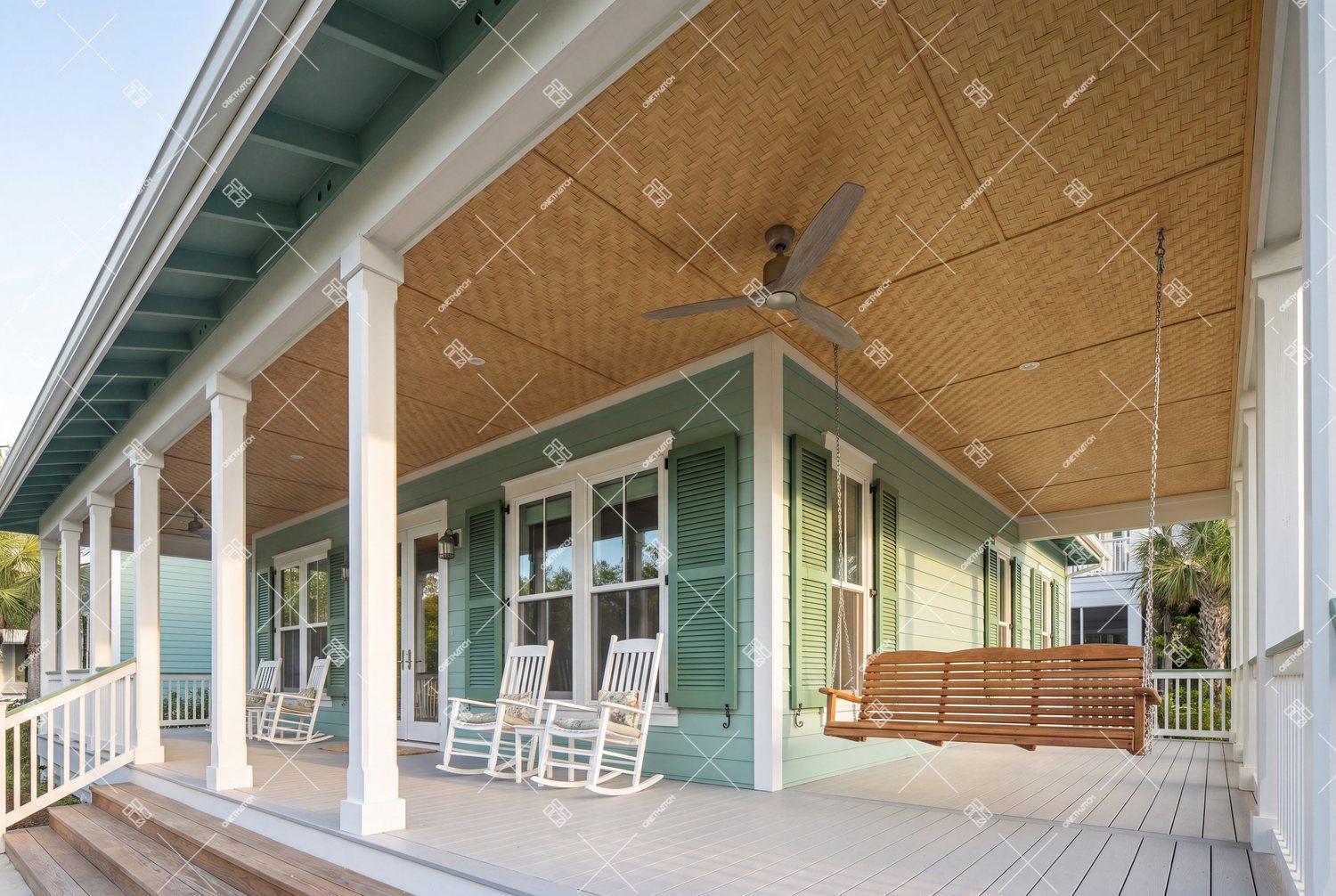
- Woven synthetic matting. Flexible strands woven by hand into sheets, like the ONETHATCH Woven Mat.
- Printed sheets and wallpapers. A photo of bamboo on vinyl, paper or board: flat to the touch, and flat in the light.
- Imitation strips and weaves in PVC. Cheaper to make, with the drawbacks covered below.
Whether a buyer types fake bamboo material, plastic bamboo material or synthetic bamboo material into a search bar, the real question is the same: which polymer, and how is it made?
The Synthetic Bamboo Material Inside ONETHATCH Woven Mat
Our Woven Mat is hand-woven from HDPE synthetic wicker, in strands 13 mm wide. No PVC. No mineral filler.
- Virgin HDPE, no filler. Filled plastic is stiffer and cheaper, but filler makes strands brittle, and brittle strands crack at fixing points as the material expands and contracts with heat. Pure HDPE stays supple, so the weave stays tight and the edges stay clean.
- UV protection engineered with BASF. Our UV stabiliser system was selected together with BASF stabilizer engineers in Shanghai. The result: 5,000 hours of ASTM G155 accelerated weathering with no significant colour change (Micom report MI-25-17428-1).
- Hand-woven, like the real craft. Every sheet is woven by hand, so the surface has the depth, shadow and gentle irregularity of a natural mat, not the flat repeat of a print.
- Backed by a 20-year limited warranty, and made in an ISO 9001-certified, solar-powered facility.
Sizes: 1.22 × 2.44 m (4 × 8 ft) sheets, and 1220 mm × 50 m rolls for large projects. Teak is stocked, with Carbonized also in stock.
HDPE vs PVC vs PE Rattan vs Natural: Woven Bamboo Material Compared
Choosing a woven bamboo material comes down to four families. Here is how they behave on a real wall:
| ONETHATCH Woven Mat (HDPE) | PVC imitation mats | PE rattan (furniture wicker) | Natural bamboo or palm mats | |
|---|---|---|---|---|
| Base material | Virgin HDPE, no filler | PVC, usually with plasticisers | Polyethylene strands, grades and filler content vary | Split bamboo, palm leaf or bark |
| Chlorine | None | Yes, part of the polymer | None | None |
| Feel | Supple, natural texture | Can turn stiff and brittle with age | Smooth, often glossy | Natural, but dries and splits |
| Sun and humidity | 5,000 h ASTM G155, no significant colour change | Plasticisers can migrate out over time | Depends on stabilisers used | Fades, absorbs moisture, can mould |
| Made for | Walls, ceilings, bar fronts, vertical furniture faces | Low-cost décor | Furniture frames and seating | Short-life décor in dry interiors |
| Fire option | Class A FR version to order (ASTM E84 and NFPA 286) | Varies by product | Varies by product | Topical treatments only |
Why we avoid PVC. PVC contains chlorine, and soft PVC relies on plasticisers to stay flexible. Over time those plasticisers can migrate out, leaving the material harder and more brittle, and burning PVC releases hydrogen chloride gas. HDPE has no chlorine and needs no plasticiser to stay supple.
Why furniture wicker is a different animal. PE rattan is made to wrap chair frames, and its strands are extruded and stabilised for that job. A wall or ceiling mat needs a weave that holds its shape across a full 4 × 8 ft sheet, glued flat to a board.
Is Synthetic Bamboo Matting Safe Indoors?
Yes. The ONETHATCH Woven Mat is PVC-free and made from HDPE, the same plastic family used for everyday food and drink containers. There is no chlorine in the polymer and no plasticiser to migrate out of the strands.
For restaurants, hotels and other public spaces where a fire code applies, specify the FR version: ASTM E84 Class A and NFPA 286, made to order. The standard version carries no fire rating. Read more in our guide to fire-rated bamboo matting.
Is It Recyclable?
HDPE is one of the most widely recycled plastics in the world (resin code 2), and our mat contains no PVC or filler to complicate recycling. Because the material lasts, it also spares a project the waste of replacing natural mats every few years.
Woven Matting vs Rigid Faux Panels
Woven matting is one way to dress a wall in bamboo; rigid panels are another. ONETHATCH makes both, and they solve different problems:
| Woven Mat | Synthetic bamboo panels | |
|---|---|---|
| Material | Hand-woven HDPE wicker | Moulded ASA resin |
| Look | Soft, flat woven texture | Bold half-rounds or slats with real nodes |
| Format | 4 × 8 ft sheets, 50 m rolls | Panels screwed to solid backing or battens at 45 cm |
| Best for | Ceilings, bar fronts, feature walls, furniture faces | Façades, wainscoting, large wall runs |
If you have been comparing interlock bamboo giant faux wall panels with woven mats, ask yourself one question: do you want the relief of whole bamboo culms, or the calm rhythm of a weave? For the first, see our synthetic bamboo panels. For the second, the Woven Mat is your material.
Whatever the brand on the sample, and buyers search everything from “virosurface vs natural matting” to “plastic bamboo”, the same checks sort a good mat from a poor one: the polymer, the filler, the weathering test and the warranty.
Where It Goes, and Where It Doesn’t
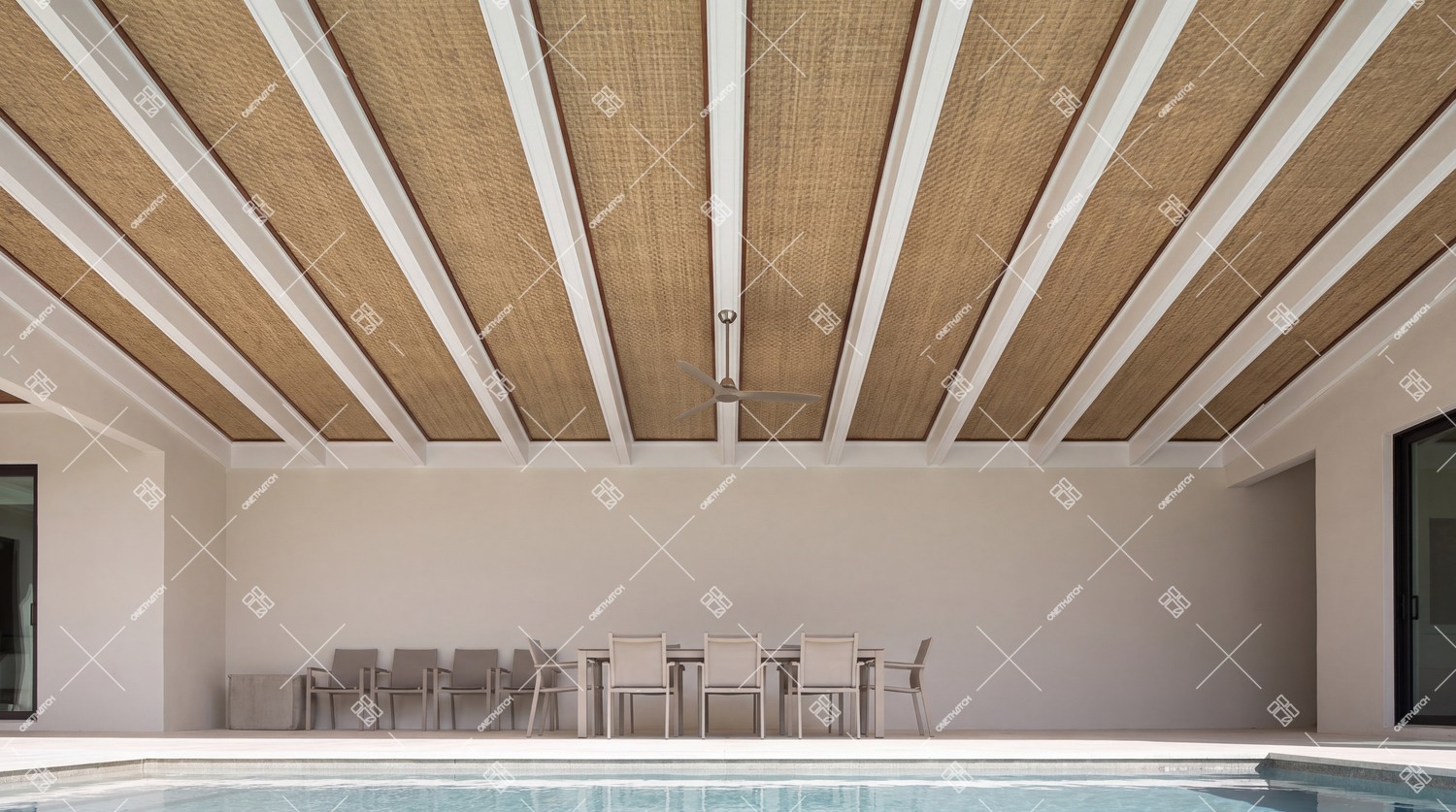
- Yes: interior walls and ceilings, bar fronts, reception desks, headboards, vertical furniture faces, and covered outdoor areas such as verandas and palapas under a roof.
- No: floors, countertops, or surfaces open to direct rain.
- Install: glue the mat to plywood, then fix the board; use staples only, never nails. Full steps in our installation guide.
FAQ
What is faux bamboo?
Faux bamboo is any material made to look like bamboo without harvesting the plant, from moulded resin poles to printed wallpaper. The ONETHATCH Woven Mat is a hand-woven faux bamboo made from HDPE strands, so it carries the real texture and depth of a woven mat.
What is synthetic bamboo matting made of?
ONETHATCH synthetic bamboo matting is made of virgin HDPE synthetic wicker, hand-woven in 13 mm strands, with no PVC and no mineral filler. UV stabilisers selected with BASF engineers protect the colour.
Is it the same as PE rattan?
No. Both are polyethylene, but PE rattan is made to wrap furniture frames, while our Woven Mat is woven into flat sheets and rolls for walls and ceilings.
Can I use it outdoors?
Yes, in covered outdoor areas only, such as a veranda, cabana or palapa with a roof overhead. Keep it out of direct rain and off floors and countertops.
Does it come in a fire-rated version?
Yes. A Class A FR version, tested to ASTM E84 and NFPA 286, is made to order. The standard version has no fire rating.
See it, feel it, test it. Free samples are available on every ONETHATCH line. Request your Woven Mat samples and our team will check your drawings and prepare a quantity take-off.
 7 reasons to choose synthetic palm thatch
 Kenninji-Gaki, the classic Japanese bamboo fence
 How to install ONETHATCH PALM (NIPA), step by step
 English
 Japanese
 Arabic
 Spanish
 French
 Portuguese
 Italian
 German
 Chinese (China)
 Thai
 Vietnamese
 Indonesian
 Korean
 Chinese (Taiwan)
 Russian